
News
Oceanography Project Presentations
Saturday, 7 November 2026
Anchorage Position: 18° 20.0’v N x 064° 42.2’ W
Log: 2700.0 nm
Weather: Beautiful day at anchor in Coral Bay, St John, USVIs. Low cumulus clouds that occasionally provide a freshwater rinse of the deck and ourselves.
As I write this blog, I am listening to laughter and chatter coming from many parts of the ship. On deck, in the Main Salon, top of the lab, etc., shipmates that have foraged life-long friendships and memories are nostalgically recalling the struggles and triumphs of our successful research voyage at sea. We have had our fair share of fine weather, but we had a fair share of rain, and rough seas early on. Of late we have had to contend with warm, humid conditions of the tropics. Students have worked tirelessly, day and night, as members of the ship’s crew. They have hauled lines, set and struck so many sails, stood lookout in the middle of the night under a carpet of stars, and taken their turn at the helm – all in the name of ocean exploration and our mission to better understand the wonders of the sea.
To that end, today was a big day! A few short hours ago, students presented their final oceanography projects and shared their discoveries with the entire ship’s company.
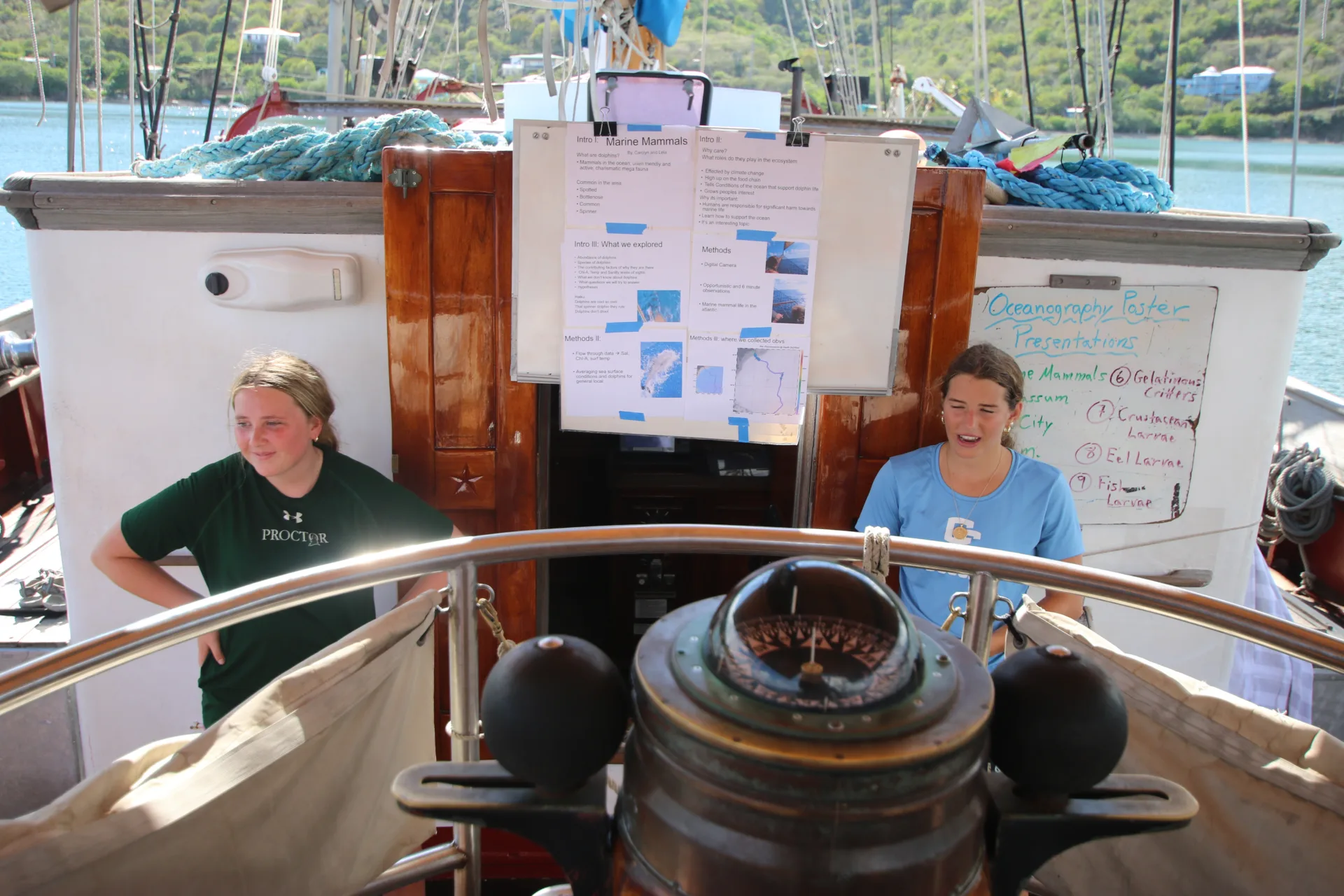
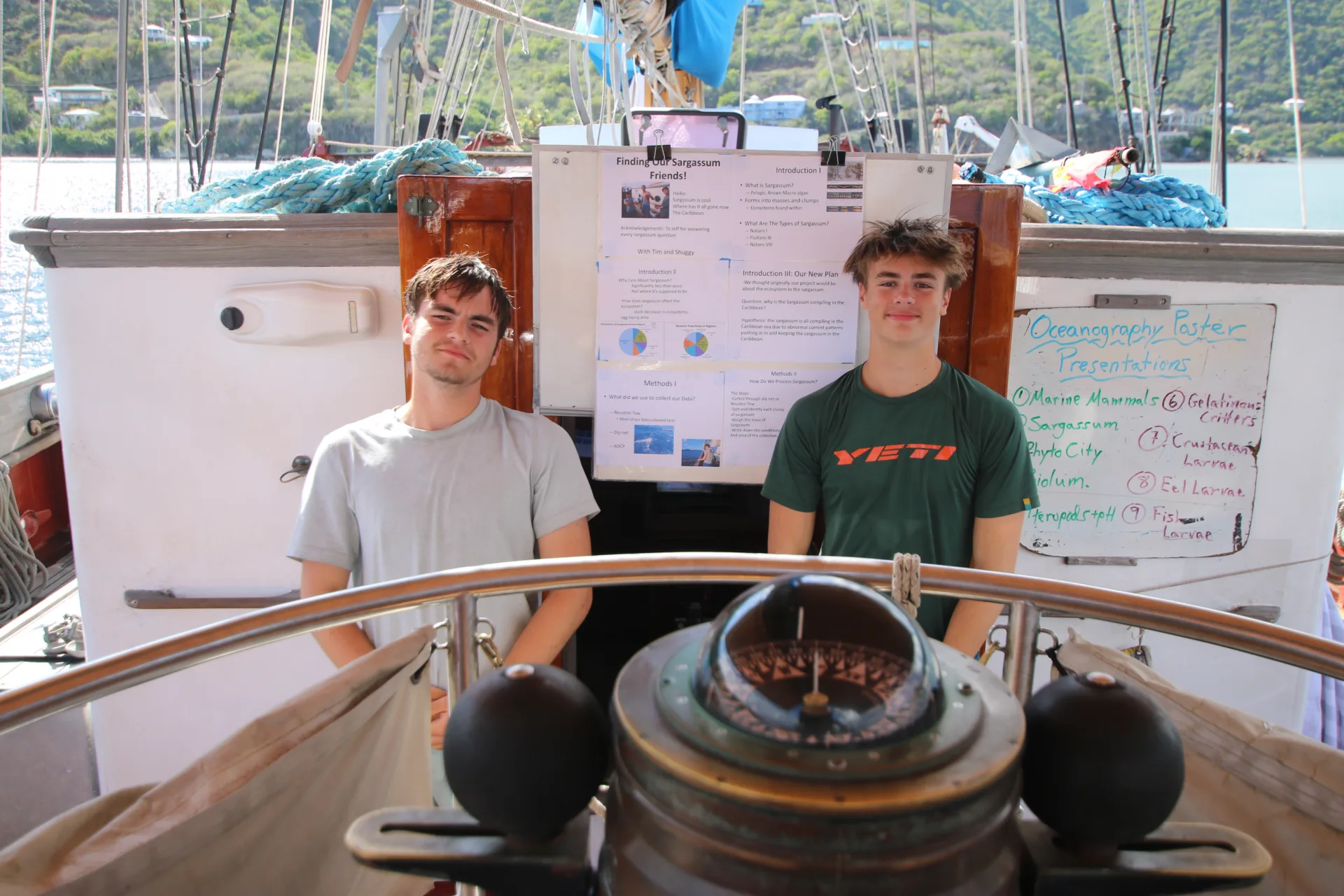
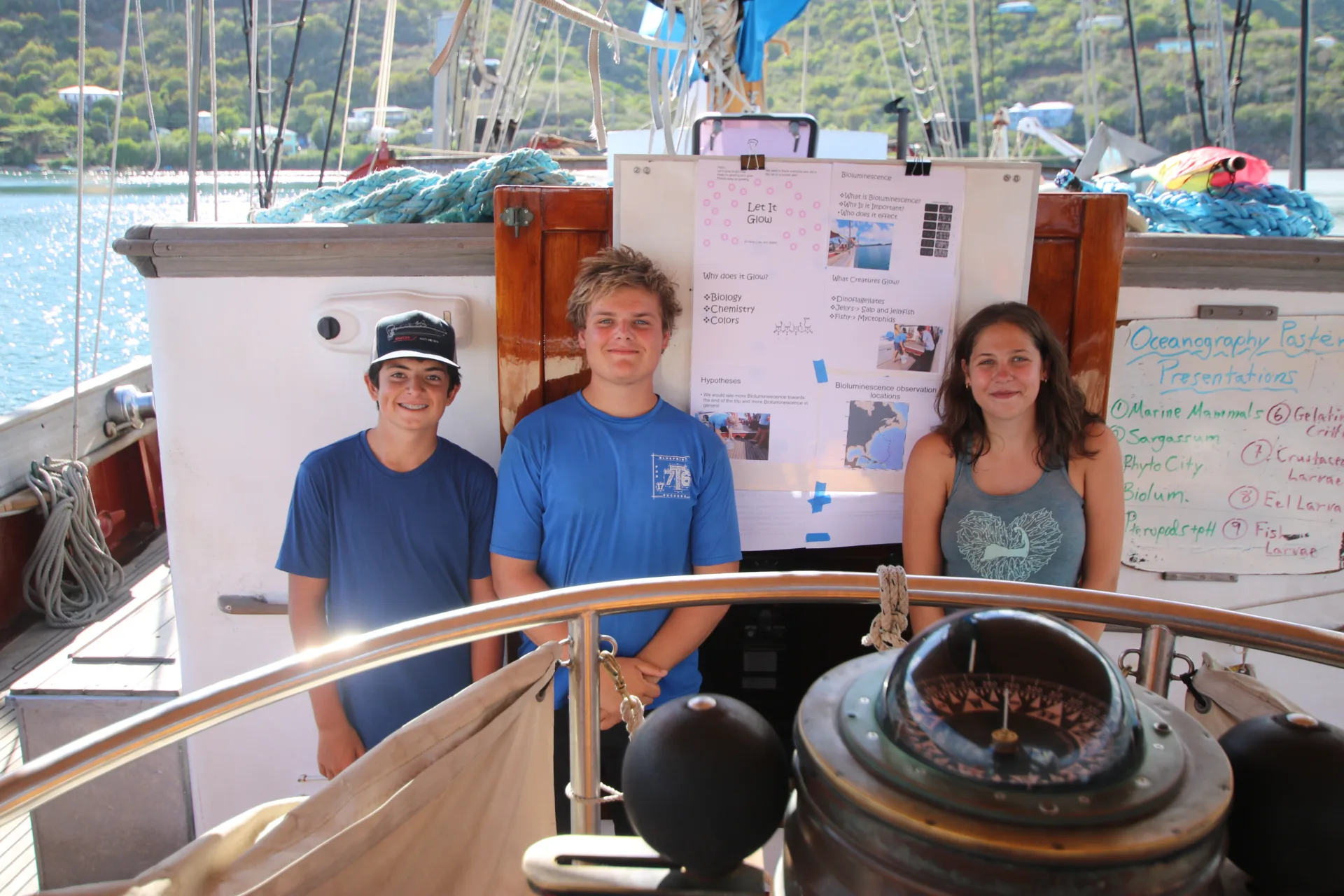
All the deployments, all the sample processing, the hours spent sorting nets, identifying critters under the microscope, recording numbers (so many numbers) on a multitude of datasheets. Toward what end, the students asked in the middle of the night as they pulled one more net back aboard, full of bioluminescence? Well, here, presented on the deck of the Corwith Cramer, were the many answers to that question.
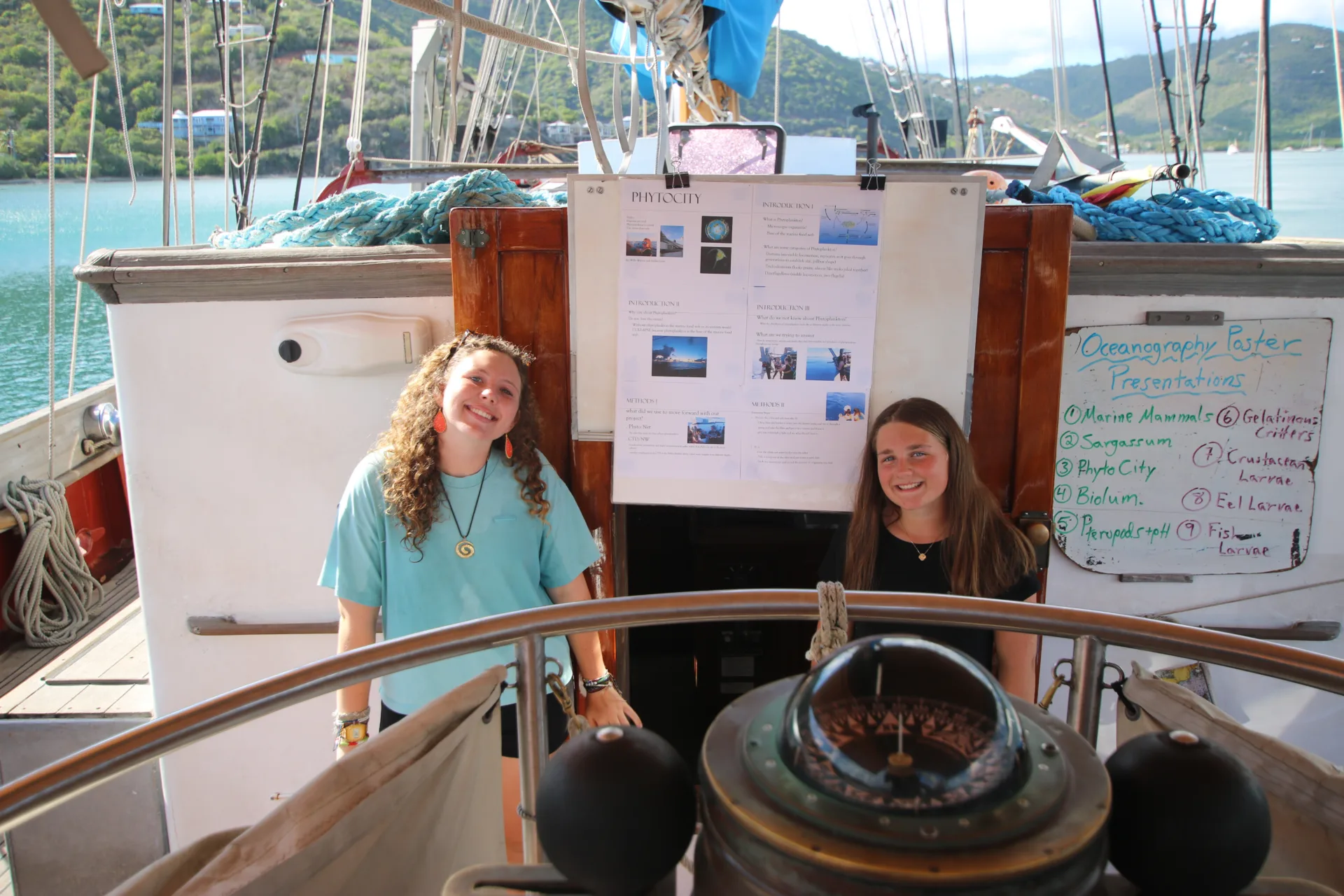
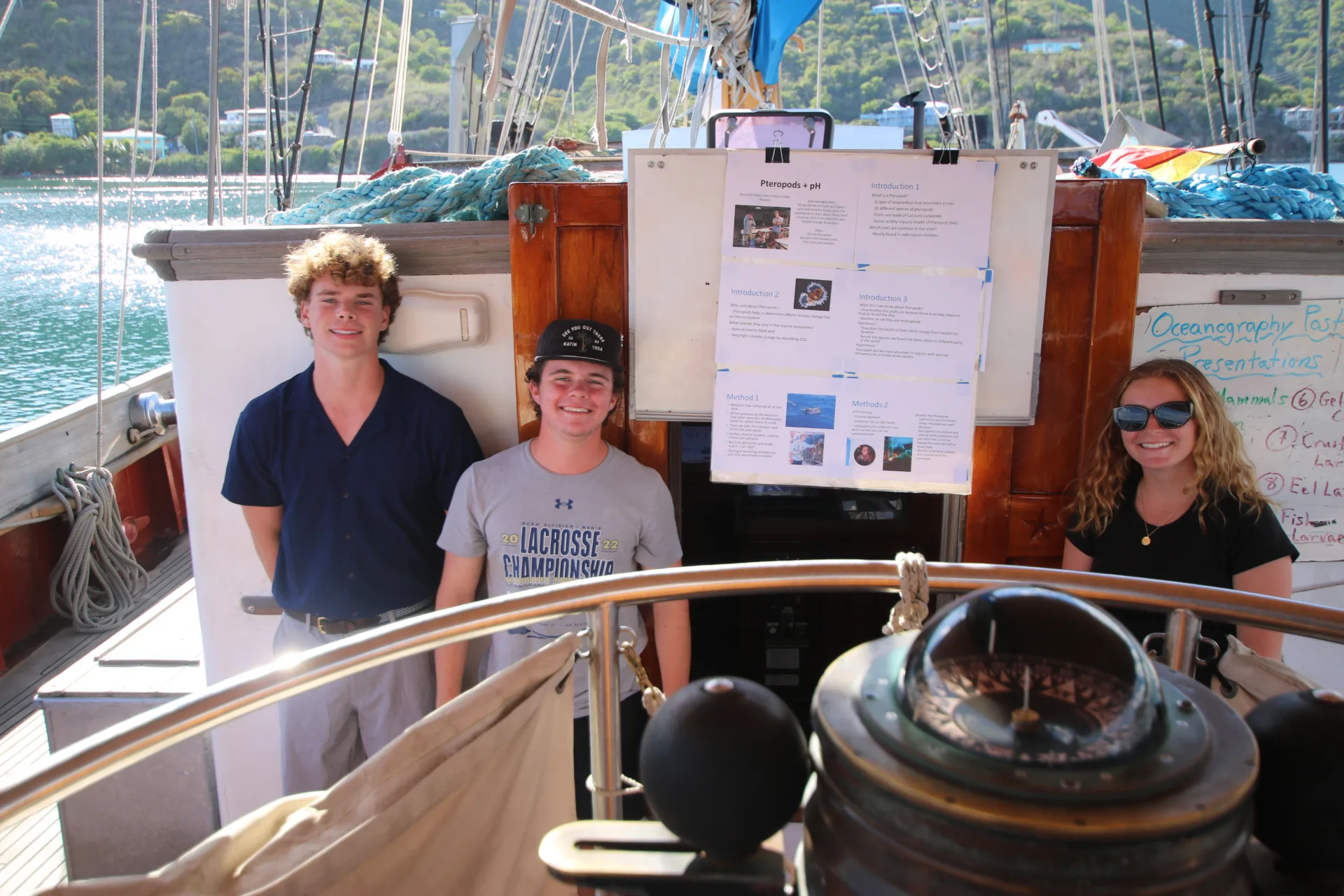
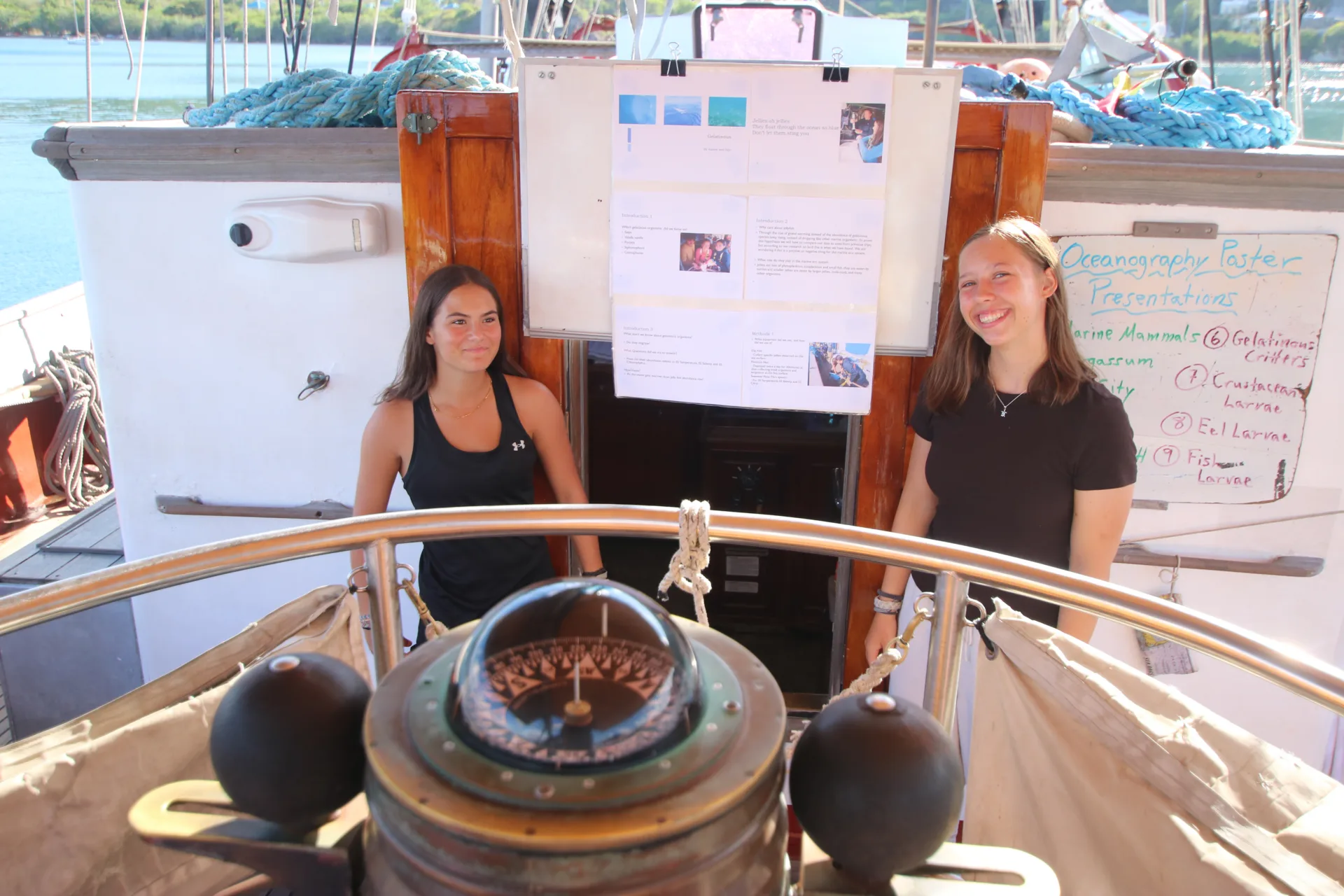
Lela and Carolyn started things off with their presentation on dolphin sightings and entertained us with many stunning photographs of dolphins playing in the bow of our ship. Tim and Shuggy presented their research on the dwindling supply of Sargassum algae in the Sargasso Sea compared to the unusual abundance observed in the Caribbean Sea. Molly, Cian, and Jamesy enlightened us on the patterns of bioluminescence observed during our voyage; while, Willa and Lynlee reminded us of how important microscopic phytoplankton are to the marine food web! Hannah, Peter, and Baker discussed the dire implications of ocean acidification and how changing pH levels affect the abundance of small swimming snails called pteropods. Audrey and Silja reminded us of those early days when we would collect so many salps in our nets and offered an explanation for why we are now seeing more siphonophores. Weston, Piper, and Nico shared what they learned about the abundance and distribution of spiny lobster and mantis shrimp larvae; while Ando, Landen, and Ezra told us a scientific story about eel larvae. Finally, Charlie and Tague shared what they learned about the great variety and abundance of fish larvae collected during our voyage to the Caribbean Sea.
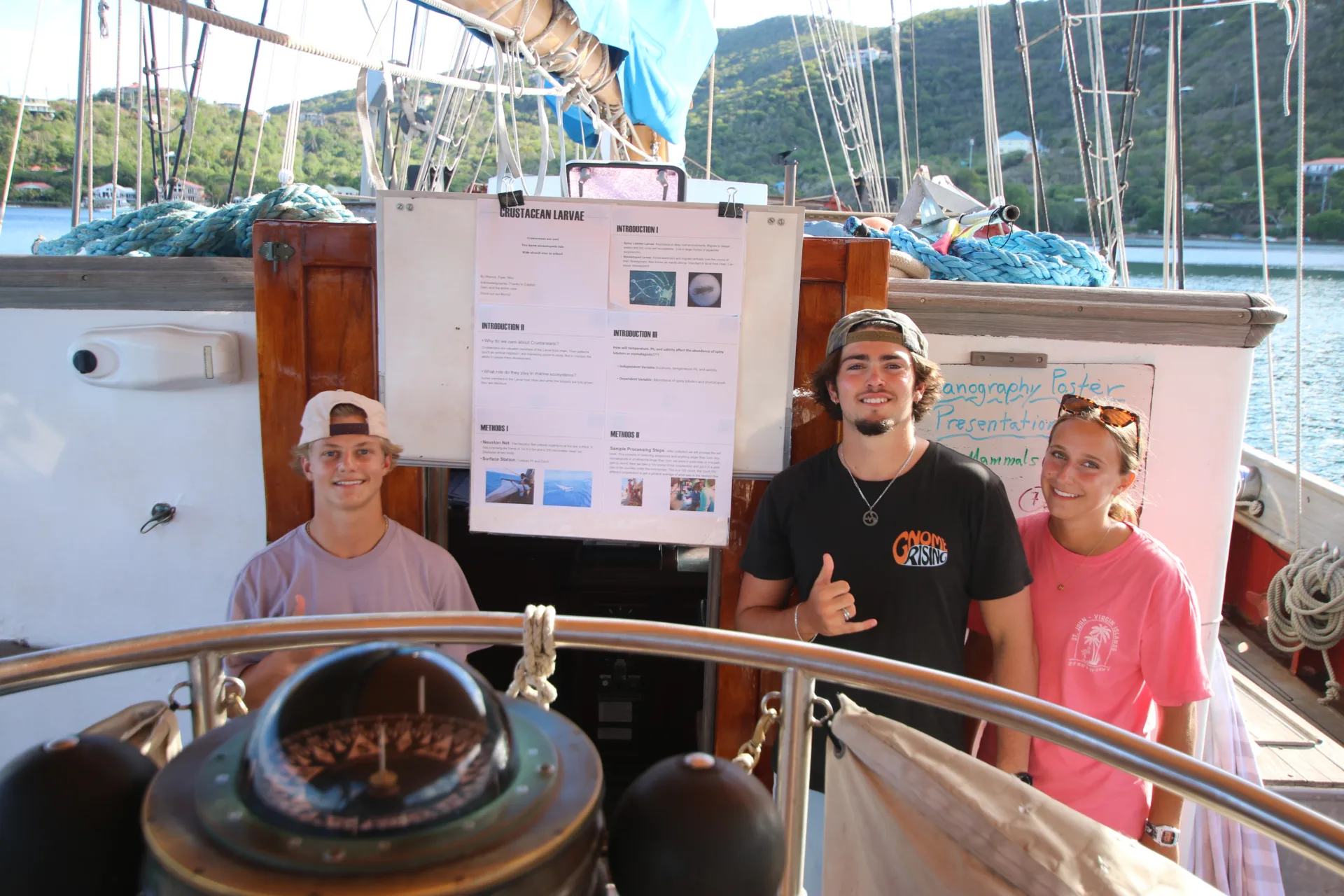
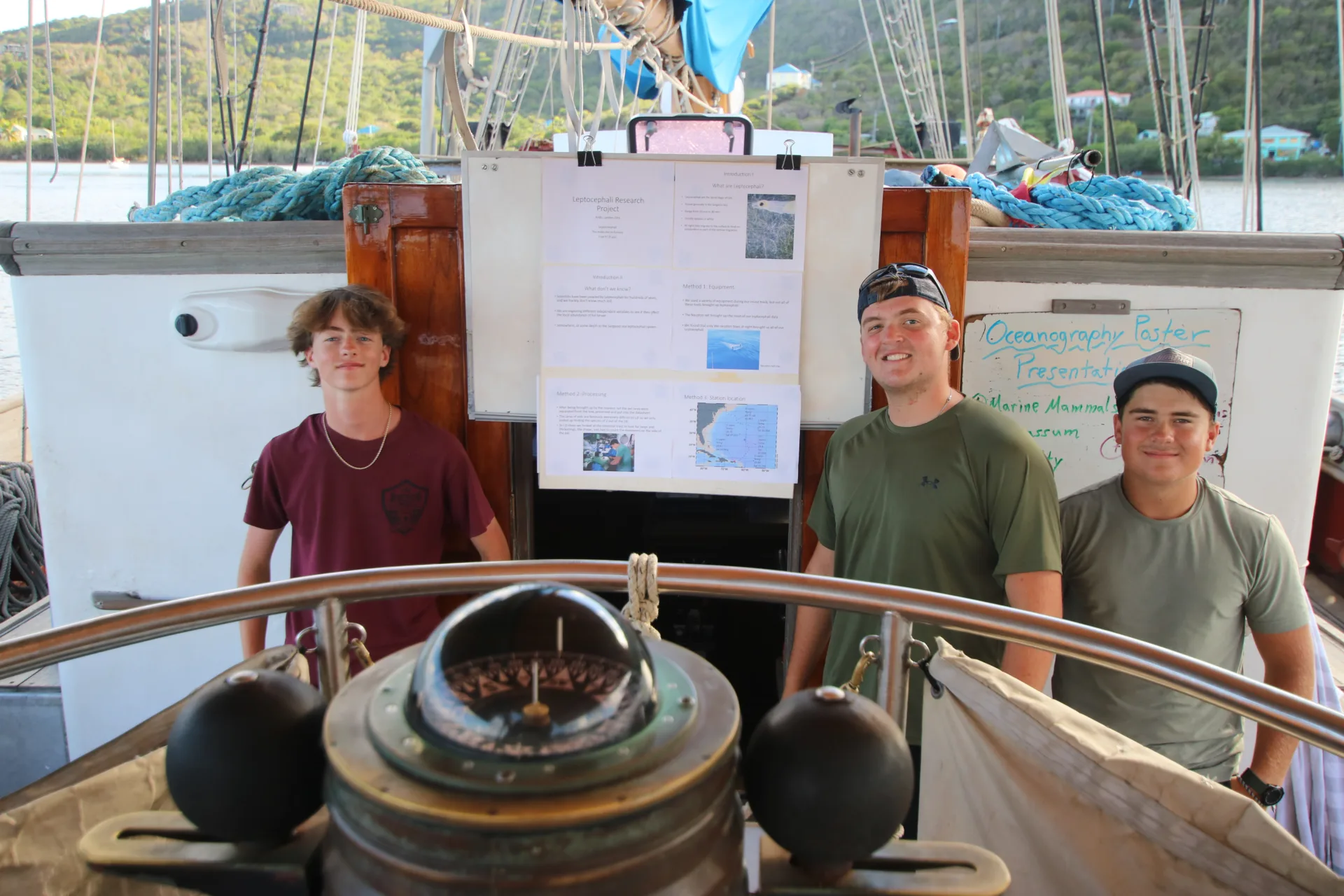
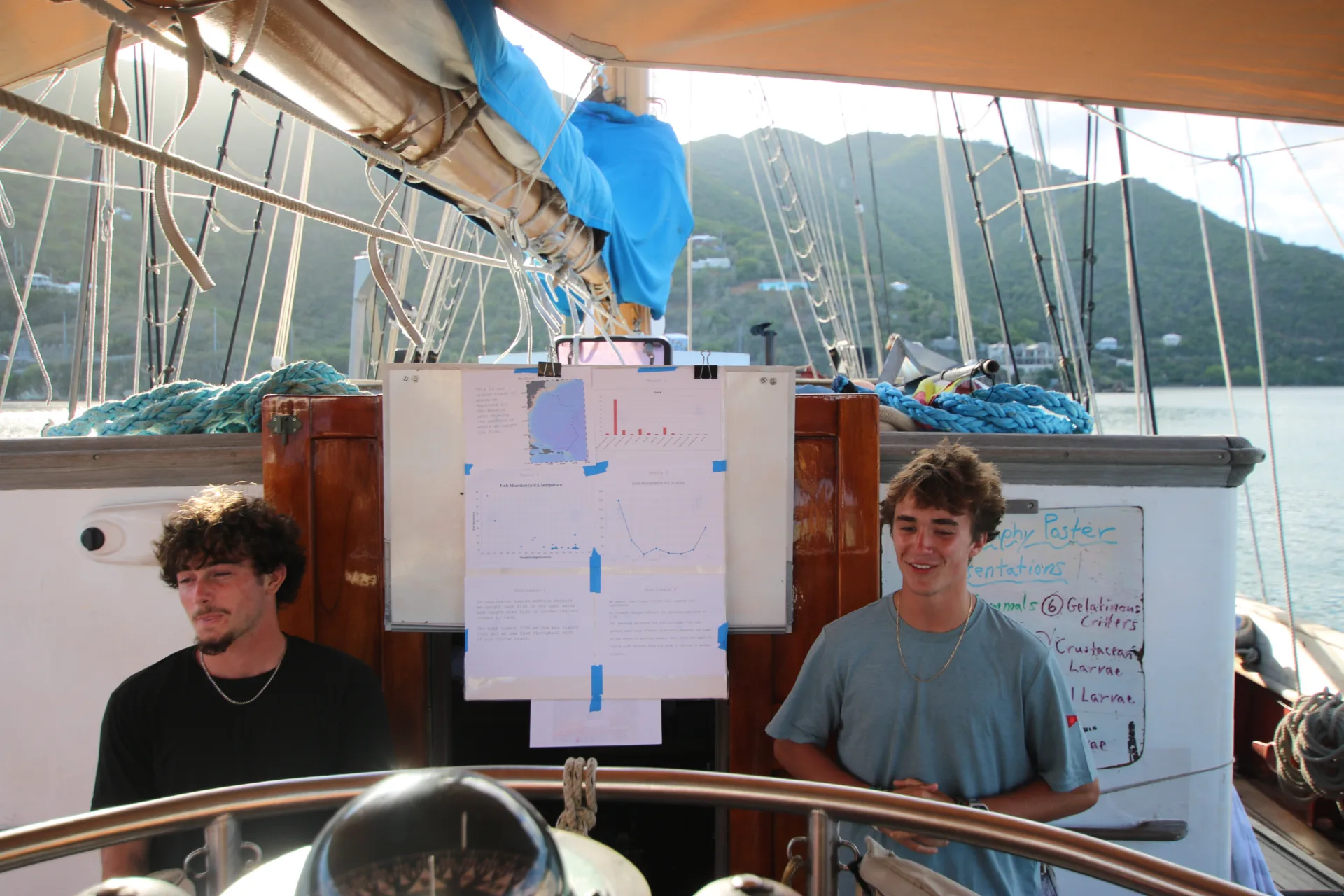
There is so much more to share about each and every project, so come ready with your questions for the final symposium on November 19th! I am so proud of these students. Every one of then made important contributions to their group projects and presented their part of the story with poise and professionalism.
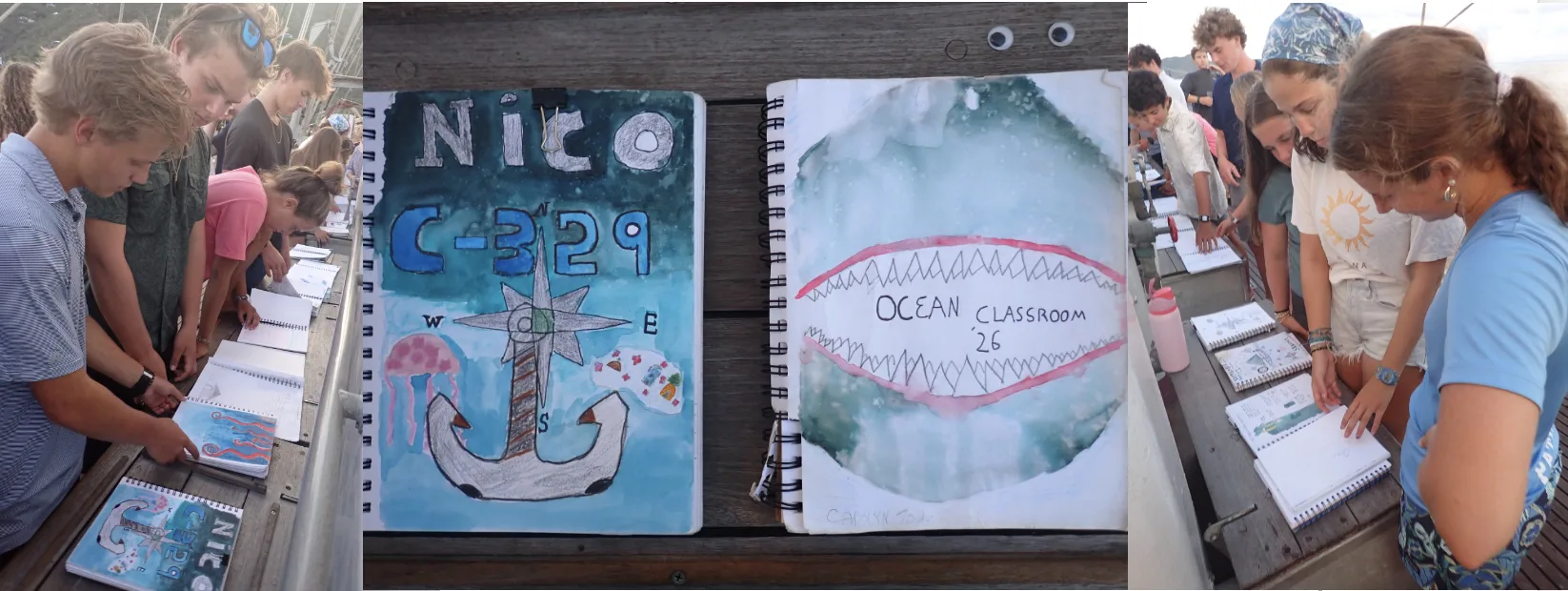
As if that were not enough for a single day, this momentous scientific event was followed by a schooner-formal event called the Sheet Anchor Gallery. This is a time to celebrate all that the students have learned (and documented artistically) during their time with SEA. Students displayed their Sheet Anchors around the ship for all to see. One and all were enthralled by the creative and insightful work of their shipmates.
However, the greatest accomplishment of this voyage is that each student has risen to the occasion and proven themselves to be reliable, respectful, and kind shipmates. For those who go to sea, there is no higher compliment.
It has been a pleasure and an honor to sail with the students and crew on Ocean Classroom 2026 (C329) and I hope to sail with all of you again soon!
Cheers
Jeff Schell, Chief Scientist