
News
A Tow, a Scope, and a Million Plankton
Monday 20 July 2026
SEA Campus, Falmouth, Massachusetts
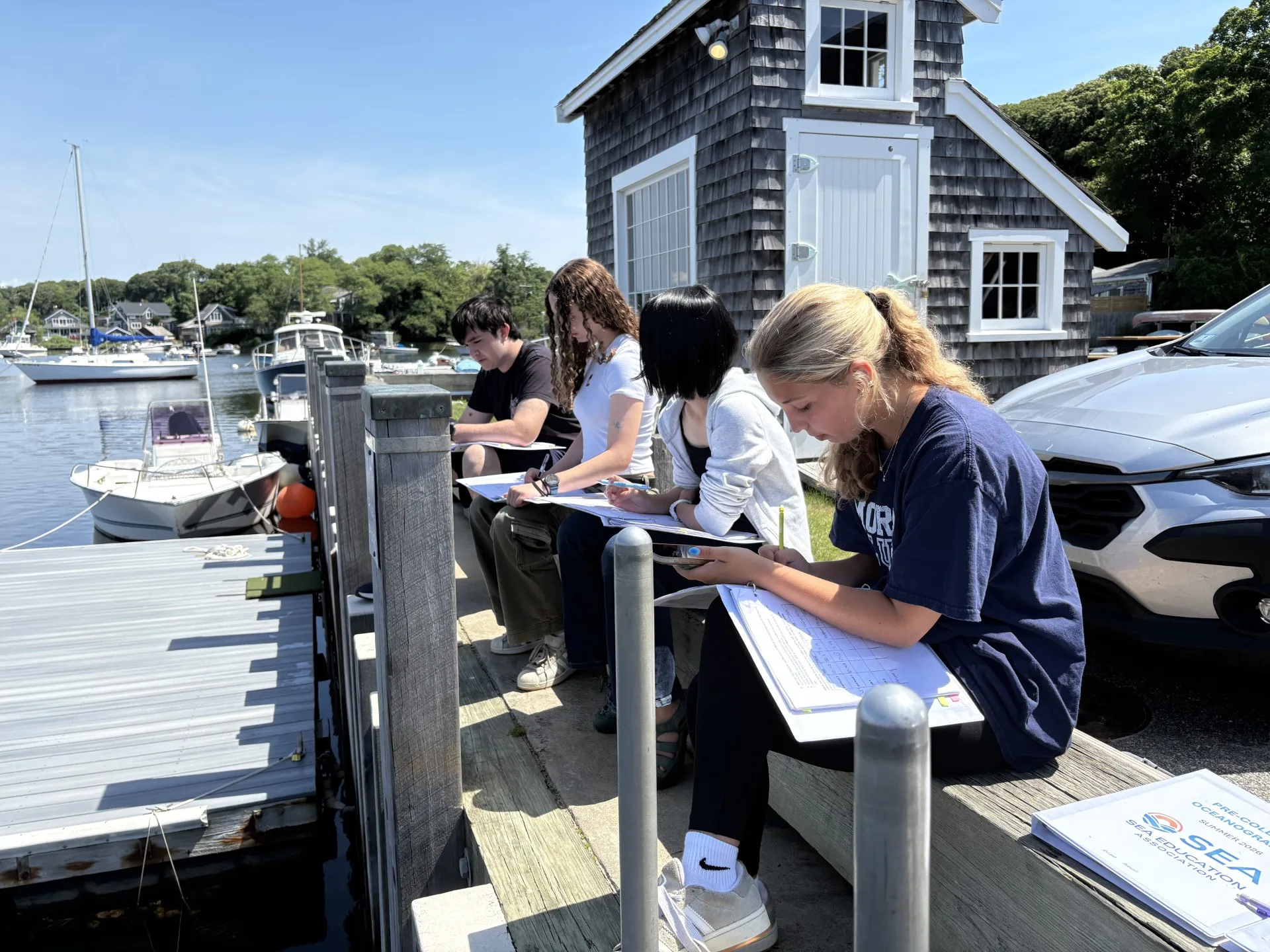
Today is Monday, a brand new week has started. We are all doing well today and being well-prepared for making progress on our research project. In the morning, after having self-served breakfast, we had a lecture on Data Best Practices. Maria gave us wonderful tips on how to draw our own data graph based on the independent and dependent variables that we have and how to analyze them properly. We did further practice for the dataset of high and low tide at beach and harbor for the average and standard deviation in the Google Sheets.
Fortunately, we all had similar and correct numbers for the two types of data.
We finished up in class and got ready to do more field work in Woods Hole. As a group, we headed towards Eel Pond and Garbage Beach to conduct our plankton lab. Dr. Ingersoll split us into 3 groups to conduct various measurements in and out of the water.
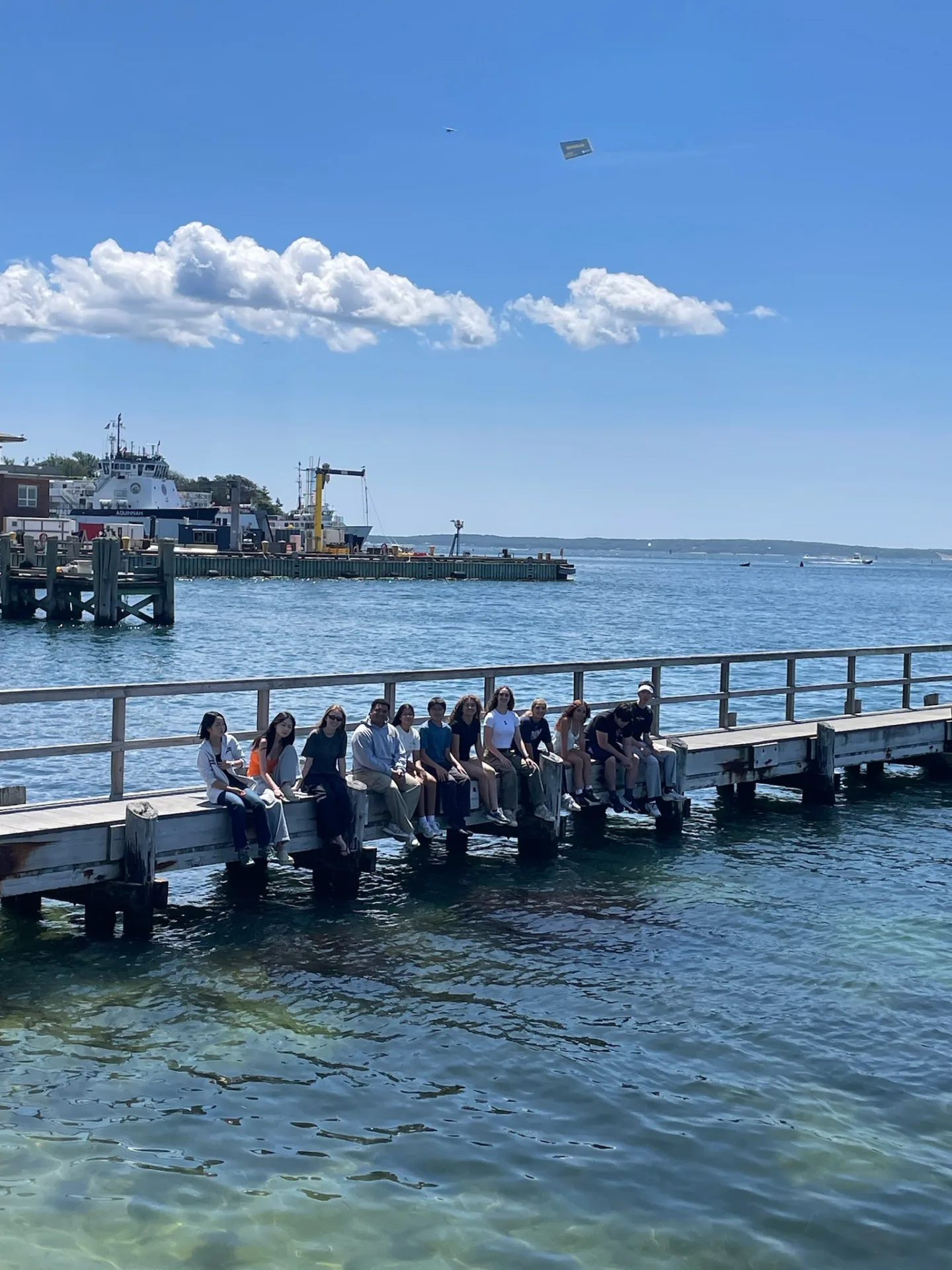
The first group did the plankton tows, which drags a conical net through the water to catch plankton. The next group measured the water quality of the site, using a water probe, we recorded the pH, total dissolved solids, salinity, temperature, and conductivity. Lastly, the third group observed the landscape, any organisms, and the weather. Together, we rotated through the groups to make sure everyone got a chance to participate in the lab. After wrapping up, we headed back to campus to eat some lunch!
After having lunch at our cottages, we headed toward the lab on our campus. Dr. Ingersoll set a goal of getting 100 plankton counts by using the samples we got in the morning under a microscope to encourage us getting really engaged by the process of identifying types of plankton.
We first used a two-layered sieve to separate the sediments from bigger than 4mm and smaller than 4mm. After that, we scooped out the sample onto a petri dish or a slide and then observed them under the microscope in order to find any plankton on the study guide and recognize them. It turned out that there were relatively massive amounts of fish eggs, and other types of plankton were also found even though the sample size wasn’t large. We did have some trouble recognizing the plankton since they’re often transparent and tiny. However, with the help of Dr. Ingersoll and Mrs. Necker, we were able to match them with the image on the study guide and also sketch them. We finished the lab course by rinsing containers. Finally, every group was successful and achieved the count goal.
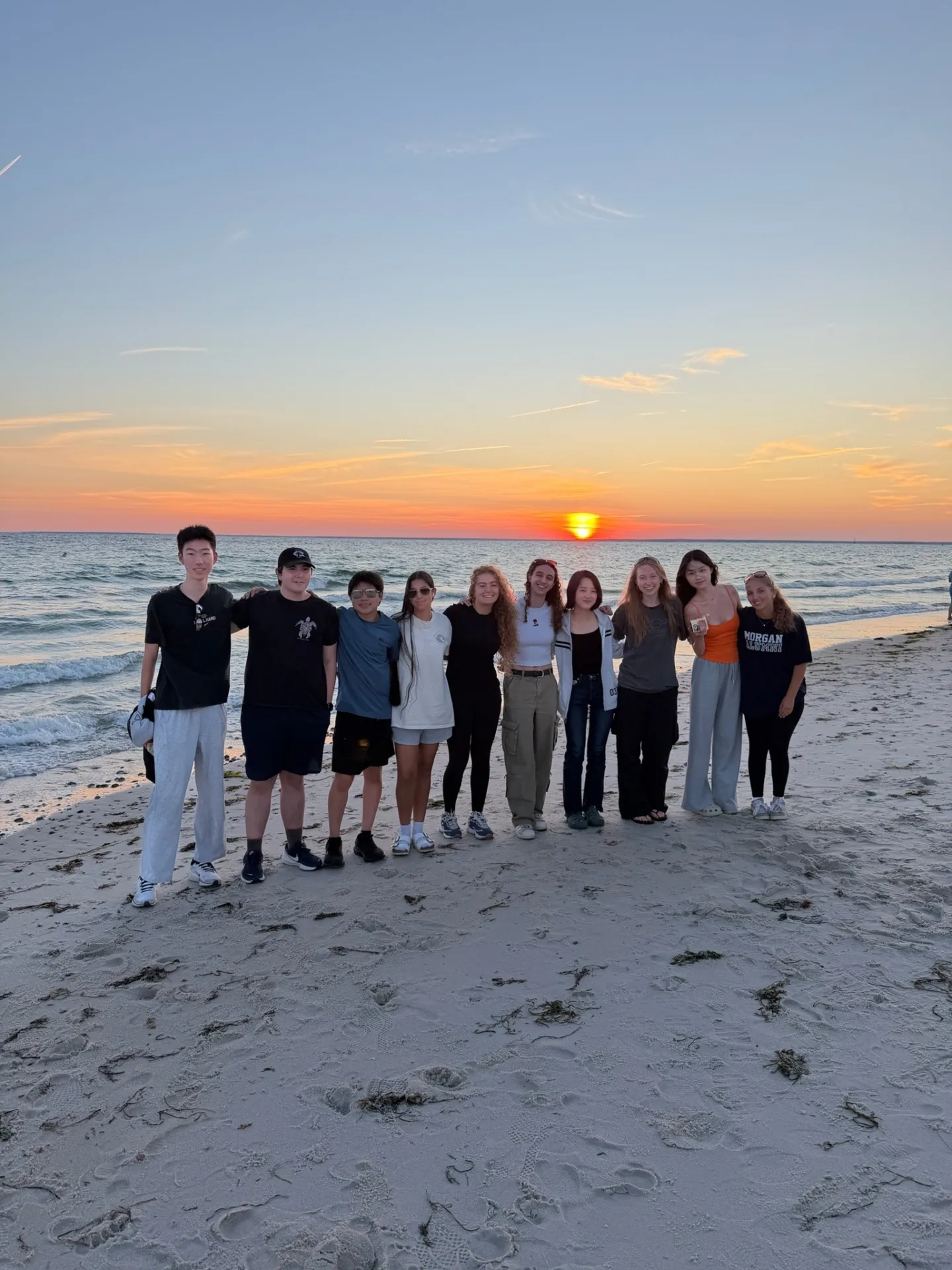
Following the long day of learning, we played several competitive games of Spikeball, and watched a baseball game starring the local team. We left during the 4th inning to catch the beautiful sunset at Chapaquoit Beach, where we all got lovely group photos with the sunset
Today was a memorable day to get in contact with different types of plankton and observe them in the lab.
Kendrick and Miles, Pre-College 2: Oceanography