
Programs Blog
Science Stroll & Fun
Pre-College 3: Marine Biology
8 Aug 2026
SEA Campus, Falmouth, Massachusetts
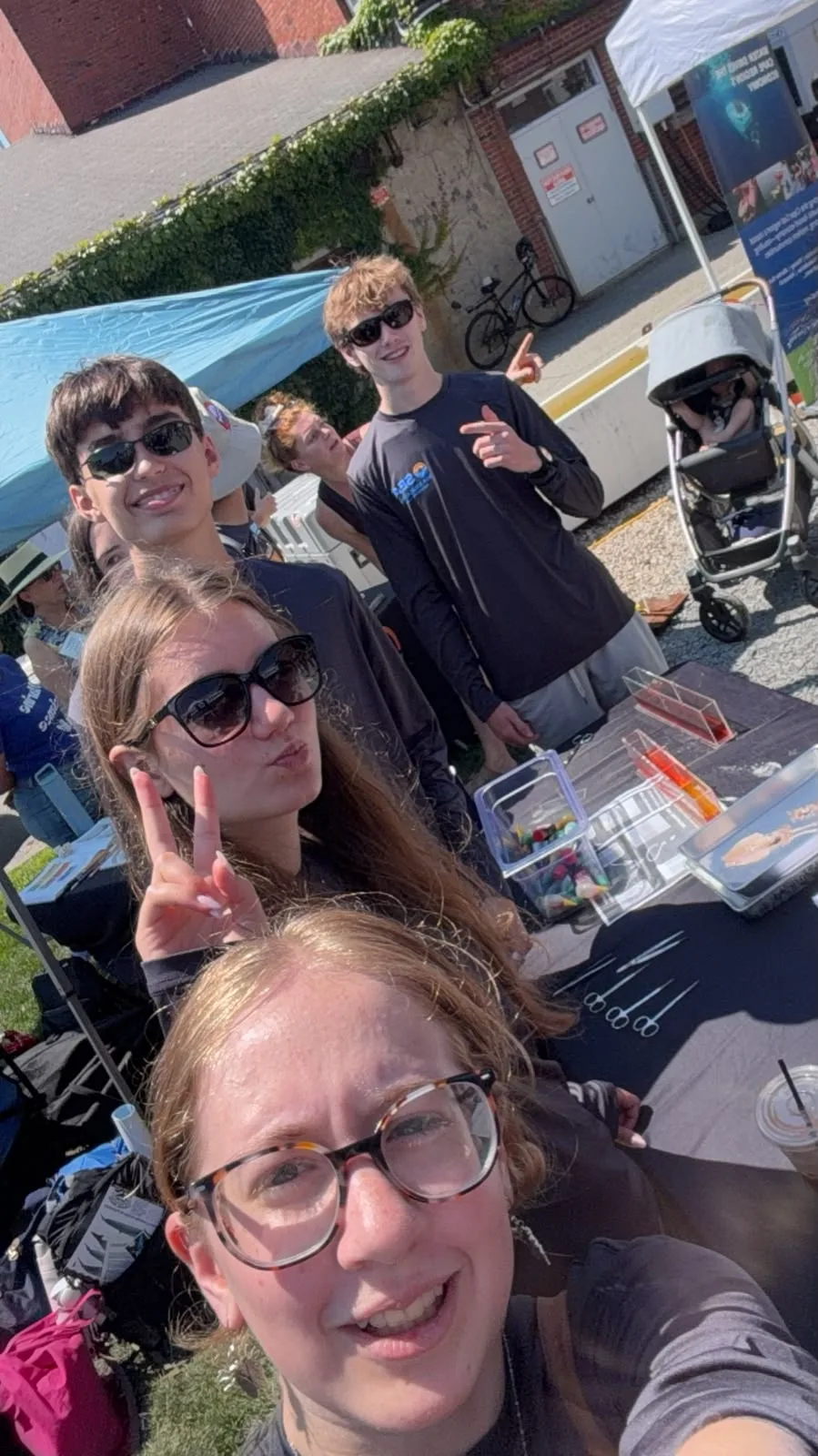
We had a great day today at the Woods Hole Science Stroll, where many of the best marine science institutions in the entire world (WHOI and MBL among others) set up stands to present their newest projects and findings to the public. We at SEA’s Pre-College Marine Biology program were also fortunate enough to have our own stand at the Science Stroll, where we volunteered in shifts from 10am to 3pm.
At the stand, we showed off two of the demonstrations that we have encountered in our classes so far. First was the squid dissection, which attracted a great deal of attention from curious members of the public over the course of several hours. One squid was preserved in a jar and two more, one fairly untouched and the other cut open to reveal the internal organs, were laid out on top of ice packs to keep them fresh under the scorching midday sun. We pointed out the squids’ two tentacles, eight arms and three hearts to fascinated children, while explaining interesting facts about the squids’ pen to their (hopefully) equally curious parents.
The second half of the SEA stand was a demonstration of salinity and its impact on water density. When asked whether fresh and saltwater would mix together or separate into layers, most people (especially children, surprisingly) correctly guessed that the saltwater was denser and would therefore sink to the bottom, leaving the freshwater floating at the top. An interesting innovation was also added to this demonstration at around midday, when SEA students decided to mix salt and freshwater together to make “brackish” or “slightly salty”water. This was then used along with fresh and saltwater to make a three-layer version of the demonstration.
The other stands at the Science Stroll were also incredibly exciting. The researchers and ocean enthusiasts were friendly and answered any questions we threw at them. Highlights included a stand presenting a giant horseshoe crab, and one showing how different plastics end up at different locations after they are dumped in the ocean, based on whether they float or sink in water. A particularly exciting prospect for marine biology was the Mesobot, a remote-operated robot designed to explore the twilight zone, where much of the ecosystem is not yet understood. Mesobot could track individual animals with lights and take DNA samples from the deep ocean to discover new species from plain seawater. In fact, the researchers running the stand say that 30 to 50% of the DNA they pull up from the deep come from animal and bacteria species never before seen!
After the Science Stroll, the afternoon continued with trips to the beach at Woods Hole (where I brought back quite the haul of sea glass), as well as to some local cafés. Dinner was a grill out organized by the PAs, who made delicious hotdogs and burgers. After dinner, the day wrapped up with a trip to Walmart, where everyone probably stayed a bit too long. But the huge variety of snacks, drinks, decorations and other items that were brought back was definitely worth it!
Tomorrow, we will be visiting Martha’s Vineyard, which everyone is very excited for. I just hope we won’t get sunburnt again…
Tinson Chen
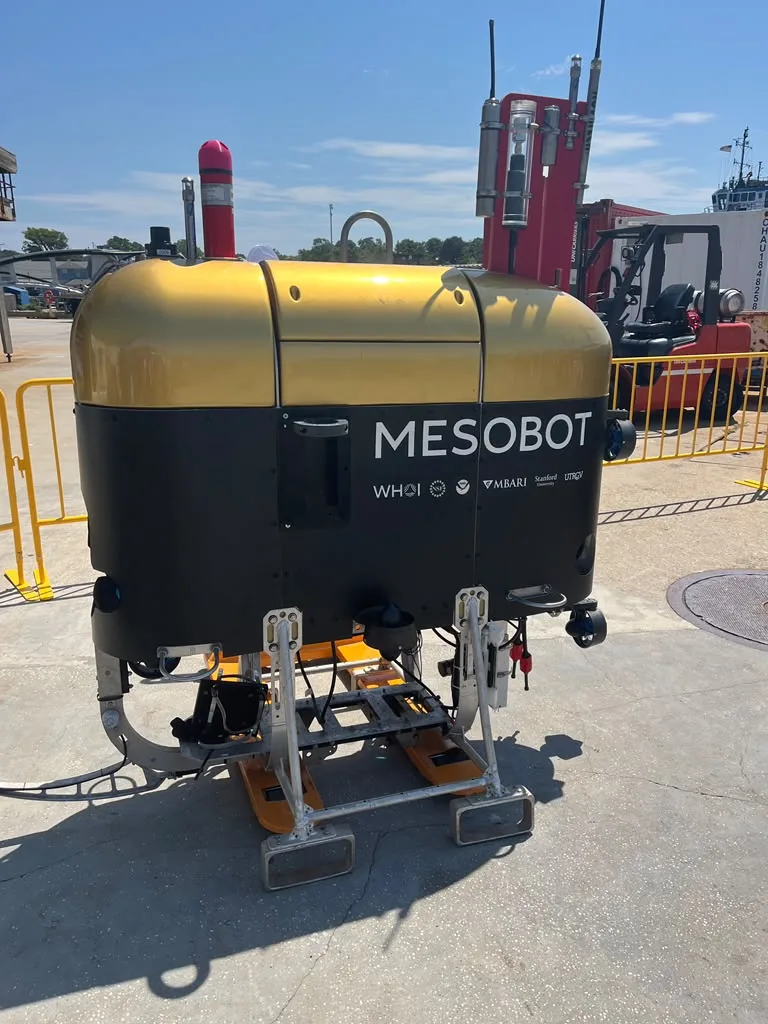
Mesobot at the Science Stroll.
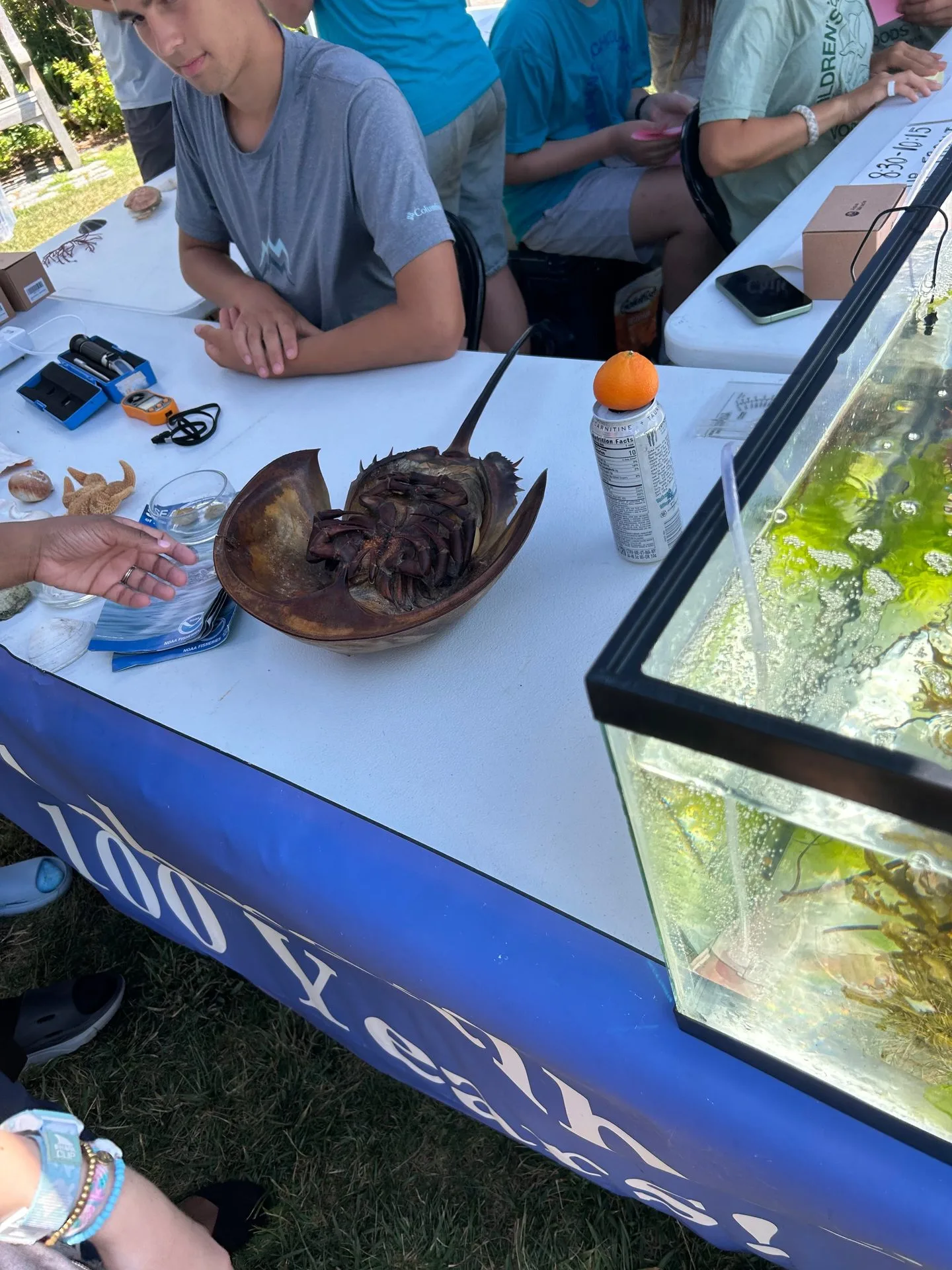
A NOAA stand at the Science Stroll, including, among other objects, a giant horseshoe crab.
Recent Posts from the Ships
- Ocean Classroom 2024-A collaborative high school program with Proctor Academy
- Collaborations and Long-term Commitments: SEA’s Caribbean Reef Program Sets a Course for Coastal Programs that Compliment Shipboard Experiences.
- Sea Education Association students prepare for life underway using state of the art nautical simulation from Wartsila Corporation.
- SEA Writer 2022, Magazines From the Summer SEA Quest Students
- Technology@SEA: Upgrades Allow Insight into Ocean Depths
Programs
- Gap Year
- Ocean Exploration
- High School
- Science at SEA
- SEA Expedition
- SEAScape
- Pre-College
- Proctor Ocean Classroom
- Protecting the Phoenix Islands
- SPICE
- Stanford@SEA
- Undergraduate
- Climate and Society
- Climate Change and Coastal Resilience
- Coral Reef Conservation
- Marine Biodiversity and Conservation
- MBL
- Ocean Exploration: Plastics
- Ocean Policy: Marine Protected Areas
- Oceans and Climate
- Pacific Reef Expedition
- Plastics and Biodiversity in the Sargasso Sea
- The Global Ocean: Hawai'i
- The Global Ocean: New Zealand
- The History of Whaling & Whale Conservation