News
SEA’s Multi-decadal Sargassum Data Provides Critical Context
Woods Hole, MA (December 04, 2025) – A new paper in Nature Geoscience ‘Dramatic decline of Sargassum in the North Sargasso Sea since 2015,’ reveals a sharp decrease in Sargassum abundance in the North Sargasso Sea, a contrast to the massive blooms occurring across the tropical Atlantic. This change suggests the entire North Atlantic basin has crossed an environmental tipping point.
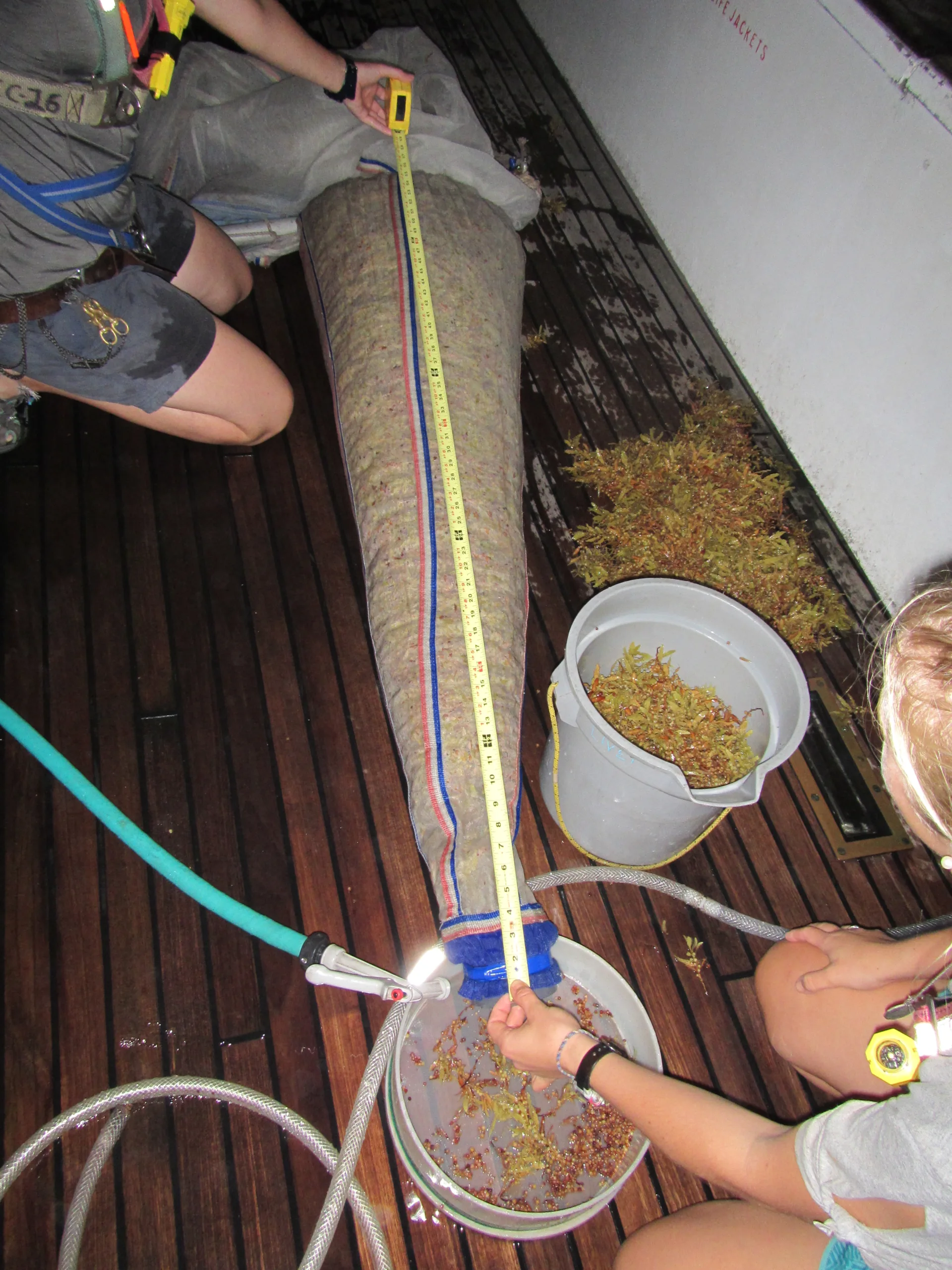
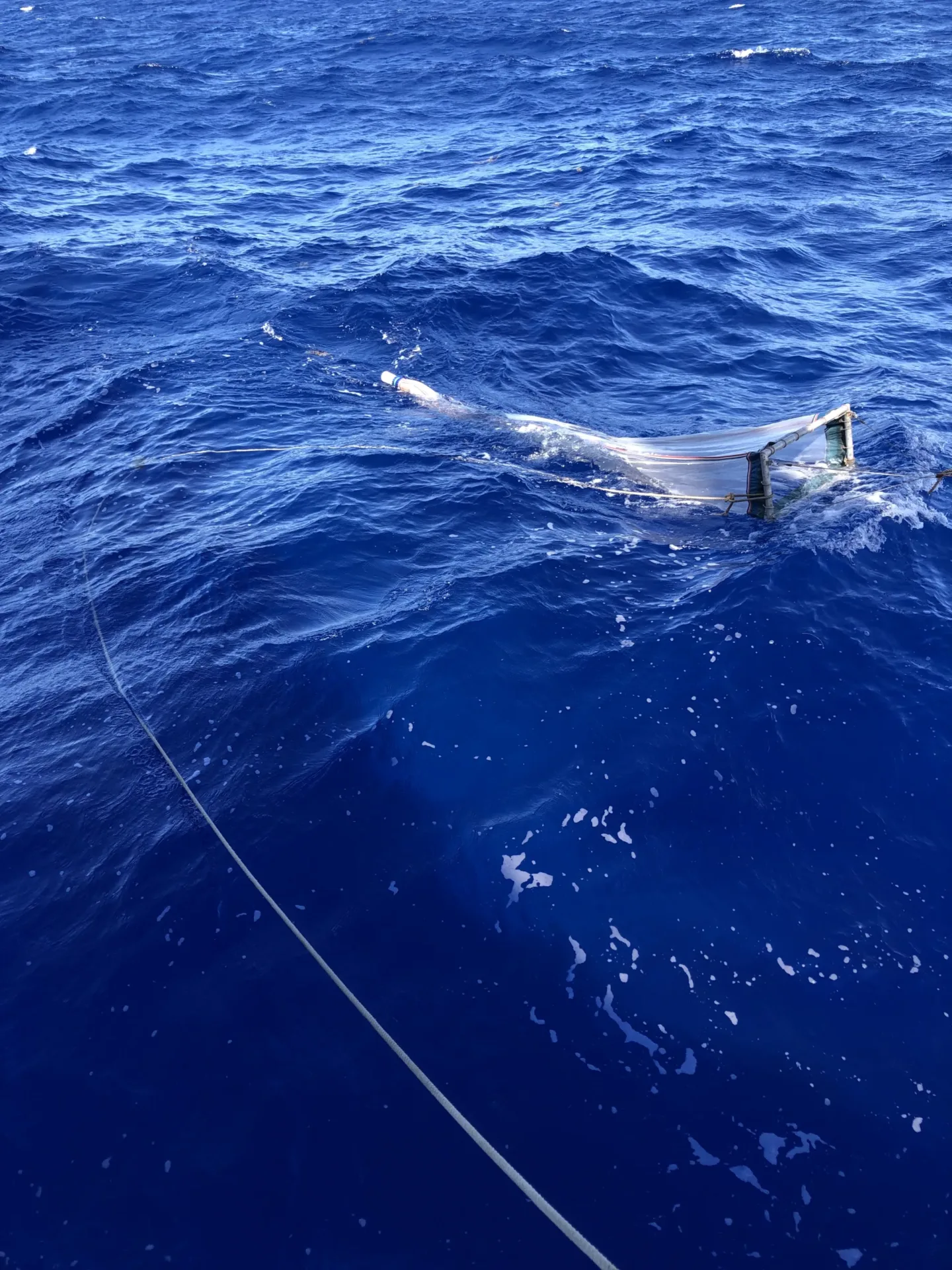
Researchers from Sea Education Association, the University of South Florida, and Eckerd College, joined together to combine satellite imagery from the University of South Florida (USF) with SEA’s multi-decade record of Sargassum collected through neuston tows aboard SEA’s SSV Corwith Cramer. The paper’s results highlight the value of research partnerships like this; while each dataset offers only part of the picture on its own, together they provide a far more accurate understanding of change within the Atlantic basin.
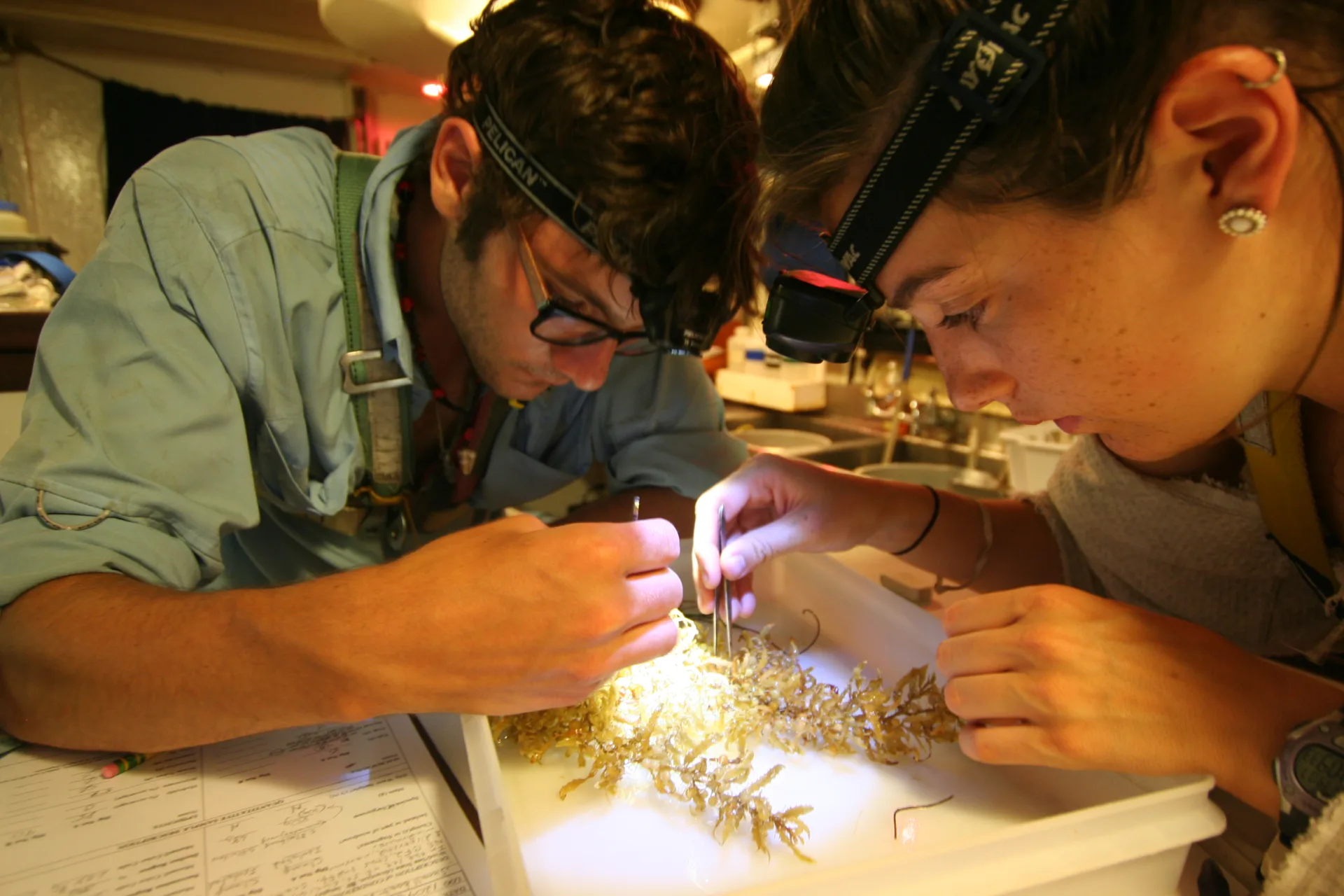
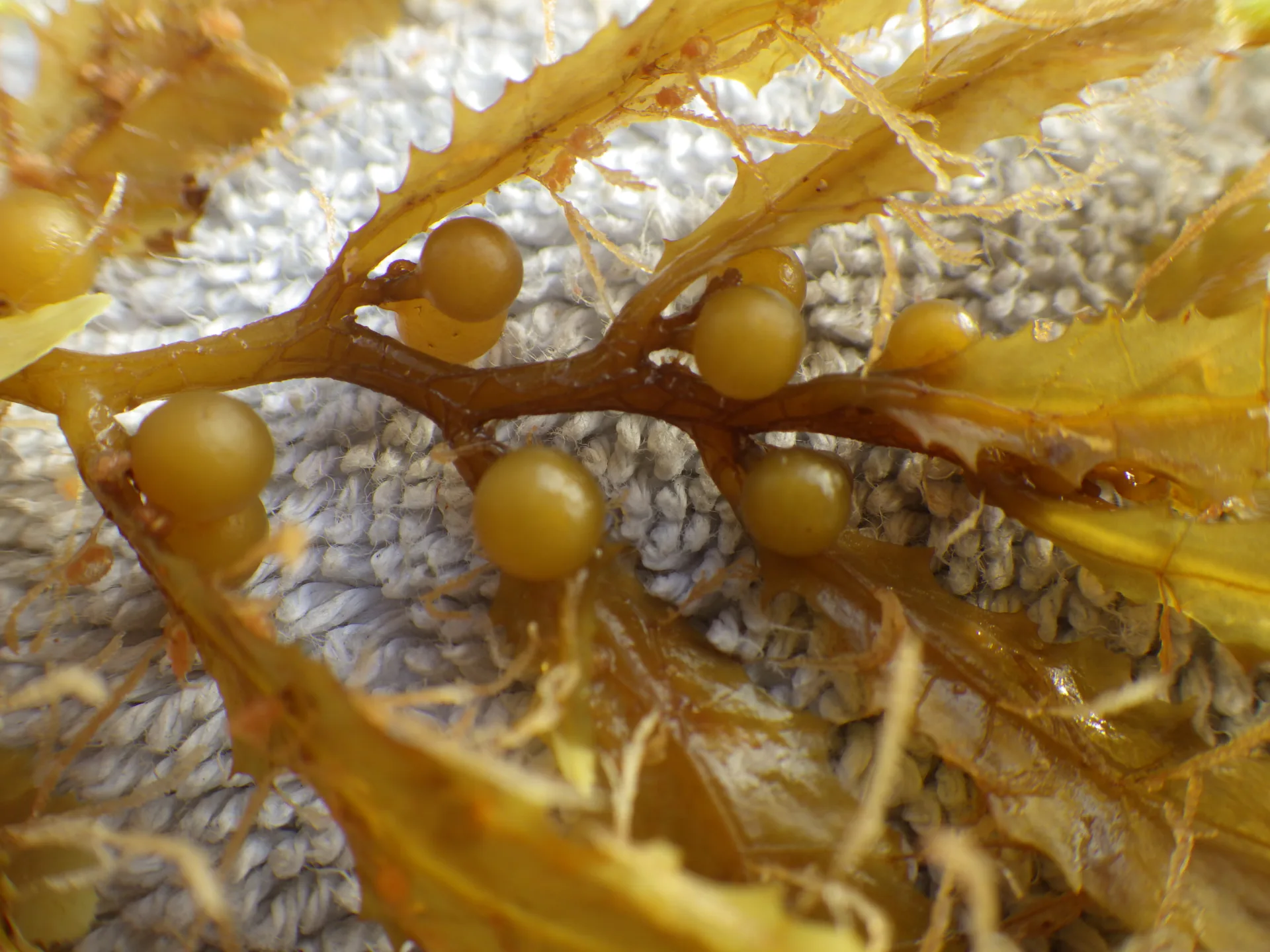
SEA’s dataset, spanning 1993 to 2025, provided an essential baseline for interpreting the satellite images. While the satellite images allowed researchers to view Sargassum patterns across the entire Atlantic basin, SEA’s shipboard measurements offer critical insight into species composition, biomass, and ecological context that satellites cannot discern.
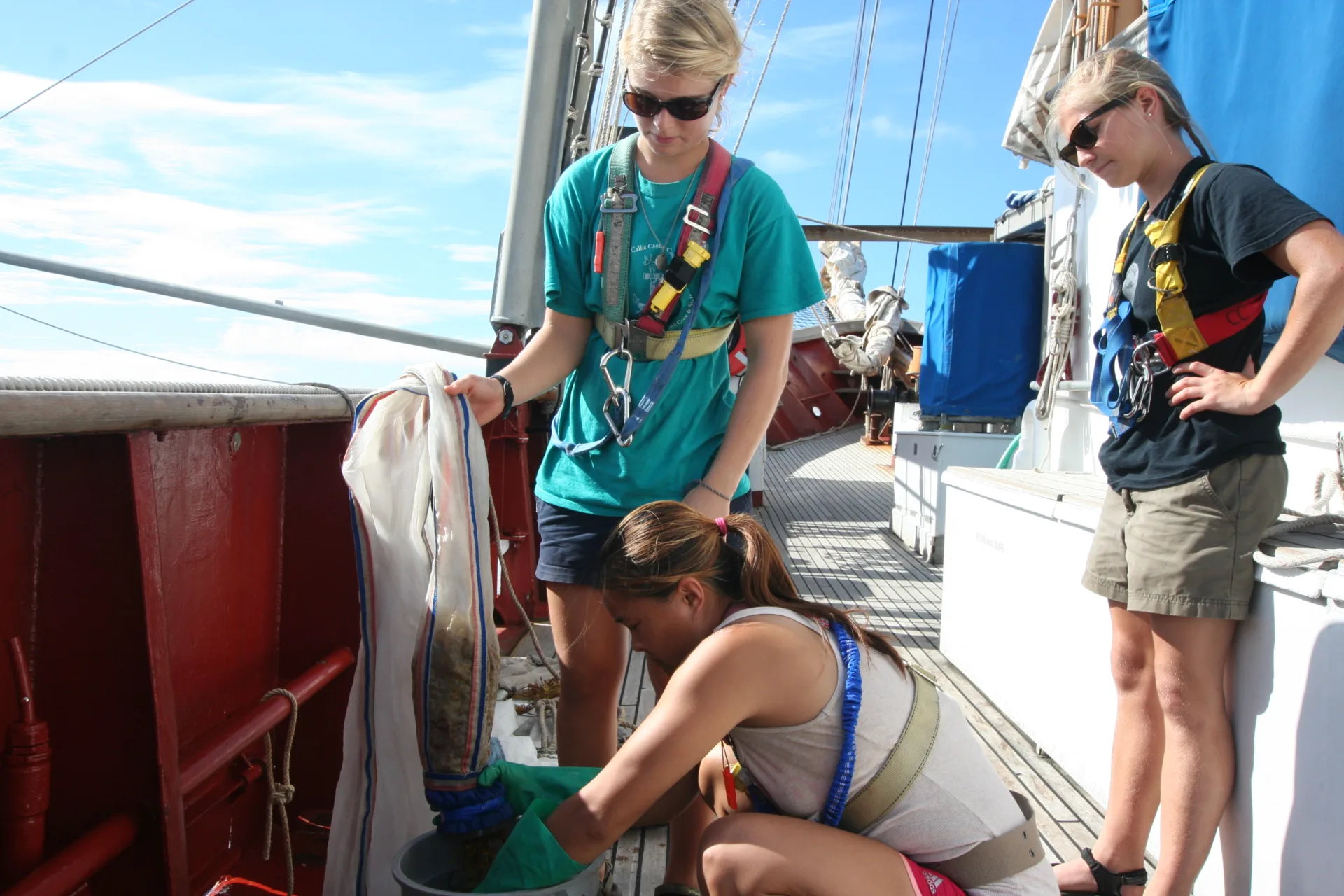
What makes this data set special is that it was built not only by SEA scientists, but by thousands of SEA students who collected (and continue to collect) these samples as part of their academic programs. SEA researchers and students were gathering the data on Sargassum long before the current sargassum boom drew global attention.
SEA Chief Scientist Dr. Deb Goodwin, co-author of the study, notes that this continuity is part of what makes the dataset so powerful. “Regardless of their program focus or voyage duration, every SEA student conducted neuston tows and recorded the collected zooplankton, floating plastic, and Sargassum,” she explains. “Together, they built an unparalleled dataset of field observations, one that we are only beginning to explore.”
The importance of this long-term work is echoed by co-author, Dr. Amy Siuda, Professor of Marine Science at Eckerd College and former SEA Chief Scientist, who helped collect some of the earliest samples as a SEA student (C-142). “To see that work now contributing to research of this scale is profoundly meaningful,” she reflects. “In the moment, long-term monitoring is not always appreciated, but it becomes vital when we’re trying to understand rapid and unprecedented environmental change.”
Co-author and SEA Professor of Oceanography Jeff Schell notes that this work was made possible in part by the support of the Doherty Foundation. During his tenure as the Doherty Chair of Ocean Studies (2022-2024), Schell explains that, “The final piece of the puzzle was the realization that not all Sargassum is the same.” Thanks to experimental work supported by the Doherty Foundation, Schell and his collaborators Drs Amy Siuda and Deb Goodwin determined that each type of Sargassum has different temperature and salinity tolerances.
These discoveries helped answer the fundamental question- why was Sargassum blooming in some areas of the North Atlantic and not others? Schell continued, “It appears that changes in ocean temperatures across the tropical Atlantic, the Gulf of Mexico, and Sargasso Sea; combined with Sargassum-specific temperature tolerances, was the solution to this complex ocean phenomenon.” He emphasizes that sustained investment from organizations like the Doherty Foundation is essential in not only advancing long-term research, but also fueling the collaborations that lead to discoveries such as this one.
About SEA
Sea Education Association (SEA) is an internationally recognized leader in ocean education, located in Woods Hole, Massachusetts. SEA provides undergraduate, gap, and high school students the opportunity to study ocean sciences and blue humanities through immersive experiences in Woods Hole, aboard one of SEA’s tall ships, and within coastal communities around the world. For more information about SEA’s programs and impact, please visit www.sea.edu.
Media Contact: Kayla Sheehan
Sea Education Association
508-444-1938