News
Historical Logbooks and a Red Moonrise
Wednesday June 10, 2026
SEA home campus
Woods Hole, MA
1040 ET
Students are working hard today on their final assignments–including their story for SEA Writer magazine, their journal responses for Marine Environmental History class, and practicing their seminar presentation. Camryn’s interview with fellow-student Ursula follows:
Hello, what’s your name and where are you from?
My name is Ursula, and I’m from Rockford, Illinois. I go to school at Northern Michigan University and I’m studying Environmental Studies and Sustainability with a GIS certificate. I originally saw an ad for SEA on Instagram, and I thought that the program looked really cool. So I ended up doing some research on it. I’m not studying anything specific to marine biology or anything like that, but I wanted to expand kind of the environmental sustainability major that I was studying and kind of explore more of the marine oceanography aspect of that. I thought that a whale conservation program would be really cool.
We just got off the Corwith Cramer about two days ago. Any special moments or stories?
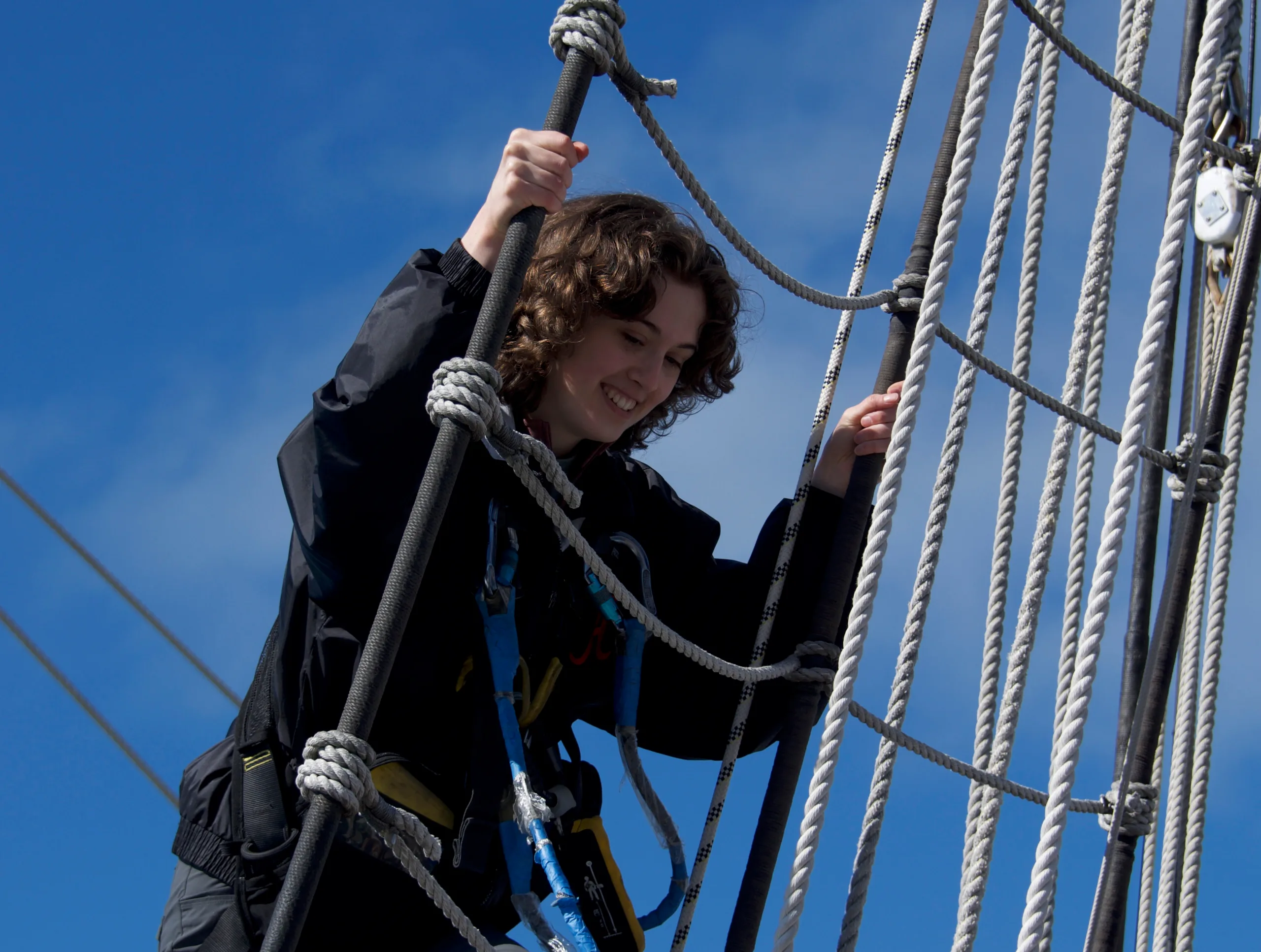
Being on the boat was really cool. It was definitely a new experience. A lot of learning curves the first couple days. For a special moment, I really enjoyed being on lookout. I remember one night I was on lookout and the sun was setting and the moon–like the sun set while I was on lookout and then the moon started rising. It was a red moon over to the right. I just remember that being really cool. It’s like, ‘Wow, I’m in the middle of the ocean.’
Any lessons or classes that have stood out to you about whaling and whale conservation?
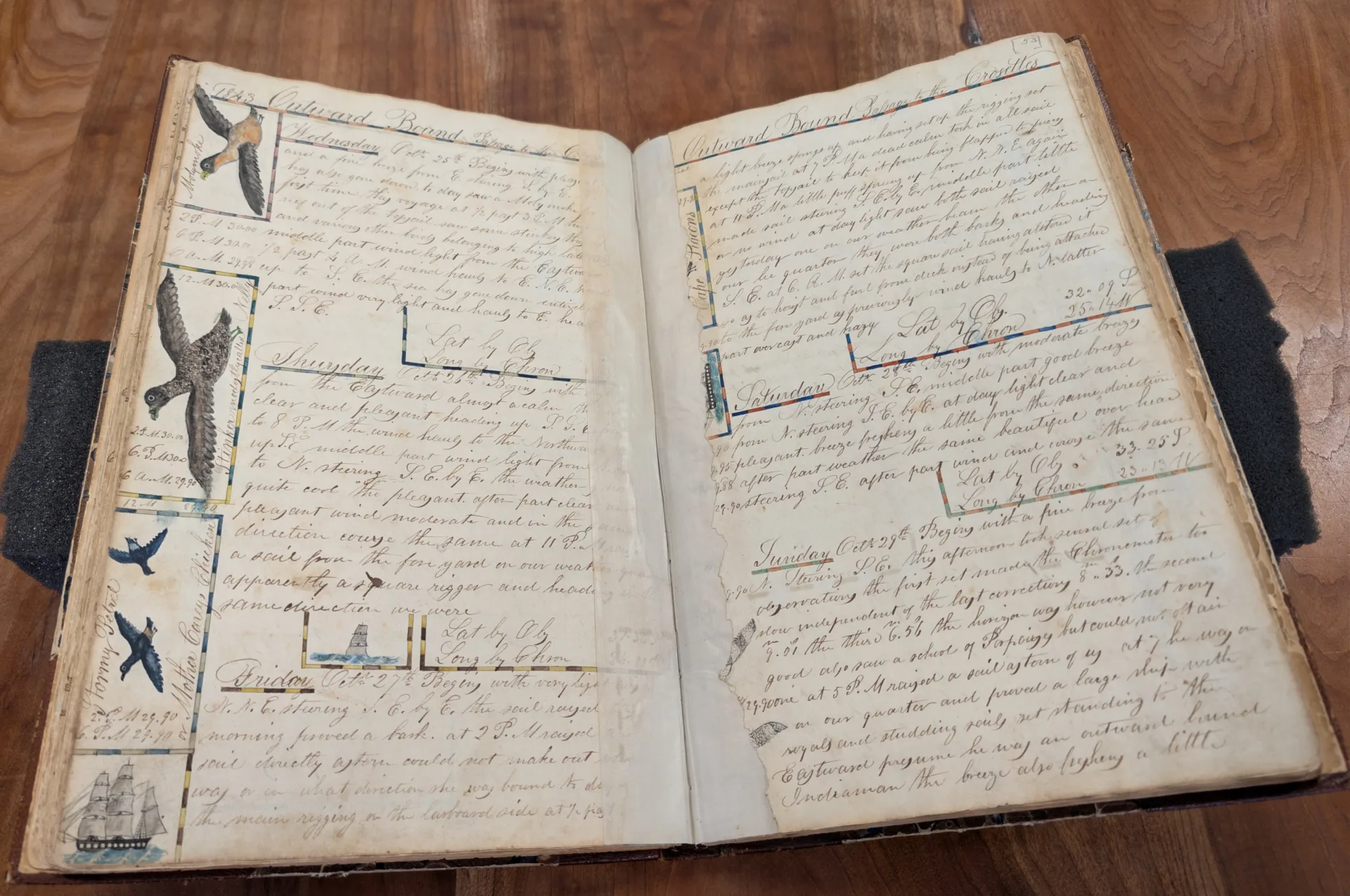
Something that I thought was really cool that we learned about was we went to the New Bedford Whaling Museum, and we got to look at old whaling log books. I thought that was really cool, because it was kind of similar to what we were doing on the boat, where we would have to record weather observations and conduct boat checks, like weather every hour. And that was basically what these old whaling captains were doing as well. They were recording weather and whether or not they saw a whale. We learned about some researchers who were going through these old log books and trying to gather weather data and compare past to present, how that’s changed using these log books. I’m also actually writing my SEA Writer magazine article on the history of oceanography and the use of those log books in cataloging oceanography data, which is pretty cool.
What’s next for us and what are you most excited about?
Well we have our article due tomorrow night and our journal prompts so I will probably be working on that and our presentation, our symposium on Thursday, so I’ll probably be working on my article today and tomorrow, and then getting ready for the presentation. But I’m hoping to go to the beach a couple more times: see the sunset.