
News
An Adventure to Waquoit Bay
Thursday, 2 July 2026
SEA Campus, Falmouth, MA
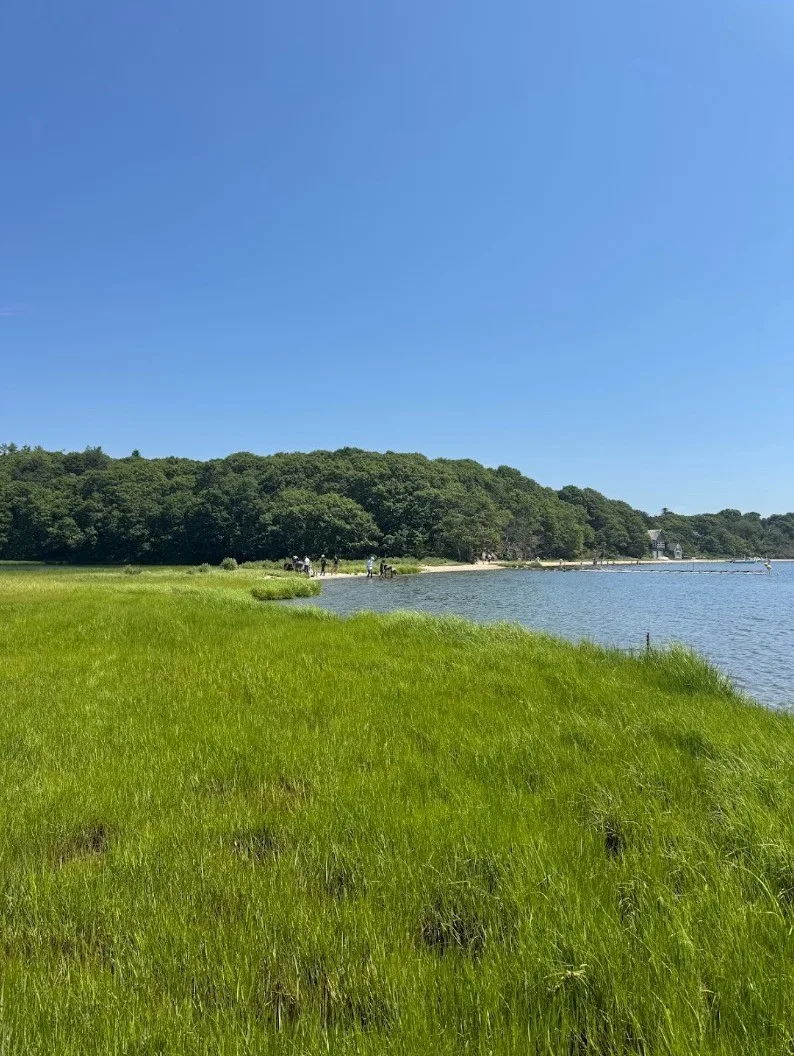
Today, the oceanography students began their day with an exciting trip to the Waquoit Bay National Estuarine Research Reserve (WBNERR).
We learned about the reserve’s geography and its watershed, which is much larger than the reserve itself. The septic systems of houses in the watershed leech nitrogen into the soil, which flows into Waquoit Bay causing periodic algal blooms and eelgrass bed decline. We also learned that WBNERR is one of the most studied estuary systems in the world, with lots of scientists working to develop an understanding of estuarine habitats and our impact on them.
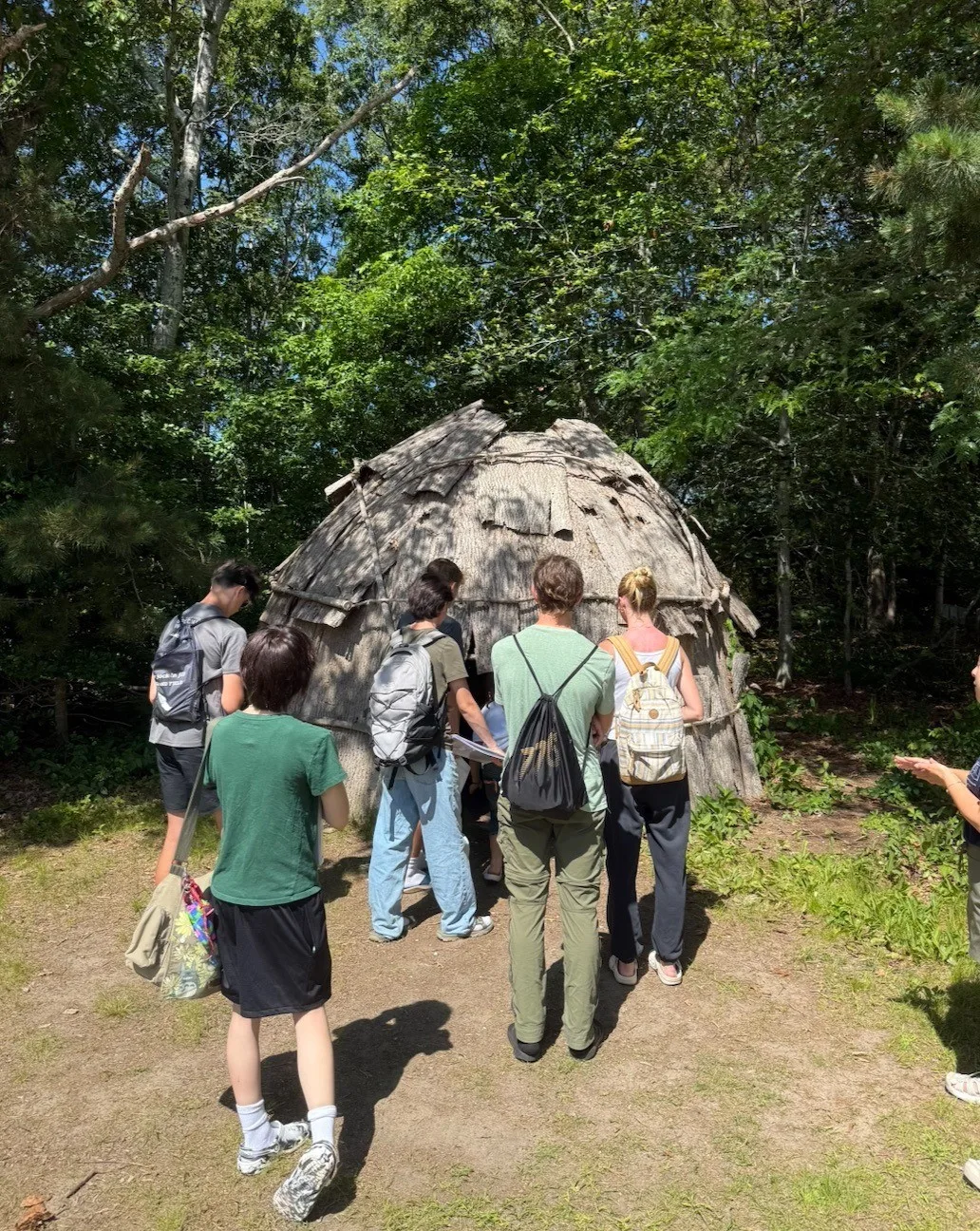
Our tour of the headquarters finished with watching ospreys and looking at a dugout canoe and a wetu (a seasonal house) built by the Mashpee Wampanoag.
On the marsh, our groups examined three transects to measure stem height and count crab burrows using quadrats (squares that we placed down to collect data in a one square meter area). We also collected sediment samples to analyze back on campus.
Afterwards, we headed back to campus for lunch.
In the afternoon, we had guest speaker Emily Burdige talk about her research looking into how zooplankton respond to differing levels of carbon dioxide and trace metals. I found it interesting how trace minerals like iron are necessary for some proteins to transport carbon into the cell.
Then, we learned about the nutrient cycle in the ocean. The nutrients are low at the surface because phytoplankton use them, and then they die, bringing the nutrients with them as they sink. As they sink, they decompose and release the nutrients into the subsurface waters.
To wrap up the day, we had some delicious baked ziti before working on our study guides for the week.
Lucien, Pre-College: Oceanography