
News
Flying Fish
Friday, 20 November 2026
Noon Position: 17° 52.750’ N x 064° 49.339’ W
Ship Heading: 225°
Ship Speed: 7.1 kts
Log: 29.3 nm
Weather / Wind / Sail Plan: Four Lowers (Mains’l, Main stays’l, Fore stays’l, Jib) and the Jib tops’l on a port tack. Wind ESE Beaufort 4, mostly cloudy (and dramatic) skies, but still extremely sunny.
Location: Approaching Frederiksted, St. Croix from the northeast.
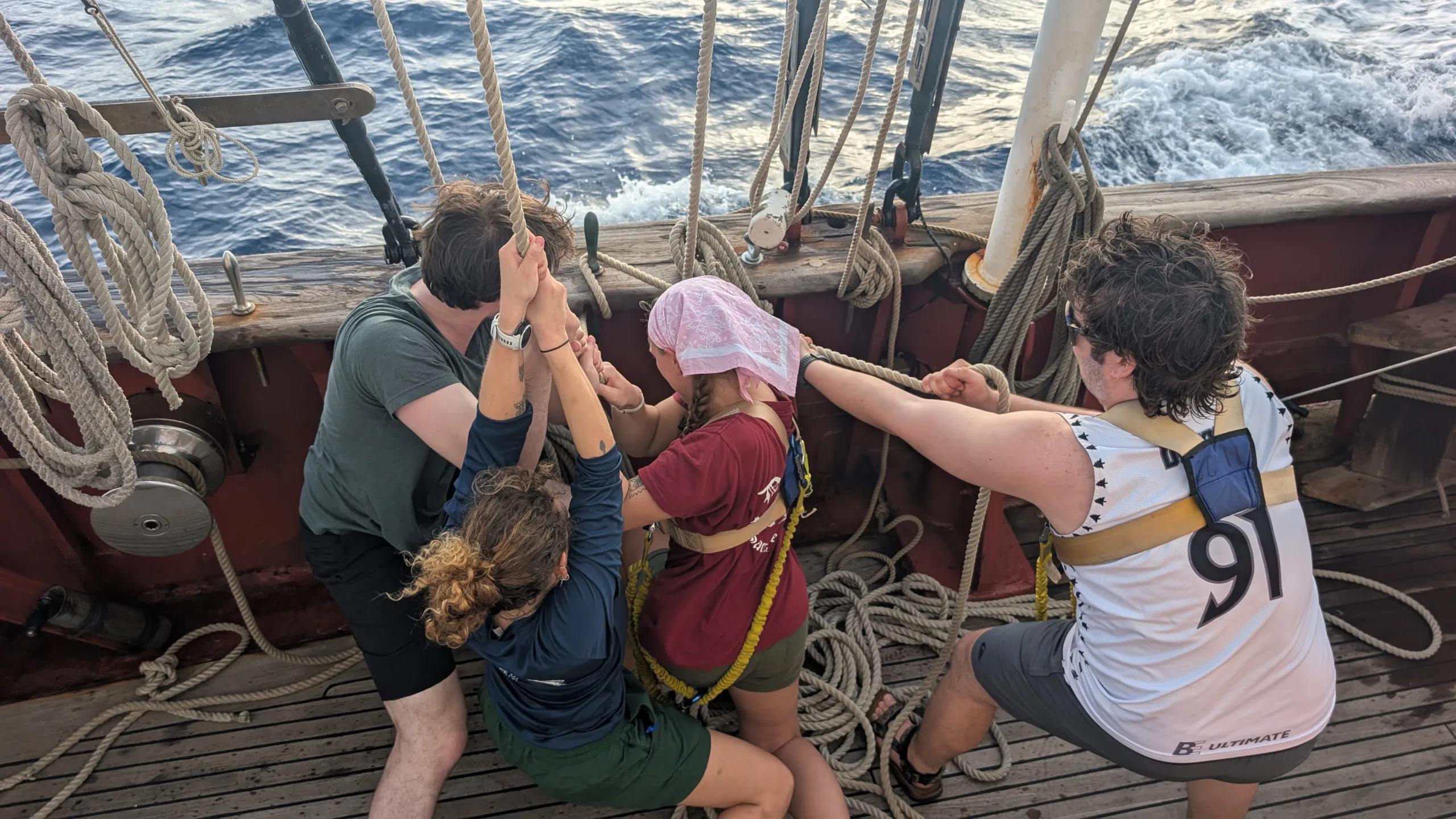
Today was quite the day for the Cramer! We set sail early this morning (0700), sailed to our drop-off point, and turned around and headed to Frederiksted, where we finally anchored at 1420. I was part of C watch, and we had one 2 hour watch today, but I was on deck helping with things pretty much the whole time! One of my favorite things to see were the flying fish, it’s absolutely incredible to see them fly out of the water and to see the birds swoop in to catch them! I think I relate a lot to the fish, taking leaps out of its natural habitat to explore realms generally untouched by fish. Just like how the fish leave the water to explore the air, we leave the land to explore the water. I think we’re actually quite similar, although the chance of being eaten by birds is much lower for us (but, perhaps, not zero).
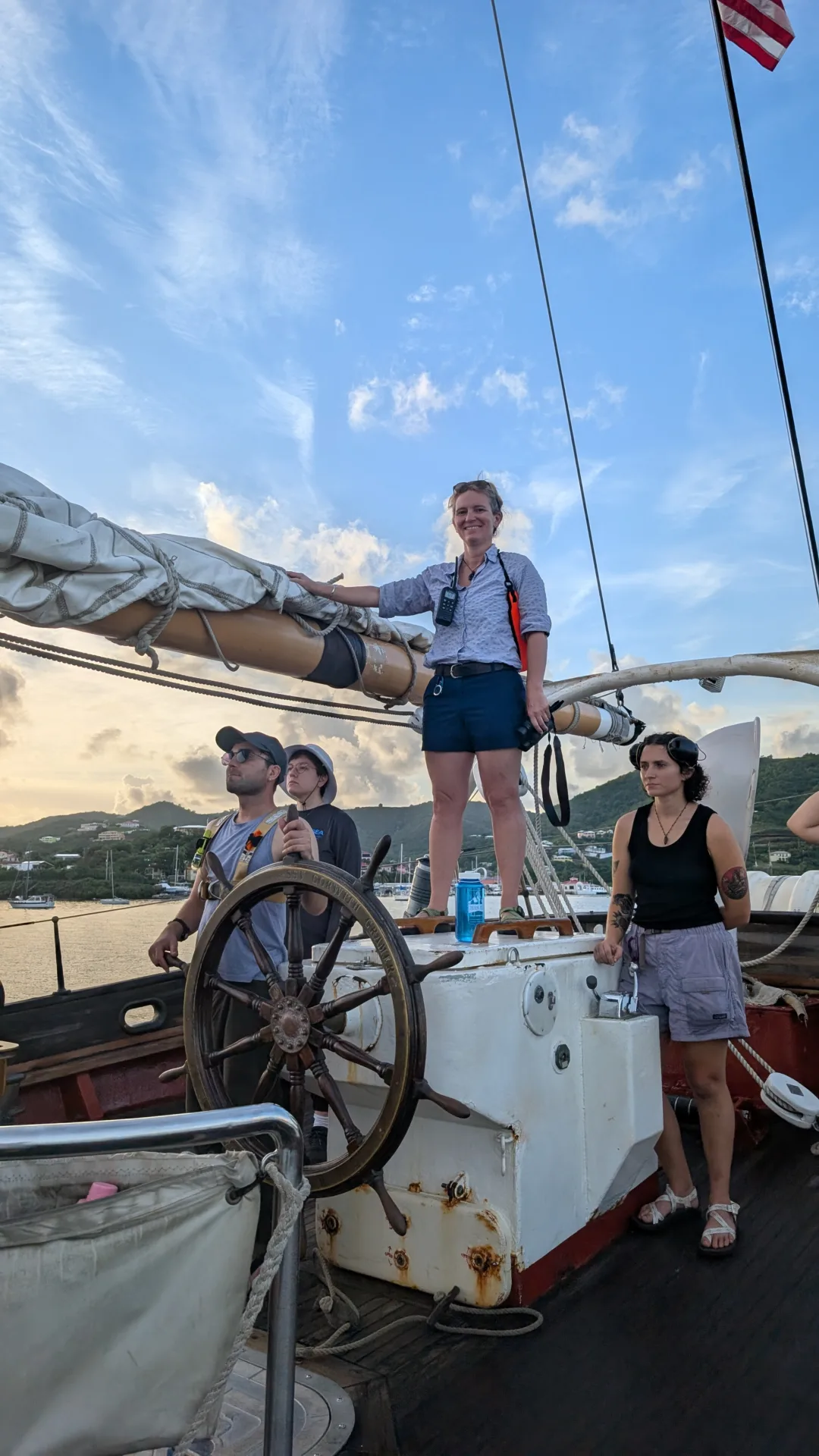
Today was a big day for both learning new things and reinforcing knowledge from shore. Implementation of what we learned has proved itself (at least for me) to be more difficult than imagined, especially while under the strain of living in a new environment. Despite all the new information, we still managed to have fun! While anchored, we took a dip in the waters off of Frederiksted. The water was up to 40ft deep, but it was so clear you could still see the reef at the bottom! I spent a lot of time watching it and looking for interesting things, and saw a lot of cool fish and some interesting looking sponges. Then, we went ashore in the small boats for a field trip to a local farm that teaches permanence fishing to the students and community in the region. They showed us how they farm in a way that does not rely on machinery or chemicals, and uses different ecological niches to fill in the gaps of others. For example, having plants grow in water with fish in it. The fish eat the algae and bugs in the water, while fertilizing the plants. I think it was somewhat ironically similar to boat life – everyone’s differences fills in the gaps for each other’s experiences. It’s a framework of community based on teamwork and permanence, which is extremely valuable for us to take back both onto the boat and into our lives going forward.
Jake Warren, C Watch, University of Maine, Machias