
Climate Change & Coastal Resilience: Caribbean
Caribbean coastal communities face intensifying storms, rising seas, and acidifying waters—raising urgent questions about climate justice and public health. Spend 12 weeks examining how climate change impacts island societies and what strategies actually work to build resilience, combining classroom work in Woods Hole with research and community engagement in St. Croix, Dominica, and St. Kitts. Live aboard SSV Corwith Cramer as working crew, deploying oceanographic equipment between islands while meeting with local experts and community members confronting these challenges firsthand.
Program Cost: $34,000
Research Themes

Learning Objectives
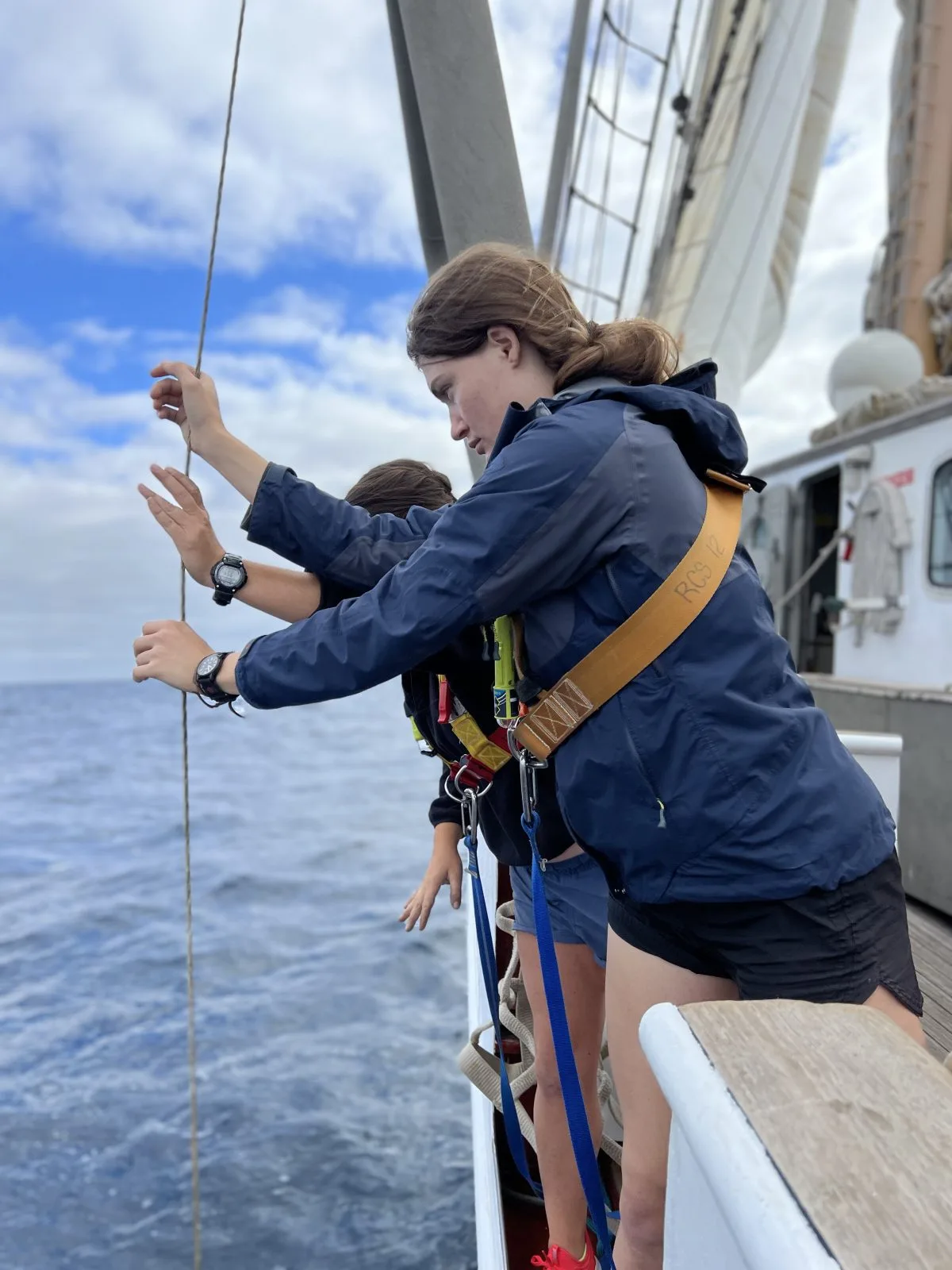
Measure Ocean Changes Driving Climate Impacts
Deploy oceanographic equipment while sailing between islands to collect data on ocean warming, acidification, and circulation patterns. Contribute measurements to long-term datasets that track how the Caribbean is changing. Understand the physical science behind rising sea levels, increased storm intensity, and ecosystem disruption.

Engage with Frontline Communities
Meet with residents, local officials, and community leaders in Dominica and St. Kitts to understand how climate change affects daily life—from hurricane recovery to water security to economic impacts on fishing and tourism. Learn what resilience strategies communities are implementing and what barriers they face.

Analyze Climate Justice and Policy Solutions
Examine who bears the costs of climate change and who has resources to adapt. Study case studies spanning large urban areas to small island villages. Investigate how science, policy, economics, and social justice intersect in climate resilience planning. Research a specific climate-related issue and propose solutions based on your field observations.
Course Descriptions & Syllabi
Students earn 18 semester hour credits from University of Minnesota upon successful completion of the program. To qualify as a gap student, participants must have been accepted into college and deferred acceptance or previously earned college credit.
Advanced Ocean Policy Research – CCCR400 level, 4 credits, SEA 3201
Advanced policy research focusing on a topic of current importance (may include fisheries, biodiversity, marine spatial planning, and cultural heritage). Emphasis on theoretical concepts, research methods, and communication skills. Requires critical review paper, original research, final report and presentation.
The Ocean and Global Change200 level, 4 credits, SEA 3026
Ocean ecosystem change in the anthropocene: warming, acidification, fisheries depletion, and pollution. Review principles of circulation, seawater chemistry, nutrient dynamics, and biological production to understand causes and consequences of change. Conduct field measurements for contribution to time-series datasets.
Leadership in a Dynamic Environment300 level, 3 credits, SEA 3029
Be an effective leader while leveraging the individual strengths of a team. Use leadership theory and case studies to understand how decisions affect outcomes. Participate as an active member of a ship’s crew, progressively assuming full leadership roles.
Marine Environmental History – CCCR300 level, 4 credits, SEA 3023
Employ methods and sources of historians and social scientists. Examine the role of human societies in coastal and open ocean environmental change. Issues include resource conservation, overfishing, pollution, invasive species, and climate change.
Choice of:
Advanced Research Topics400 level, 4 credits
Advanced humanities and social science seminar focusing on contemporary climate-related issues including urban/coastal resilience, poverty and justice, clean energy, human displacement, and national security. Emphasizes case study analysis and research methods. Requires data collection, research paper and written proposal for publication or distribution of results.
Practical Oceanographic Research200 level, 4 credits
Introduction to oceanographic research. Design a collaborative, hypothesis-driven project following the scientific process. Collect original data. Conduct analysis and interpretation, then prepare a written report and oral presentation.
Directed Oceanographic Research300 level, 4 credits
Two lab science courses (one at the 200-level or higher) or consent of instructor.
Design and conduct original oceanographic research. Collect data and analyze samples. Compile results in peer-reviewed manuscript format and share during oral or poster presentation session. Emphasis on development of research skills and written/oral communication abilities.
Apply
Upcoming Sessions
Program Dates
Sep 28, 2026 - Dec 20, 2026
Cost & payment
Program Cost: $34,000
APPLICATION PROCESS
- Complete your application
- Gather one reference and an unofficial transcript
- Coordinate with your university
- Obtain medical clearance
- Apply for a passport
- Speak with our team