News
“Yes, Today is Big.”
Friday June 12th, 2026
SEA campus
Woods Hole, MA
0900
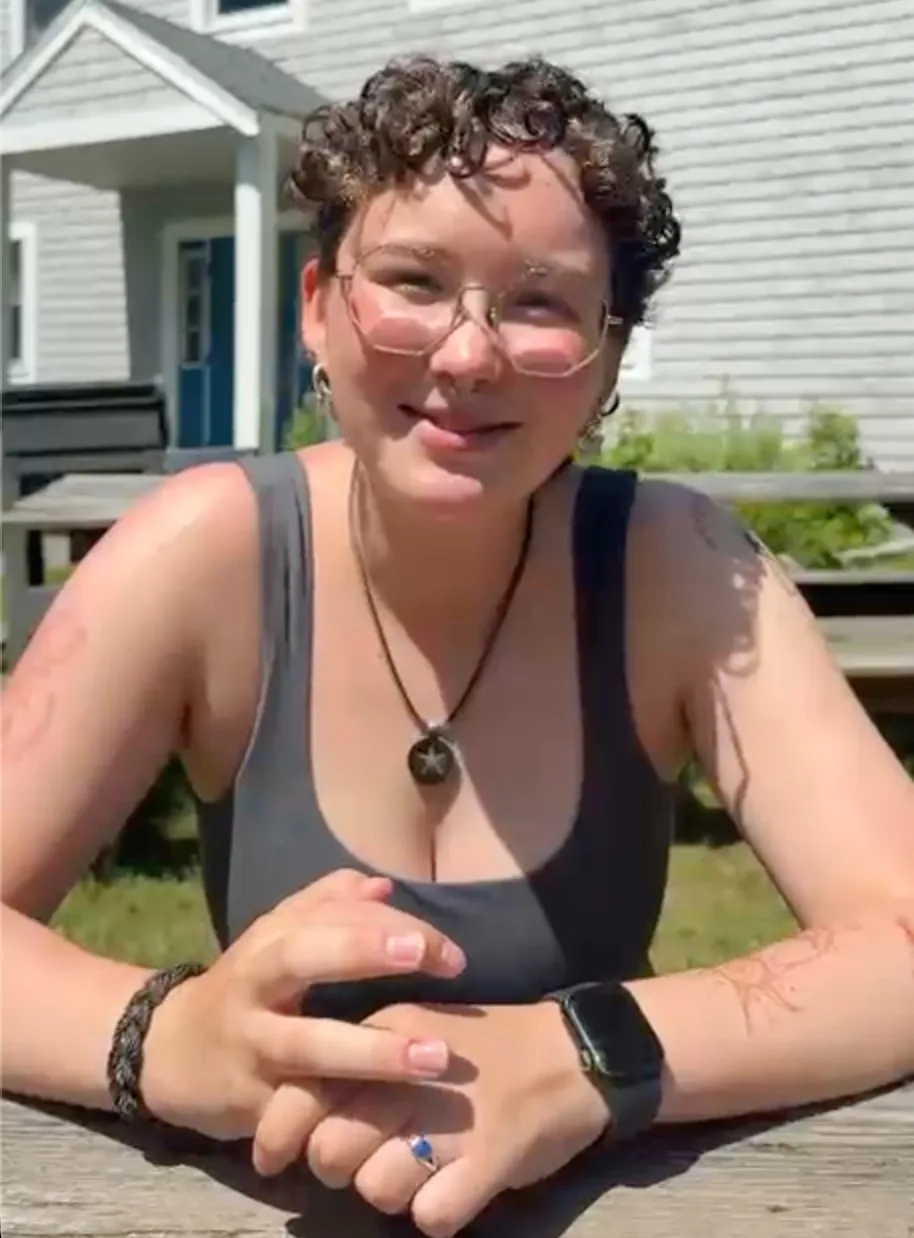
Here is Camryn’s interview with fellow student Georgia Green on symposium day!
Hello, what’s your name and where are you from?
My name is Georgia. I grew up in New Jersey. I now live in Portland, Maine, and I go to school at Bates College up in Lewiston, Maine. I have a major in Anthropology, a minor in Asian Studies, and a concentration in Math.
That’s a very interdisciplinary background. What drew you to this whaling program specifically?
I kind of knew about SEA beforehand, and I’d been looking at programs. I wasn’t sure I wanted to commit to a whole semester program, so I was looking at the summer programs. This one came up, and it looked really interdisciplinary, which I felt was better for me because I don’t have a very hard STEM background. I’ve spent a lot of time around the ocean and sailing. It seemed like a really good way to connect a lot of my interests of marine science, anthropology, and then also sailing.
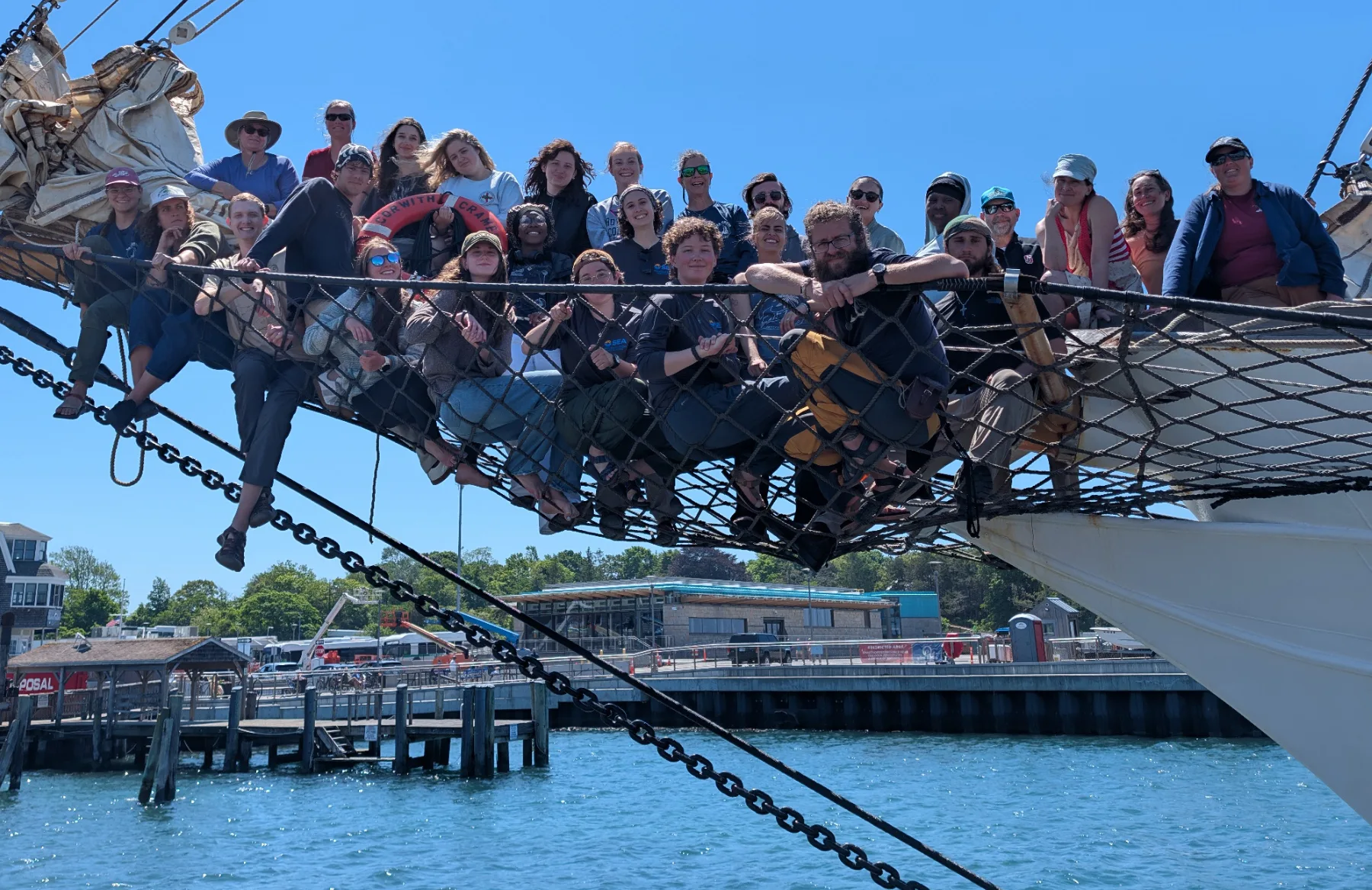
We got off the Corwith Cramer about three days ago-ish. Do you have any specific moments or stories that really stuck out to you?
Yeah, so I grew up sailing. I started sailing when I was eight. Now I sail at college, and it was really exciting to come on a bigger boat. I’ve never sailed a boat the size of the Cramer before. I think probably my one moment that was really striking to me was our first day of sailing when we were really sailing. We didn’t have the engine on. And we were just going. It felt so freeing almost. It felt so exciting to just be out there and to be on the water in a very similar way to what I’ve experienced. But also so different, in such a bigger fashion, especially doing that work and having to really communicate with everyone else on the ship to make the boat sail in the way that we wanted it to. I think that was really special.
Among all of our lectures about whaling conservation, whaling history, are there any topics or lessons that have stood out to you or meant the most to you?
Yeah, I mean, I think that the lectures about Indigenous whaling were very interesting. And how subsistence whaling is still practiced, and what that looked like before New England whaling became a really big economy. And what that looks like now. And also, partly because I don’t have a really STEM background, I thought the lectures we had about phytoplankton, or zooplankton, or stable isotope analysis, I thought those were really interesting because there’s things that I really don’t know about. I probably won’t learn about [these topics] in my academic career at Bates, because those aren’t classes that I’ll take. But I really thought those lectures were interesting because it opened up such a different perspective for me.
So today is our second to last day on campus. We’re moving out tomorrow. What does today look like?
Yes, today is big. Today is our symposium. So this morning we had a little alumni chat where we talked to Maddy, the head of alumni relations here at SEA. She kind of talked to us about what it means to be alums of SEA, and you know, kind of what resources that brings, which was really exciting to hear about.
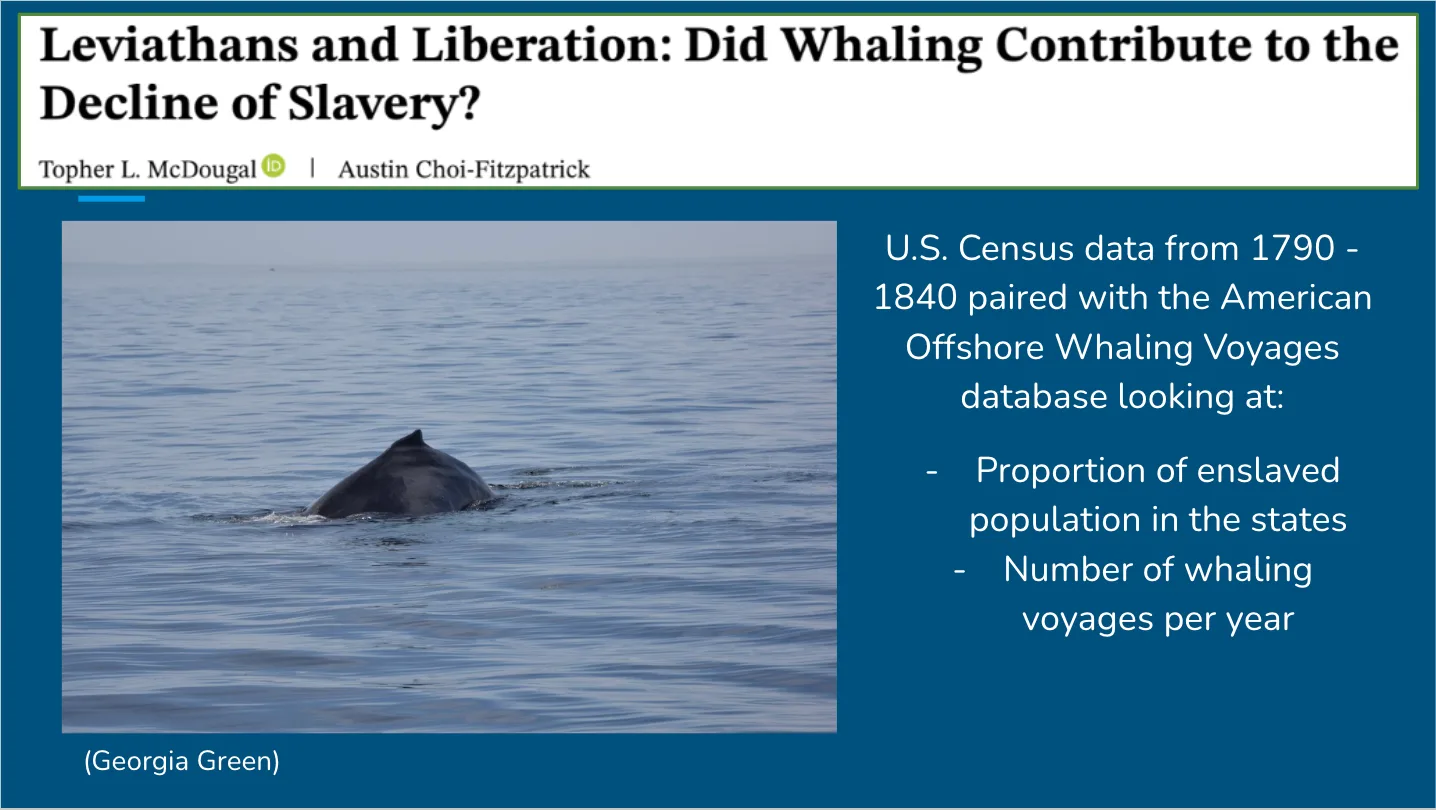
And then this afternoon we have our final symposium where we’re each going to present about the article topics that we’ve been working on for the entire time we’ve been here. Mine is about the connection between the New England whaling economy and the decline of American slavery around the turn of the 1800s. And so we’re each going to go through and present. We have the whole crew of the ship coming to watch. And some people’s parents are coming.
That sounds so interesting. I cannot wait to hear more about it at the symposium. Thank you so much, Georgia!
Thank you, Camryn!