
News
Ethical Science and Photosynthesis
Tuesday, 30 June 2026
SEA Campus, Falmouth, Massachusetts
We started today with an amazing lecture on collaboration and co-production of knowledge. We learned how to conduct ethical research across different cultures. When working in areas we are unfamiliar with (for us, we could think of this concept as Woods Hole, Massachusetts, the United States, etc.) it is important to work with local and indigenous peoples, not just parachute into their communities. Local knowledge passed down over generations can be incredibly helpful and should always be considered when performing science in the area, and this can open up a world of unknown information and unique traditions and perspectives. The best research is ethical research, and comes with understanding, respect, communication, and sharing of resources and knowledge.
I really love the idea of being a cultural liaison between scientists and local peoples. I believe in the formative exposure to worlds and cultures beyond one’s own and I would totally enjoy a career where I can talk with many different people from all walks of life.
After our lecture, we took a quick sun break outside before learning about the primary production methods of marine algae, which is photosynthesis. In the deep ocean different lengths of light waves reach different depths of the ocean. The pigment molecules in algae are designed to take in the light most available to them; chlorophyll is used to process green light waves, carotenoids for red, orange, and yellow, as well as phycobiliproteins for red. These pigment molecules then convert free-floating carbon dioxide and water molecules into glucose and oxygen. Respiration then takes this glucose and oxygen back into water and carbon dioxide. Net primary production is the difference of the gross primary production carried out by photosynthesis minus the loss taken by respiration.
NPP = GPP – R
Net primary production = gross primary production – respiration
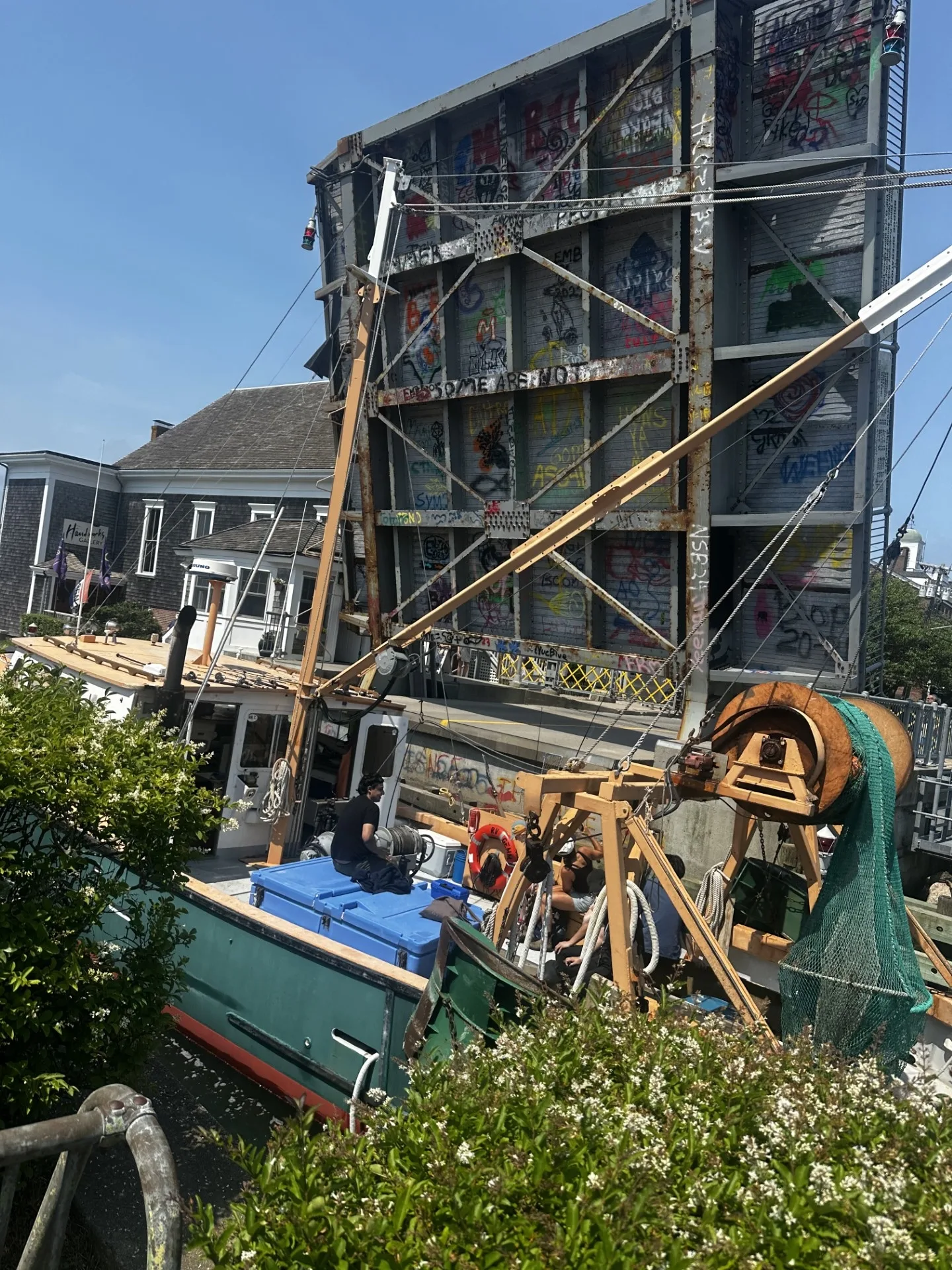
We briefly talked about cyanobacteria before heading out to Eel Pond to collect water quality measurements, plankton tows, and weather and GPS data. On arrival, we got to see several research vessels coming in and took some pics of the graffiti under the bridge, which was pretty cool 🙂
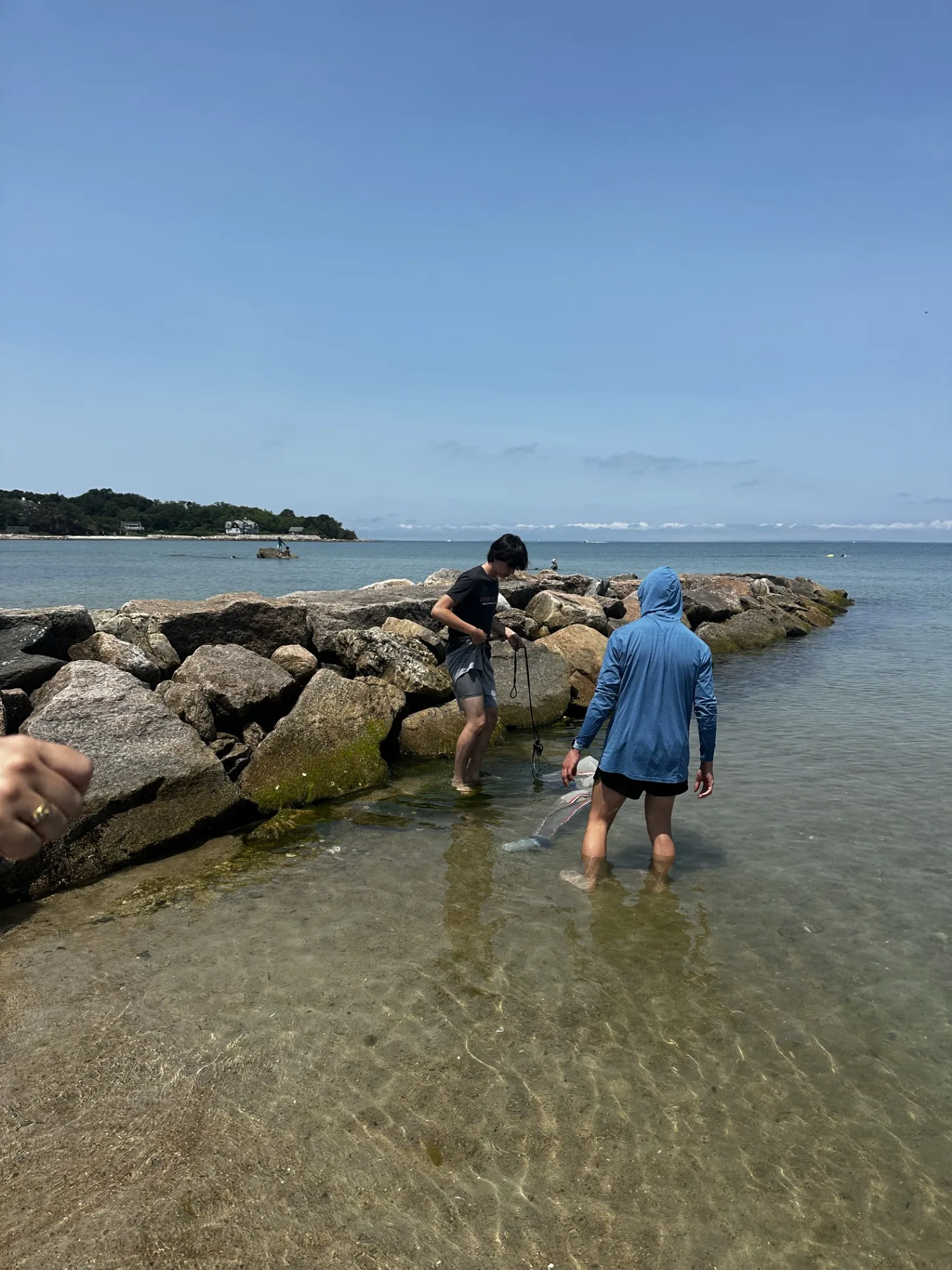
Including Eel Pond, we also visited the beach at Woods Hole Waterfront Park and Stony Beach. Back in the lab, the plankton tows taken at Stony Beach were some of the most difficult to chart due to the heavy amounts of sediment captured by the nets, so all groups pitched to help analyze petri dishes under the microscopes. Although working with the microscopes took a while to do, it was a great lesson in the importance of collaboration and good rapport with fellow scientists. The plankton tows taught us about the diverse biodiversity of the Woods Hole area and emphasized how essential photosynthesizing organisms are to our greater ecosystem.
The day ended back at our cabins with chicken and rice for dinner and some amazing lemonade (in which actually turned out pretty delicious since we followed a recipe this time. . . shout out to Jackson and Alejandro). Baddie Baddie B House also went to Woods Hole for ice cream and candy, and sadly Pie in the Sky ran out of apple pie. We ended the day at the beach watching the sun set on the ocean 🙂
Millie, Pre-College