
News
Exploring the Effects of Seawater Properties: Tried and True
Friday, 17 July 2026
SEA Campus, Woods Hole, Cape Cod, Massachusetts
The focus of today’s academic lecture(s) were the physical properties of seawater, including temperature, salinity, and density. This was highlighted by in-class learning, and demonstrations in our own lab. Class jumped right in, starting with the subject of ocean stratification and the names of the layers in the ocean formed by varying densities. We next learned how water with a higher salinity sinks, and why Antarctic bottom water is more dense, due to the water being cooler and the salinity being significantly higher than the surface water.
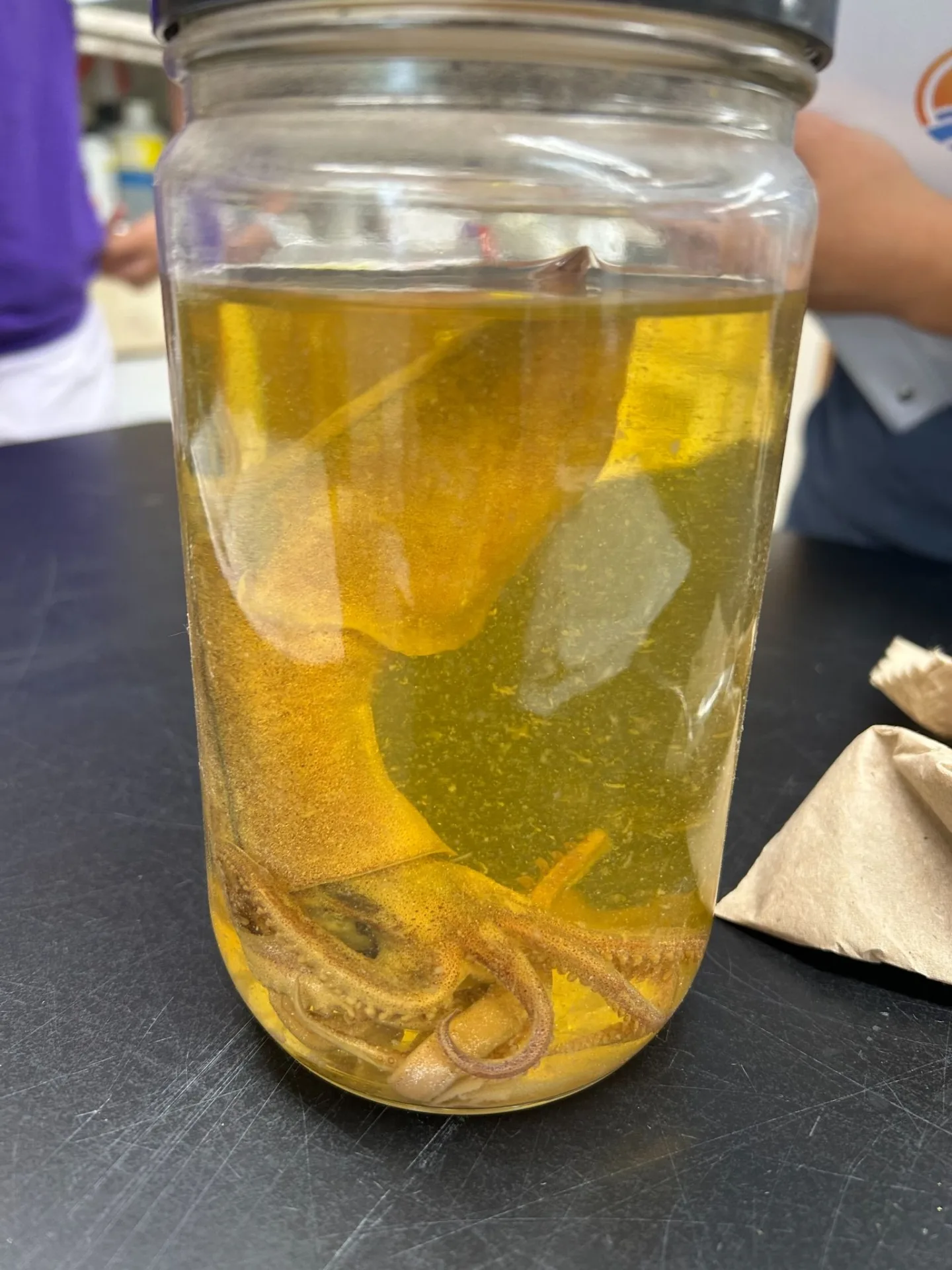
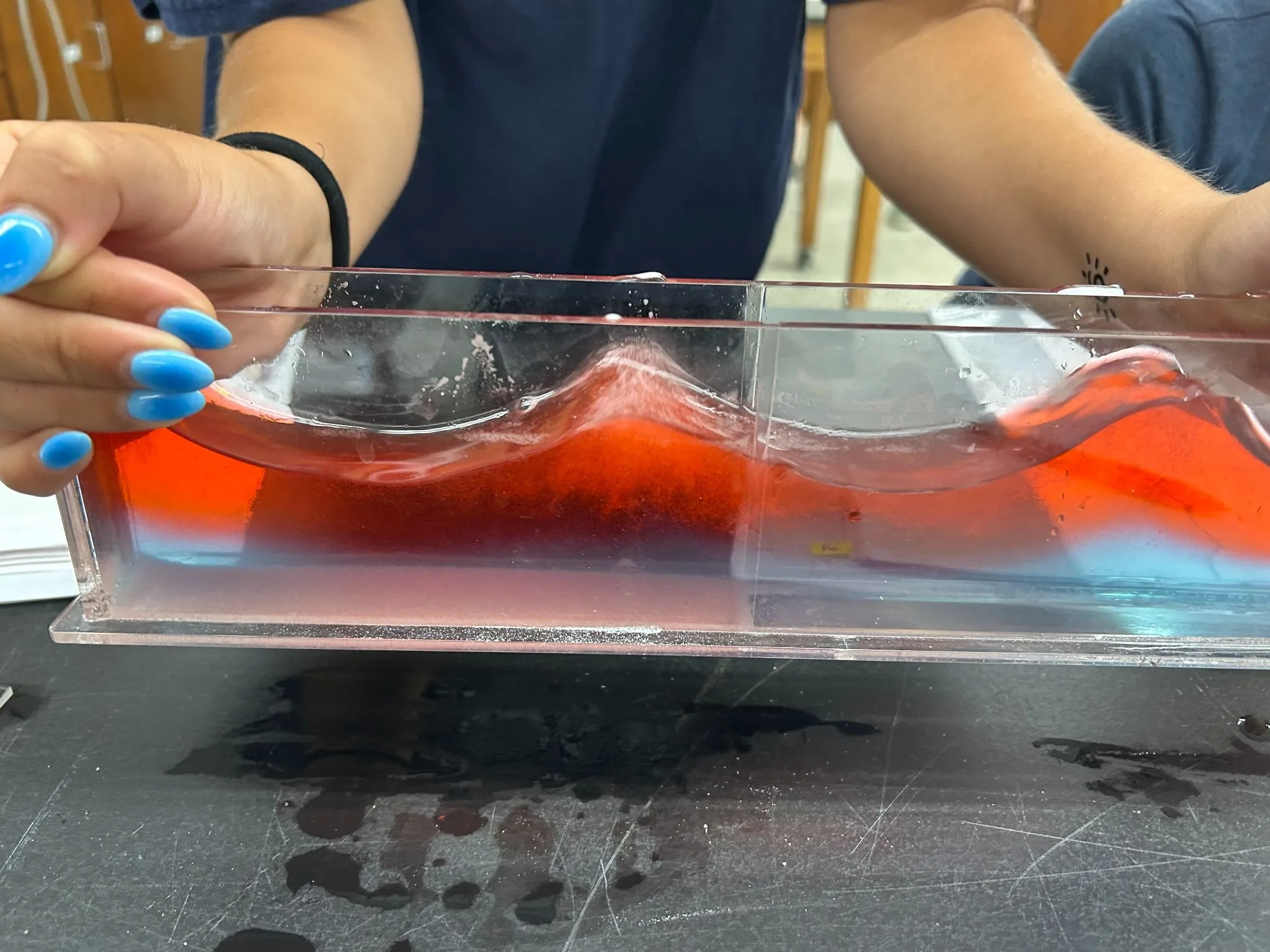
As aforementioned, our lab demonstrations reflected the material taught in class. We conducted two experiments – one with cold and warm water, and the second with salted and unsalted water. In order to differentiate the two waters in each experiment, we used food dye so when we removed the divider between the pair, the separation was clear. After conducting the experiments, the results showed that cold water sinks while warm floats, and the unsalted water floats while the salted sinks. Following this, our class explored the many samples found in the lab from previous years, some even dating back to the 1970s! One sample was a squid whose cause of death was apparently from launching itself onto the deck of a ship and dying. Despite the samples being nasty and hard to look at, being able to explore the lab gave the students an inside look into the world of oceanography – or at least a piece of it.
After time spent working in the lab and looking at specimens was over, the students and faculty returned to the classroom for two presentations given by our own program assistants, Kameran and Marcus who both shared insight into projects they themselves had conducted relating to our studies. Kameran shared his findings related to coral found in Jamaica and the diseases that plague the coral populations, and the reason behind it: human pollution. After a quick lunch break, Marcus finished the class with his presentation concerning the connection between eel grass and oyster farming which he conducted through MBL. Post-presentations, the class was given time to work on our projects before wrapping up and heading back to the cabins. During this project time, my team and I researched papers on our subject, how pH and salinity affect the biodiversity and growth of local plankton populations. We looked deeper into the base of our findings and had time to plan out what we wanted our experiment to look like.
The most interesting part of the academic portion of our day was seeing the projects our PAs (program assistants) conducted because it showed how these subjects and skills we are currently learning can be applied in the real world. Everyone asked questions and participated, and both presenters were able to help better our understanding and teach us about the path they took to be able to work with the organizations and universities that they did. In hearing these paths, it helped better my understanding of how to be able to conduct experiments and real-world research outside of a classroom assignment. What we learned throughout the day today broadened my understanding of ocean currents and how the water circulates around the world. Despite the fact that this was initially quite confusing, the demonstrations we conducted and the lectures given by our teachers helped expand my knowledge on a subject I didn’t know too much about.
Gretchen, Pre-College: Oceanography Session 2