
News
Swamped(!) in Sippewissett Marsh and Woodneck Beach
Friday, 26 June 2026
Pre-College: Oceanography
SEA Campus, Falmouth, Massachusetts
The focus of today’s academic lecture and research activities was the importance of marshes on the global and local ecosystem. We also learned about the physical, chemical, and biological oceanography impact by salt marshes. They retain and recycle nutrients and store large amounts of carbon (even more than boreal and tropical forests) due to the heavy moisture surrounding their root environments. Marshes are also the breeding grounds for many diverse species and provide habitats for crabs, shrimp, and mussels. Some important things to remember when sampling a salt marsh are to look out for sliding banks, woody plants, and large sand and mud pits.
We then visited Little Sippewissett in the SEA van blasting Katy Perry to study species density in the marshes. We made a side hypothesis that Katy Perry encourages green crabs to burrow faster, but unfortunately we did not find any conclusive data. 🙁 We hope to test this more in future studies.
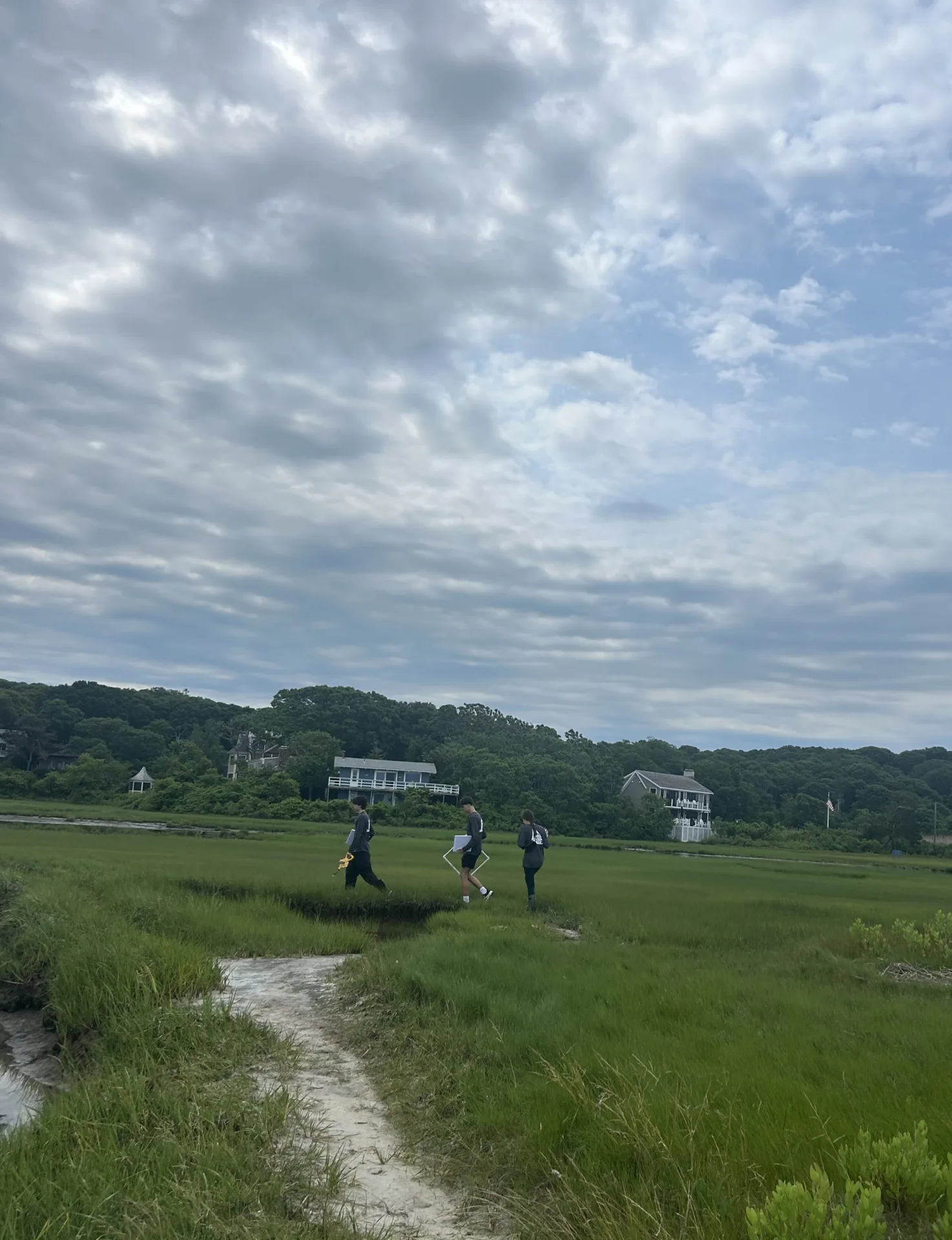
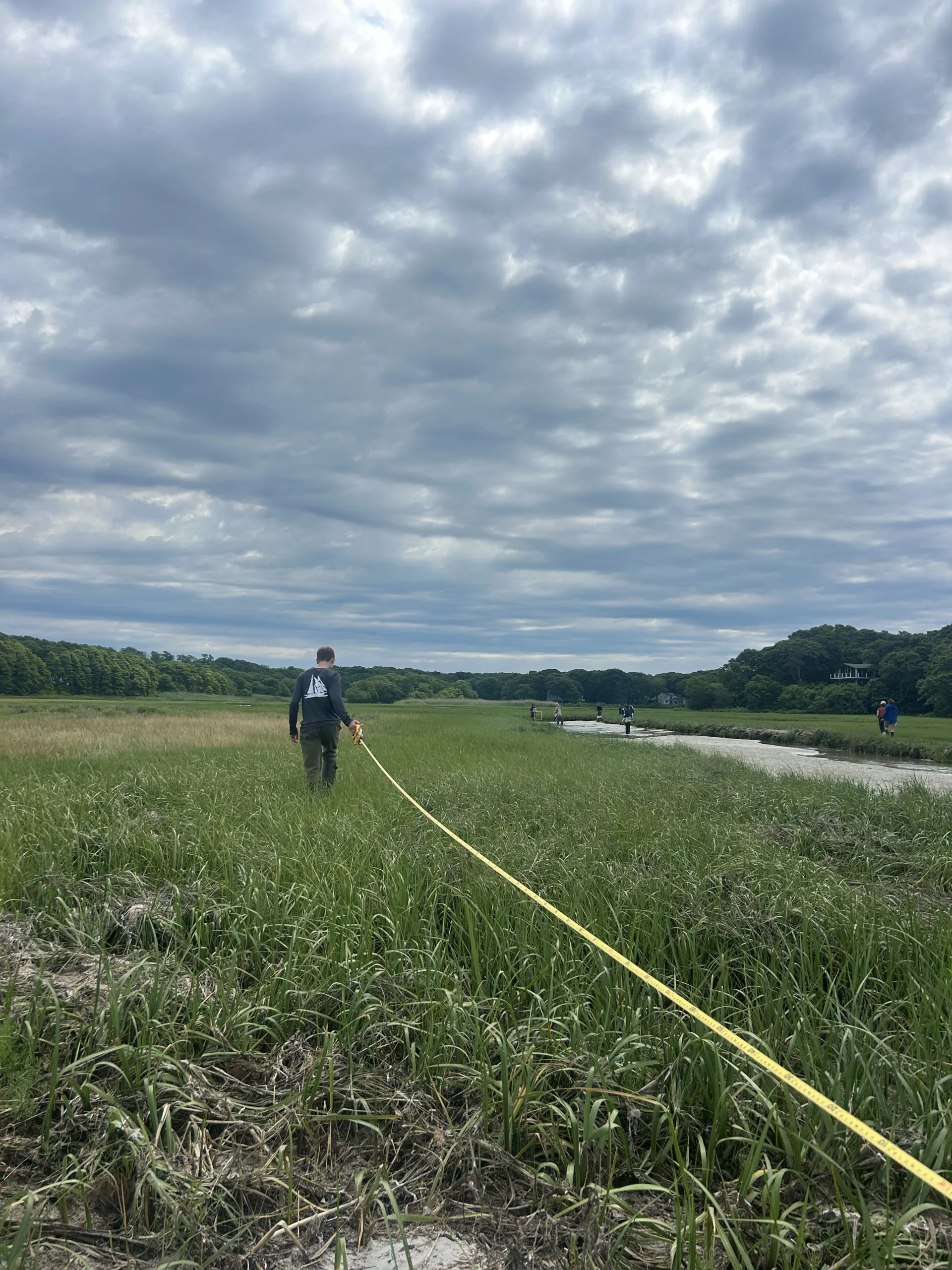
However, studying the marshes was very interesting! We split into groups and then estimated species cover through gathering quadrat data every 5 meters along a 30 meter transect. Each group also studied water quality of various sections of marsh and collected pH, salinity, total dissolved solids, temperature, and conductivity data. One of the most interesting things we learned about was that invasive crabs are taking over the marsh and eating native grasses. We also learned the marshes are very diverse and vibrant ecosystems and can be heavily influenced by nitrogen leaks from nearby septic systems. In the early development of the Americas, farmers repurposed marshes into farmland and this created long-lasting effects that are still seen today (ditches, water rerouting, bridges). Learning about marshes helps us better understand how oceans and inland systems are connected and how rising sea levels have immense effects globally.
Collaborating with peers and faculty builds community. It also pushes us to explore our inner scientists and our interest in environmental and marine research. We also know that building a good connection with those around us sets us up for success and pushes us to be the best version of ourselves we can be. However, we also learned that collaboration with similarly minded peers can be fun as well. Today, during our marsh expedition, Alejandro gave John a piggy back ride across the marsh. However, due to their combined weight, they both fell in.
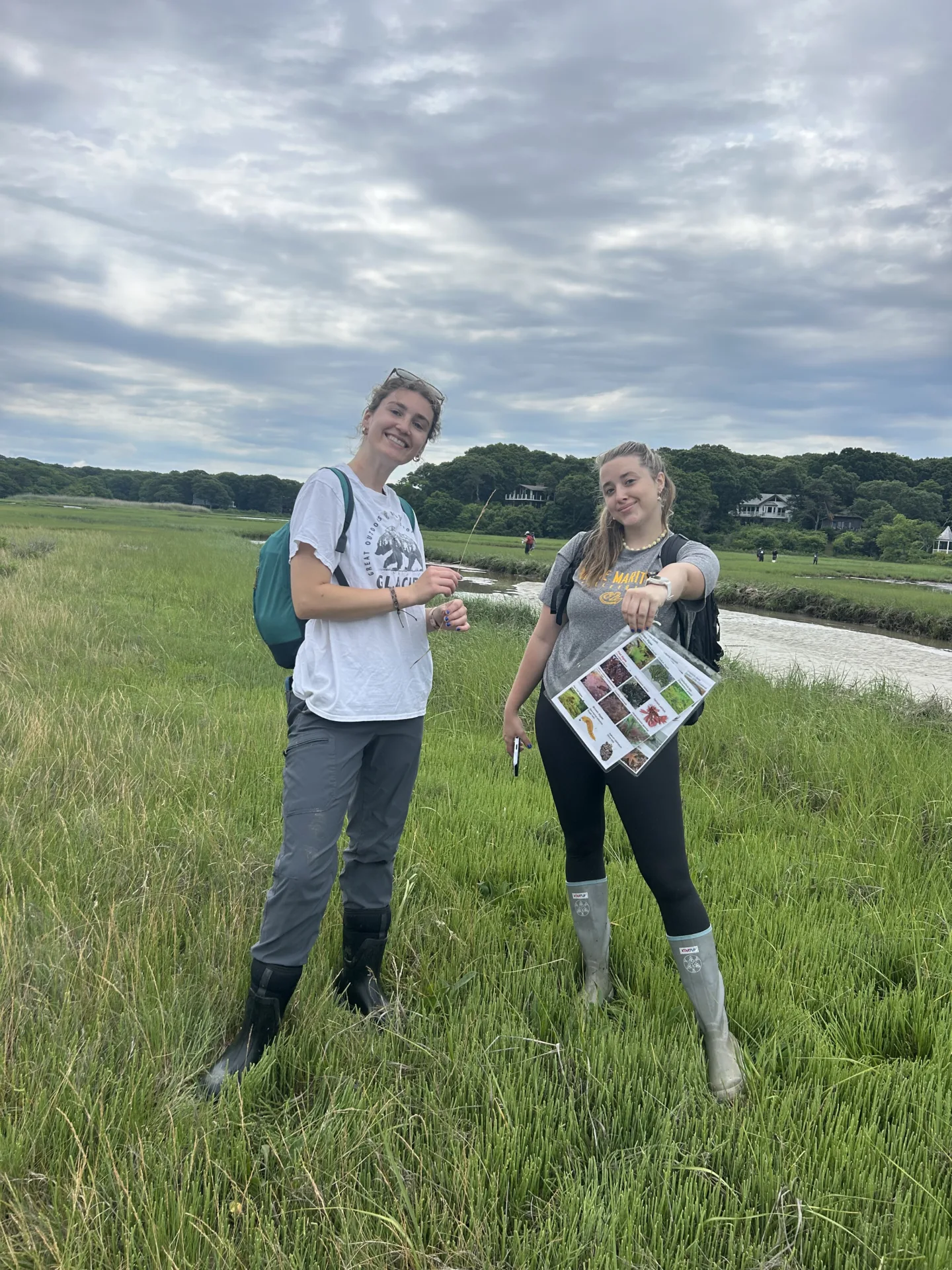
Later, we also saw a dead shark washed up on the beach and some eel larvae. But before we could further explore the salt marsh, it started to rain. So we went home and ate cheese quesadillas for lunch. After lunch, we went up to Madden and learned from our lecturers about how to develop a research question and furthermore, the difference between a hypothesis and a prediction. We finished the day by splitting into our research groups and worked on our individual projects.
We ended the day by making homemade pizza and then spending the evening making crafts and watching Spiderman and Princess Bride.
Irene and Millie