
News
Oceanography Project Presentations
Saturday, 25 July 2026
Anchorage in Menemsha Bight: 41 deg 21.6’N x 070 deg 46.9’W
Log: 418.0 nm
Weather: Beautiful day at anchor in Menemsha Bight, Martha’s Vineyard
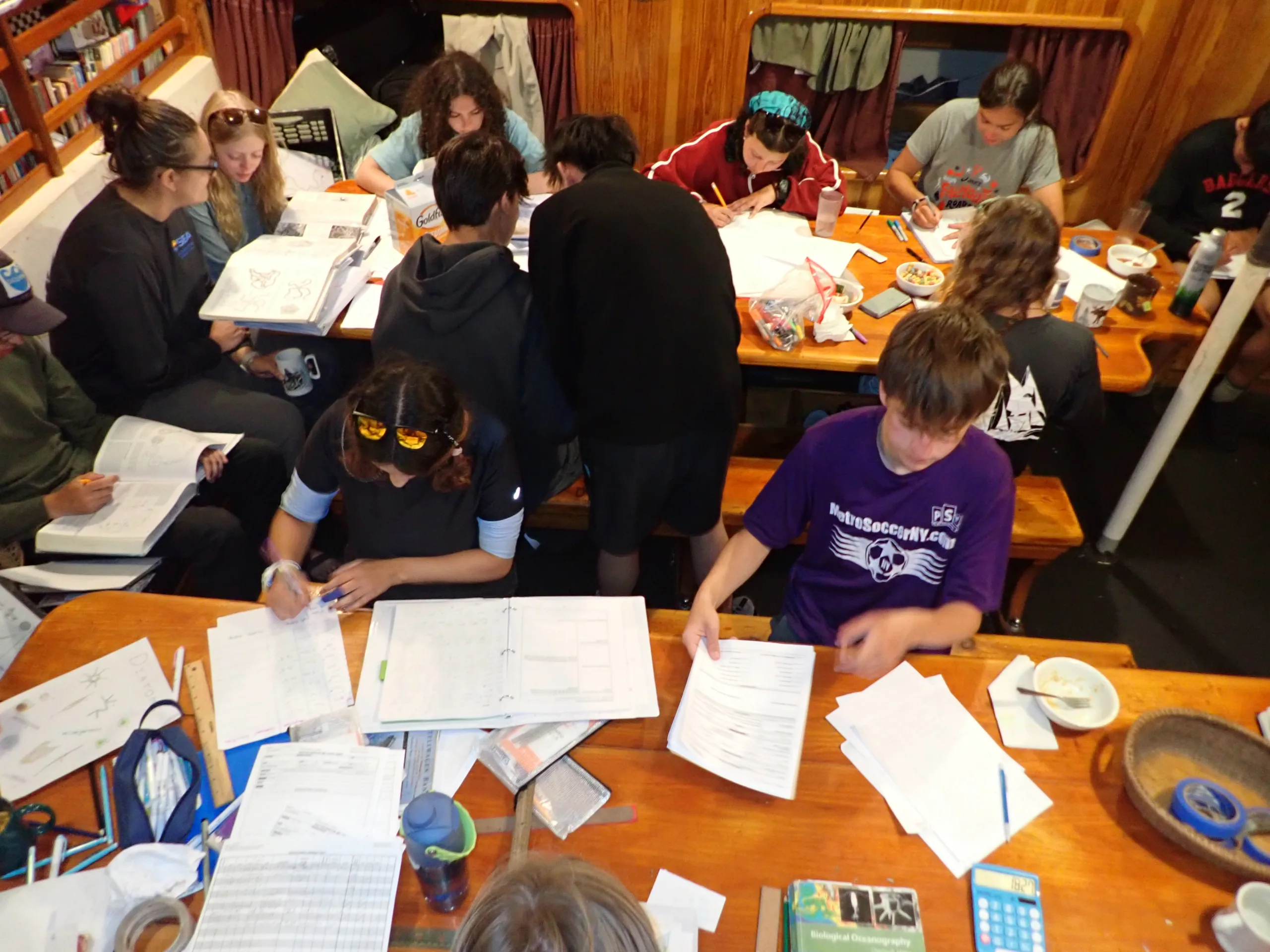
As I write this blog, I am listening to laughter and chatter coming from many parts of the ship. On deck, in the Main Salon, top of the lab, etc., shipmates that have forged life-long friendships and memories are nostalgically recalling the struggles and triumphs of our successful research voyage at sea. We have had our fair share of fine weather, but we have also weathered many days of rain, lightning, and rough seas. Students have worked tirelessly, day and night, as members of the ship’s crew. They have hauled lines, set and struck so many sails, stood lookout in the middle of the night under a carpet of stars, and taken their turn at the helm – all in the name of ocean exploration and our mission to better understand the wonders of the sea.
To that end, today was a big day! A few short hours ago, students presented their final oceanography projects. Project Plankton, Search for Phytoplankton City, and Deep Sea Studies shared their discoveries with the entire ship’s company.
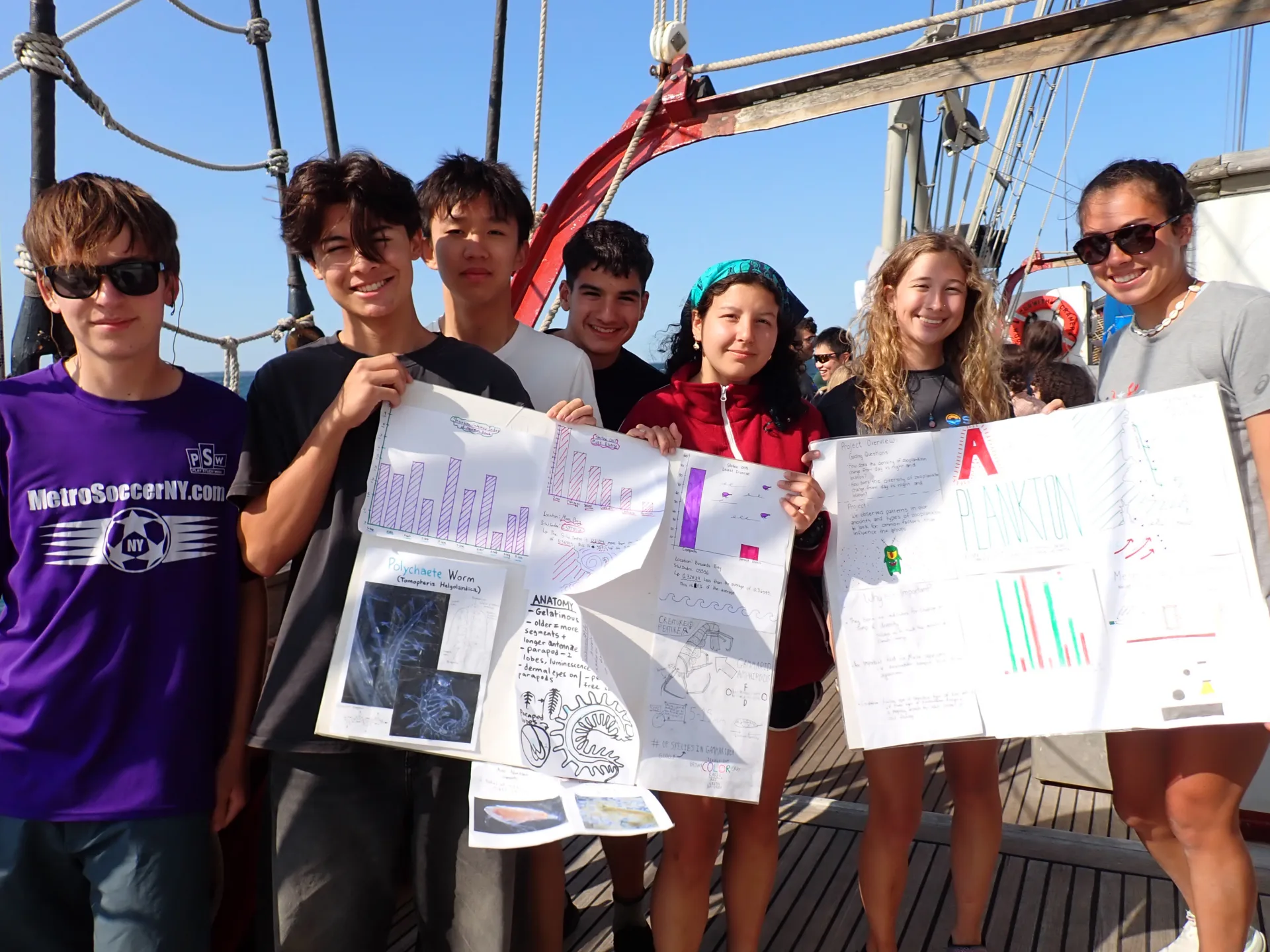
All the deployments, all the sample processing, the hours spent sieving sediments, sorting nets, identifying critters under the microscope, recording numbers (so many numbers) on a multitude of datasheets. Toward what end, the students asked in the middle of the night as they pulled one more net back aboard, full of bioluminescence.
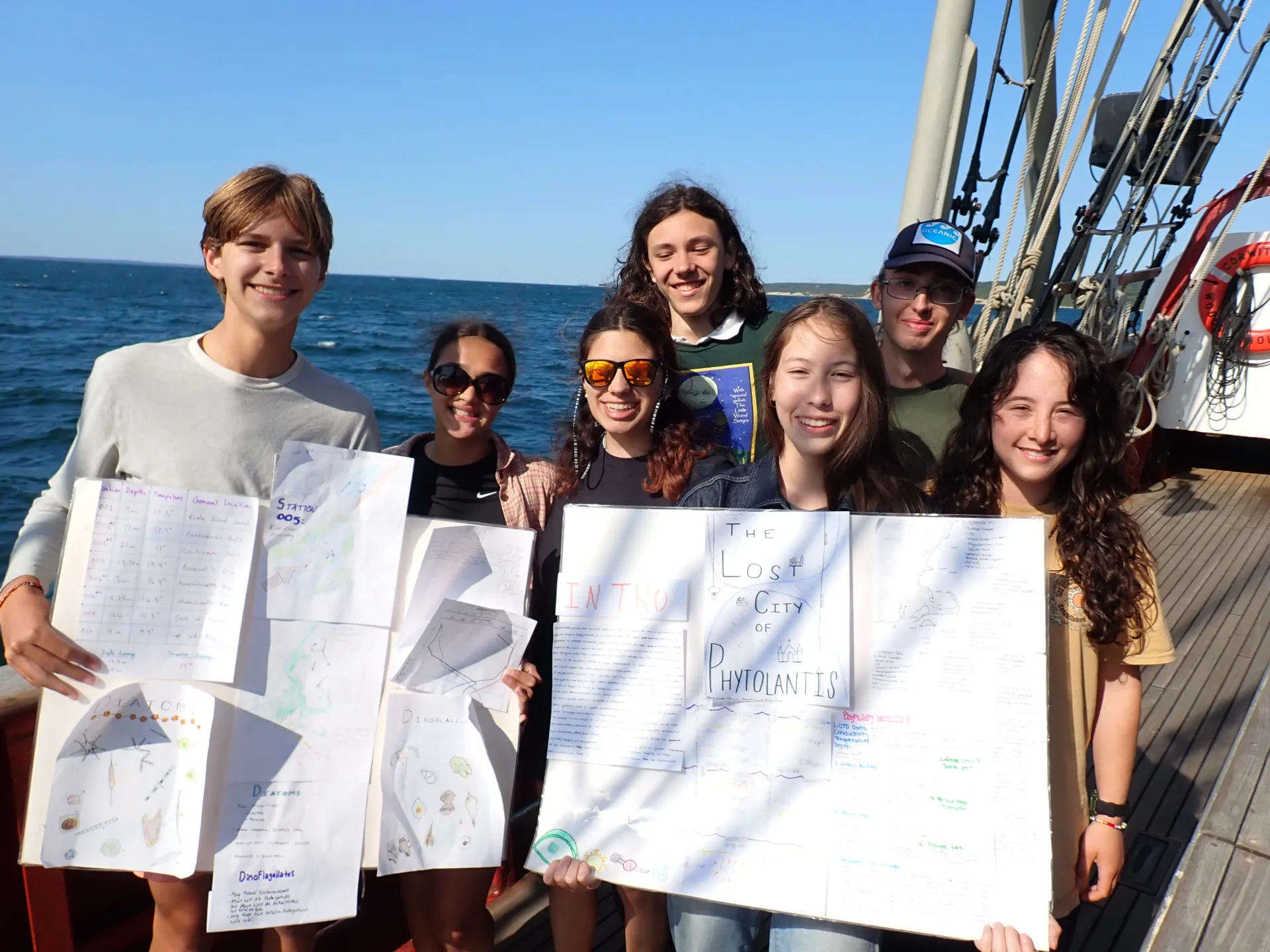
Well, here, presented on the deck of the Corwith Cramer, were the many answers to that question. We learned about the vertical migratory patterns of zooplankton and discovered that copepods are indeed the most abundant critter in the sea! We discovered Phytoplankton City in some surprising locations thanks to nutrient runoff from local rivers. And we learned about the influence of depth and sediment type on the abundance and diversity of organisms found living there. There is so much more to share about each and every project, so be sure to ask what we discovered. I am so proud of these students. Every student made important contributions to their group projects and presented their part of the story with poise and professionalism.
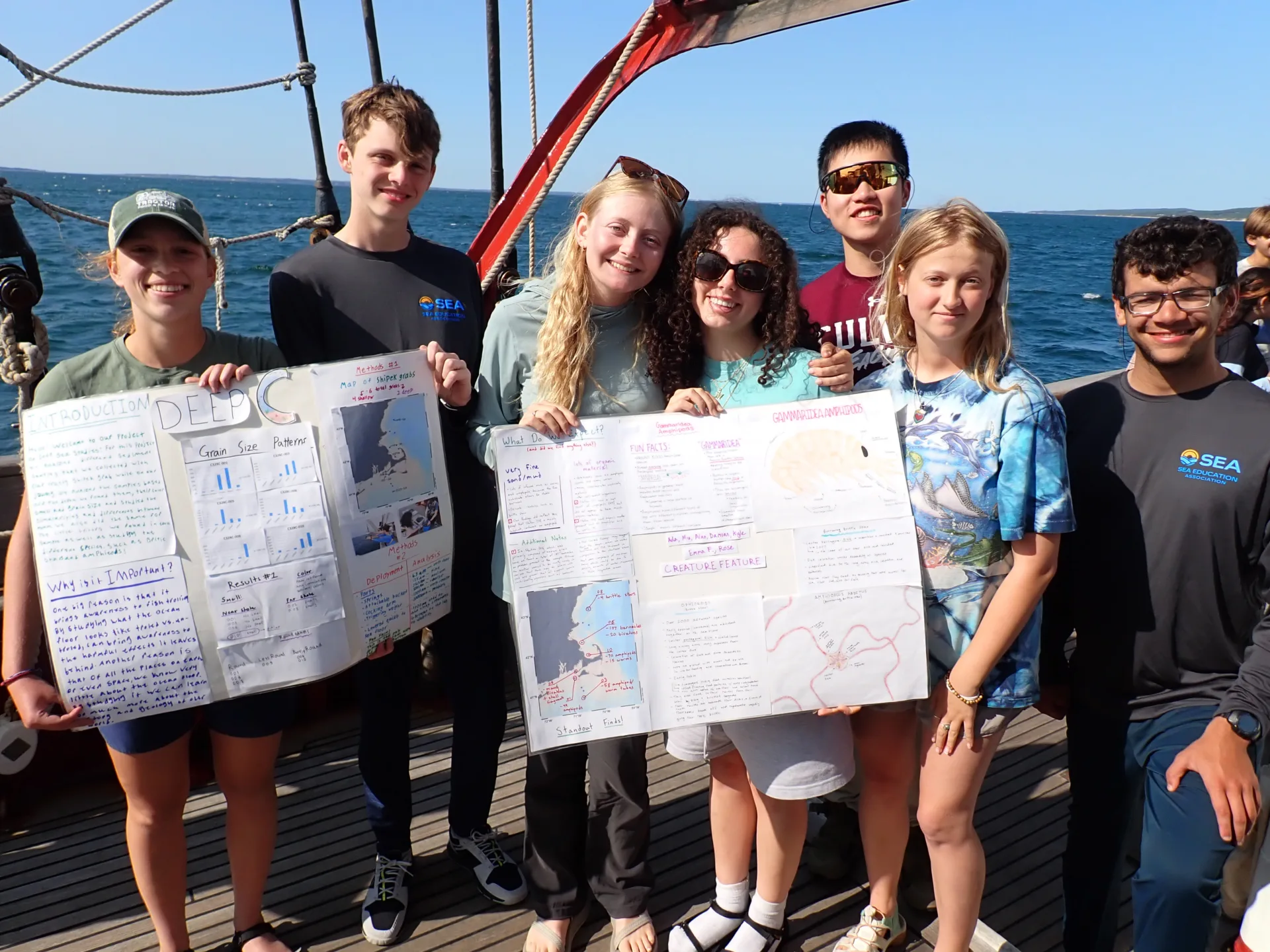
That being said, the greatest accomplishment of this voyage is that each student has risen to the occasion and proven themselves to be great shipmates. For those who go to sea, there is no higher compliment.
It has been a pleasure and an honor to sail with the students and crew on SEA Expedition III and I hope to sail with all of you again soon!
Cheers,
Jeff Schell, Chief Scientist