
News
Tying it All Together
Wednesday, 22 July 2026
SEA Campus, Falmouth, Massachusetts
Today is the hump day of our second week here at SEA, and the work today certainly reflected it. This morning’s lectures were relatively brief in comparison to other days. We began our class time with a brief activity reflecting on the leadership styles of ourselves. After each of us identified which style suited themselves best, we went over the positives of each type and some of the things each person can keep in mind when working with the group.
We then moved on to presentations about primary and secondary production, mainly within the context of our oceans. Naturally, we started with primary production, learning about marine autotrophs and the processes in which they create their own energy. We then broadened our scope, learning about secondary production, which discussed heterotrophy and the way in which energy moved from one organism to the next. This also consisted of learning about food chains and food webs. We solidified this understanding in an exercise where we each picked five marine creatures and created our own food web, interconnecting each one along the way.
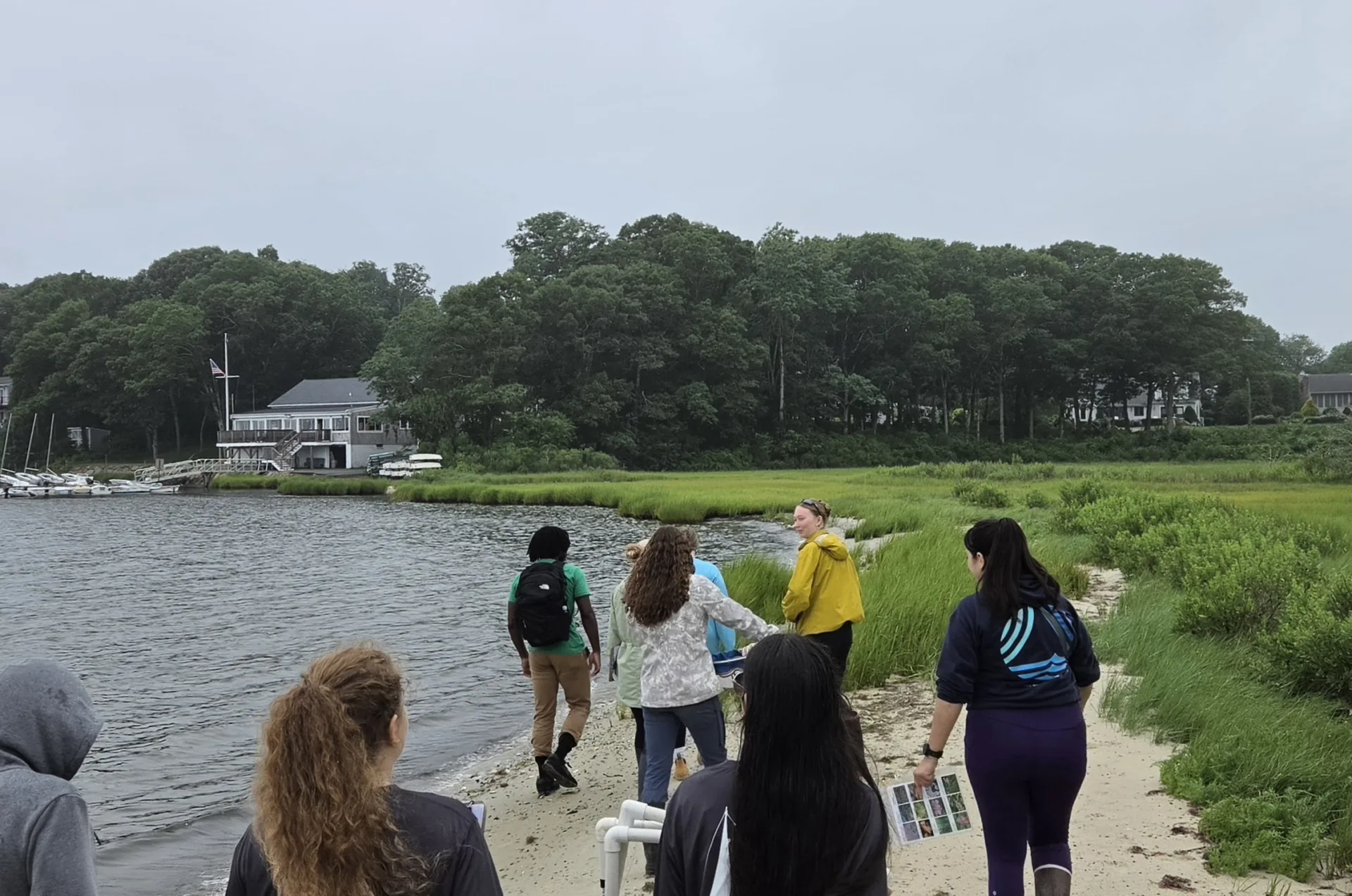
After a quick lunch, we all headed out into the field where the real fun began: collecting data for our research projects. Today’s trip brought us to Waquoit Bay National Estuarine Research Reserve, where, under the threatening ambience of today’s overcast weather, we received a short tour from a representative from Massachusetts’ Department of Conservation and Recreation. They explained to us the background of the area, including the surrounding watershed, Wampanoag culture, and some of the local osprey!
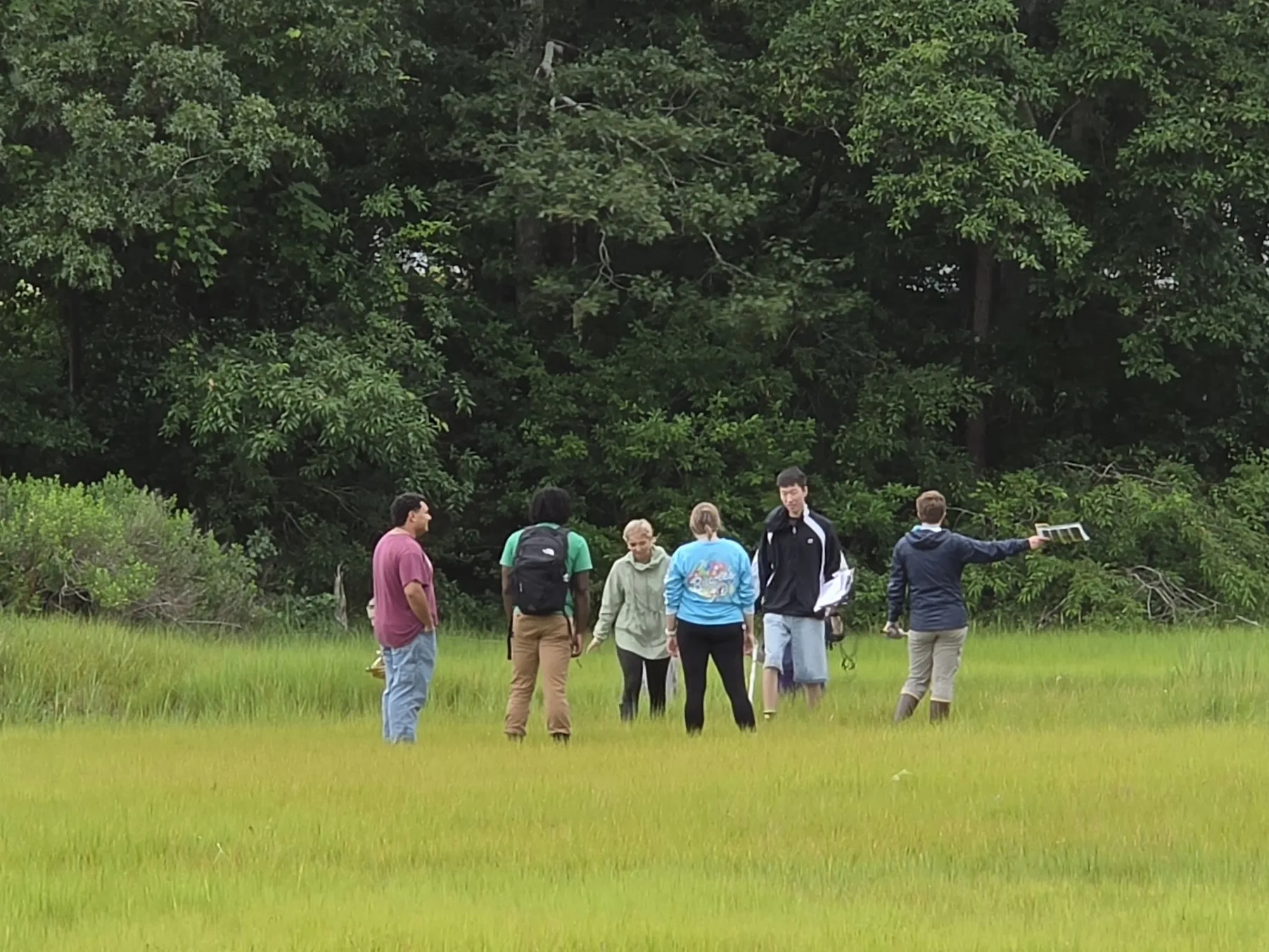
Following a quick trek down to the salt marsh, we divided up equipment, split into groups and began to sample for our three different projects. Most of our collection relied on transects and quadrats, where we measured plant data and sampled sediments at specific intervals. A brave team of us also sampled plankton within the bay, towing a net to filter critters into a bottle. While all of us tried our best to stay dry, some took some unexpected plunges into the waters, a noble sacrifice for the pursuit of science.
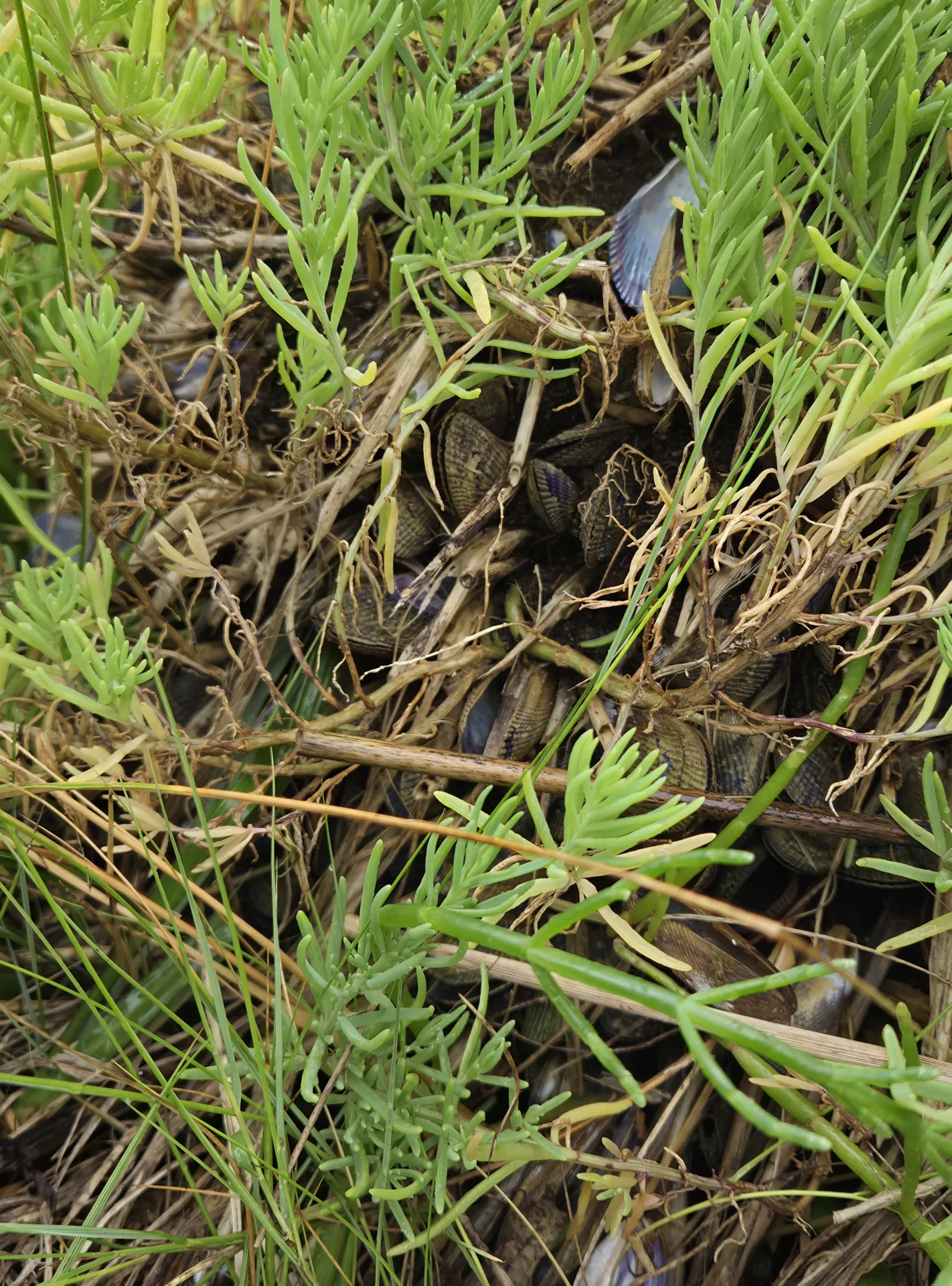
Our day wasn’t quite done yet. We returned to campus, samples in hand, where project groups utilized the lab and lab equipment to analyze the samples and convert it into valuable data for projects.
Today was a day about togetherness, reflecting on how we work with one another, how the oceans are sustained by vast connections of organisms, and finally working as a team to undertake the marsh and collect valuable data.
Julien, Pre-College: Oceanography 2