
Programs Blog
They got rid of some amount of water
Tuesday, April 28th, 2026.
Noon Position: (Lat and Long): 32 degrees 22.7’ N, 064 degrees 40.8’ W
Log (nm): 1678 nm
Weather / Wind / Sail Plan (from 1300 Watch Change): Wind SExE F4, clear skies, alongside at Pennos Wharf
Description of location: St. George’s, Bermuda
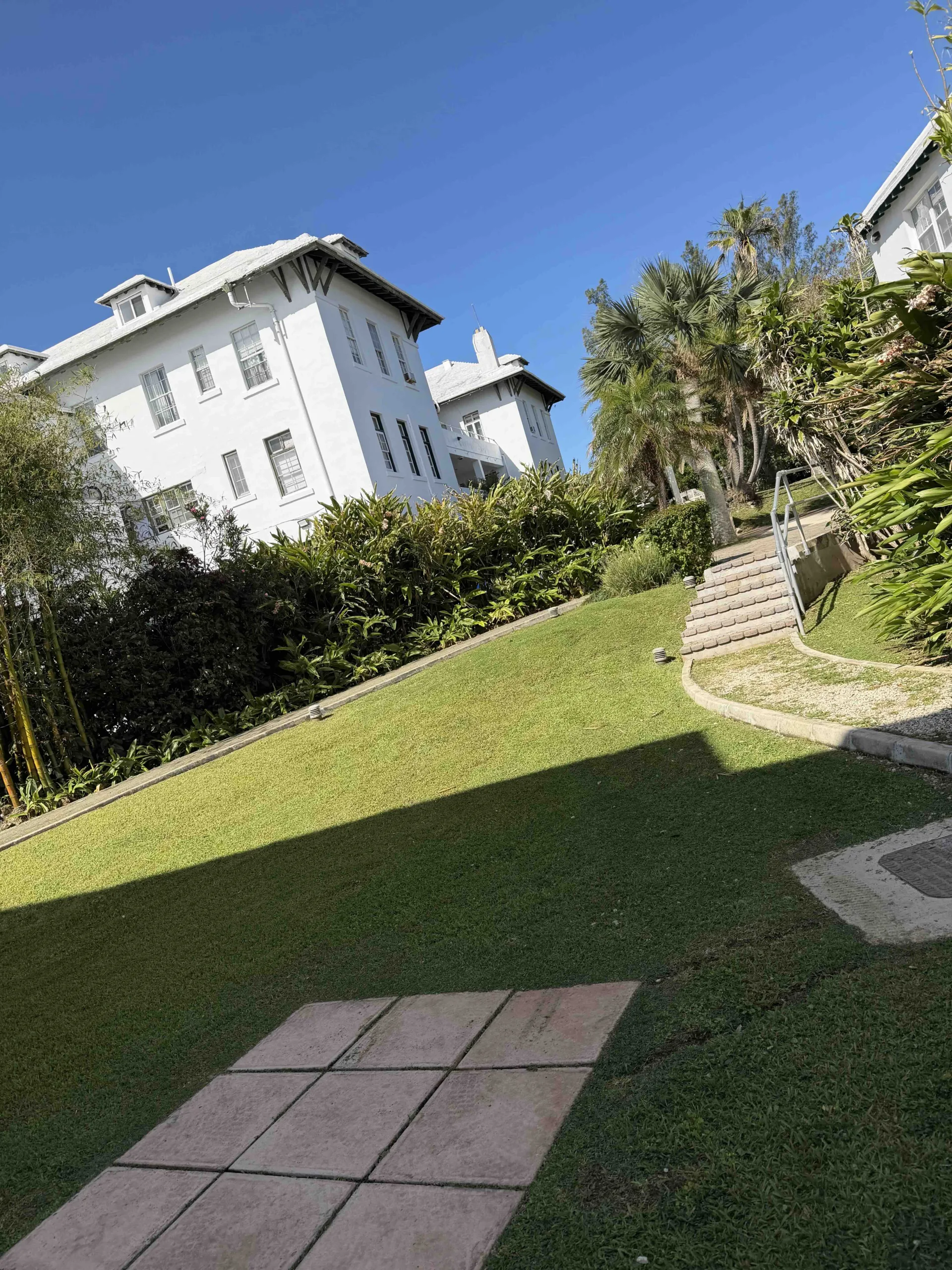
Today was our first of two full days in Bermuda, and boy oh boy were we busy. In the morning, we visited BIOS, the Bermuda Institute of Ocean Sciences, which does a lot of research on the oceanographic issues of our day. We met Amy after a lovely walk through the grounds of an old sanitorium. The laboratory was a wonderful sight to behold, particularly the familiar and new machines shown to us, as well as the delightful Suriname Cherries growing on the bushes, which taste like a combination between bell peppers and cherries.
After our visit to BIOS, Etta, Ciaran, Tenny, Kate, and myself walked along the railroad tracks back to the boat. Upon climbing a hill, we found a luscious moss-covered floor that much resembled Iceland, along with a beautiful cliffside view. Our wanderings reminded me that land is indeed real, and nice, and fun to walk on. We arrived in town where I called yet more people. Later in the day, we received a visit from Fay of the Sargasso Sea Commission, whom we showed around the boat, as well as Dr. Robbie, who is just generally a local celebrity, and wonderful scientist, who helped in research and advocacy around the High Seas Treaty, and is also apparently quite good at identifying fish.
Alright, it’s time for Simon’s Brain Time, which is where I just list things off that exist in my head in regard to Bermuda:
Being on land reminded me about life off the of the boat, and I must say, some part of me missed the dawn watches, and the life of both great vastness and tightness that a boat provides. The boat is a powerful place to reflect and think about what I want out of the life I get to live, although I will say that sleep is an important part of thinking straight and it’s quite difficult to get sleep on a boat.
One fun and interesting fact about Bermuda, is that over the course of a long amount of time (like quite long) the whole island increases and decreases in size. Many a British vessel shipwrecked themselves on the coral reef North of Bermuda, but those coral reefs are also sometimes island every few thousand years or so, when sea level lowers. We happen to be living through a time where Bermuda is much smaller than it could be, but also bigger, given that we continue to fill this bathtub.
Bermuda prices are quite high, similar to Iceland, and these islands always feel a little spooky, just because of the high necessity to pull in tourists. If that source of money dries up, the island suffers significantly. Wealth inequality in Bermuda is extreme. A housing Census report identified that the median income among Black Bermudans dropped 13% from 2010 to 2016, which is of course continually extended due to high cost of living, poor workers’ rights, and as per usual, no social safety net of any kind. Additionally, Bermuda became the first territory in the world to “repeal its same-sex marriage legislation by its Supreme court.” The circumstances of the politics of Bermuda are shaped broadly by its colonial history of slavery, and its existence as a tax haven for billionaires.
Overall, I think that places like Bermuda are quiet. They exist frozen in time, and communities come together to help each other in a place that has very little capacity for the growth that is required under capitalism to maintain communities. As time passes, those communities are slowly withered away and replaced with resorts, and wealthy tourists. Old sailing ships turn into catamarans, and eventually the Michelin guide comes in, and recommends restaurants, destroying local culture and taste, and replacing it with the “refined” palette Michelin brings.
The research happening in Bermuda is incredibly wonderful. Because they exist in the middle of the ocean, they have great capacity to complete research about the deep ocean effectively and quickly. Amy and Shane were both exuberant and excited researchers, and I find that the kind of joy they exhibited is both infectious and hard to find. I hope that I can one day feel the same joy for the field I go into that the two of them feel.
Dr. Robbie reminded me that international cooperation can happen, even if only through great difficulty, despite opposing forces. While the UN is still a mostly toothless organization, it is hopeful to see countries participate of their own free will and decide to do better by environment because they can. I hope we can see an expansion of the BBNJ treaties we have now and see more cooperation in the future.
The island life was surprising, to say the least. While there is still some endemic life, much of the native wildlife in Bermuda also exists in other places, and much of the wildlife is also just straight up invasive. I wonder what criteria are used to decide that a species is native but not endemic. While I could be wrong, I saw a whole, seemingly sustainable ecosystem in Bermuda that was made nearly entirely of invasive species. Is it bad to transplant plants to an island like Bermuda? What are our metrics for biodiversity? Why, other than sustaining human life, is biodiversity important?
Simon Braun, C Watch
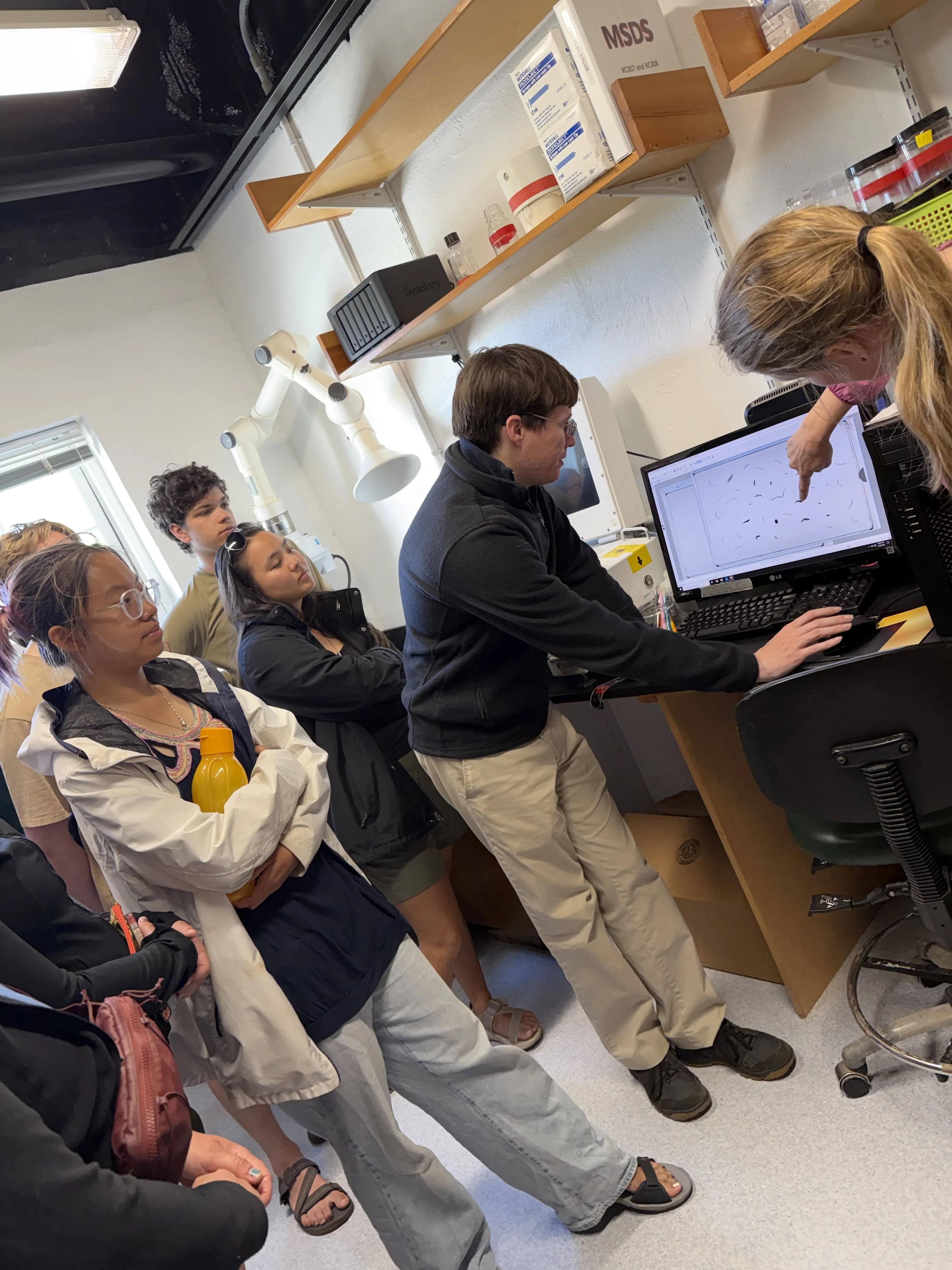
Amy excitedly shows us her fancy machines
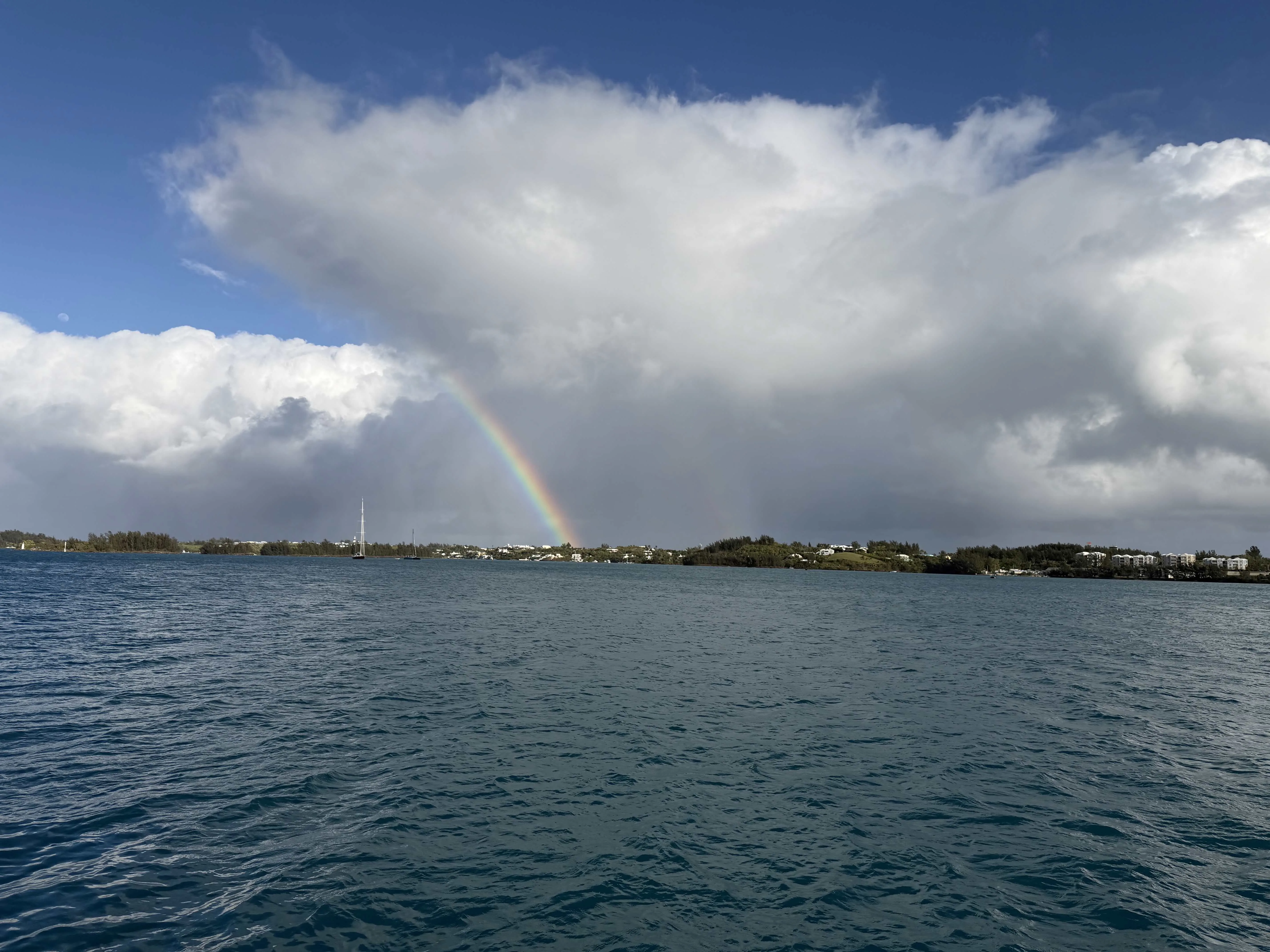
Double rainbow!
Recent Posts from the Ships
- Ocean Classroom 2024-A collaborative high school program with Proctor Academy
- Collaborations and Long-term Commitments: SEA’s Caribbean Reef Program Sets a Course for Coastal Programs that Compliment Shipboard Experiences.
- Sea Education Association students prepare for life underway using state of the art nautical simulation from Wartsila Corporation.
- SEA Writer 2022, Magazines From the Summer SEA Quest Students
- Technology@SEA: Upgrades Allow Insight into Ocean Depths
Programs
- Gap Year
- Ocean Exploration
- High School
- Science at SEA
- SEA Expedition
- SEAScape
- Pre-College
- Proctor Ocean Classroom
- Protecting the Phoenix Islands
- SPICE
- Stanford@SEA
- Undergraduate
- Climate and Society
- Climate Change and Coastal Resilience
- Coral Reef Conservation
- Marine Biodiversity and Conservation
- MBL
- Ocean Exploration: Plastics
- Ocean Policy: Marine Protected Areas
- Oceans and Climate
- Pacific Reef Expedition
- Plastics and Biodiversity in the Sargasso Sea
- The Global Ocean: Hawai'i
- The Global Ocean: New Zealand
- The History of Whaling & Whale Conservation