
Programs Blog
Active Coral Restoration in Dominica
Understanding of Dominica Prior to Arriving to the Island:
Prior to arriving in Dominica, we did some research on shore to get an idea of what active restoration of corals looked like on the island. We learned that the island, characterized by steep mountains and extensive rainforest, lost 10-15% of its coral cover between 2005 and 2015. The reefs took another hit in 2017 due to Hurricane Maria. These reefs are vital habitat for a variety of marine species, provide jobs and tourist income for the local populations (dive trips, boat tours, etc.), and allow for the creation of a variety of medical products (like anti-cancer drugs), which are derived from compounds found in the many organisms that are found in these diverse communities. We found that active coral restoration was happening in a couple of places on the island. In Secret Bay, coral transplantation is being marketed as a tourism experience, and visitors to the island are helping to replace corals from nurseries back onto the reefs. In the Soufriere Scotts Head Marine Reserve, restoration practitioners are focusing on battling Stony Coral Tissue Loss Disease (SCTLD). Coral fragmentation and transplantation, establishing coral nurseries, and restoring native herbivore populations were the primary forms of restoration we encountered during our research. We found that, in addition to SCTLD, the corals that organizations like Daniel Langlois Coral Restoration Center, Oceans Forward, and Nature Island Dive are seeking to protect are facing additional stressors from climate change, overfishing, coastal development, and poor water quality/harmful terrestrial runoff.
Current Solutions and Ways Forward in Light of Local and Global Climate Change Related Stressors:
When we got to Dominica, we visited Nature Island Dive, a dive shop in Soufriere on the southwestern part of the island. Here we were introduced to ways that this community has taken on restoration efforts to improve and maintain the state of coral reefs in Soufriere Bay. They recognized the importance of the health of coral reefs for the survival of their business model and partnered with a nonprofit called Oceans Forward, which recently received funding from a larger organization called Conservation International, to help restore coral reefs through fragmentation, biobanking, and promoting sexual reproduction.
Fragmentation is the process of cutting healthy living corals into pieces (something that we got to try while on the island, and which can feel somewhat harrowing) and growing them in small groups with the goal of eventually producing a larger coral that is capable of reproducing on their own, which will ultimately either be transplanted back onto reefs or used in the biobank. The key with fragmentation (when the goal is creating a single, larger coral) is to make sure that the small coral fragments that are placed together are all the same genotype, as this will allow them to fuse together into a larger coral. It is important to create a larger coral because corals will only start to reproduce sexually after they reach a particular size. Fragmentation allows restoration specialists to fast track this process, creating corals that are the size of ones far older than each of the individual fragments alone.
Biobanking involves establishing a collection of different corals in a controlled lab setting in order to preserve them. The goal here is to collect as many different genetic variants and species as possible and protect them from harm that might come to them in natural reefs (where they will be in greater danger of bleaching, contracting diseases, etc.). The biobank allows us to keep lots of different corals alive even if (as is likely to occur) natural conditions continue to worsen, meaning that we will still have them in the future and they can potentially be reestablished in the wild if conditions ever do improve. However, there are several tricky parts to this process. Some corals do not take well to being raised in the lab environment, meaning that they are not good candidates for biobank preservation. Additionally, money and space are limited, so restoration specialists must decide which corals are most in need of biobanking, which might be alright on their own, and which we might just have to risk losing.
Nature Island Dive is also working on promoting sexual reproduction in corals by combining sperm and egg packets to try and create new larval corals. While asexual methods, like fragmentation, can be effective and relatively easy, particularly in a lab setting, they do not allow for genetic recombination (as all corals produced by fragmentation will be clones of each other), making the corals produced via these methods more vulnerable. Having genetic variability within a population can make that population more resilient to disturbances. For example, if a disease were to arise that only impacted corals of a particular genotype, then it would be better if all the corals in an area had different genotypes, as some might be resistant to the disease and the population as a whole would be more likely to survive an outbreak. Simon’s team has had mixed success with this technique. Different coral species reproduce on different schedules (some of which have not yet been documented), and these schedules can be quite specific and inconvenient to work around. For example, many corals reproduce late at night when volunteers may not want to be awake. While they have had some success with collecting reproductive material and combining them in the field, attempting this in the lab has so far proved unsuccessful. However, they do plan to continue to use these methods and workshop them in the future.
In addition to running projects for Oceans Forward, the team at Nature Island Dive are also heavily involved in the community and host frequent talks with local students to communicate the importance of not overfishing, keeping trash out of the ocean, and staying aware of the state of the reefs. Simon Walsh, the owner of Nature Island Dive, has also been a voice for the Fisheries Department of Dominica who look to him for developments in fishing limits and laws governing that sector due to his deep involvement with various marine and coastal communities.
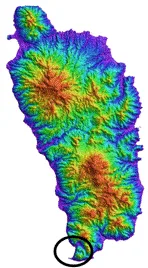
Figure 1: Scott’s Head Marine Park, Soufriere Bay, Dominica
Current Challenges:
Simon explained that the two most pressing issues to coral reefs as it relates to restoration efforts are the lack of funding and human resources. He explained that in most cases, applying and being granted funding through typical routes – scientific or governmental grants – could take two years or more which would be far too long to wait due to the fast-paced nature of coral degradation. In order to run a successful restoration operation, Simon funds restoration efforts using the dive shop business as well as donations from dive shop goers and other organizations.
The second challenge Simon highlighted was human resources. Much of the restoration work being done is volunteer based and, given the amount of work that needs to be done to stay ahead of climate change related coral reef degradation, it is difficult to consistently the necessary resources to do all that needs to be done. Additionally, some restoration methods such as fragmentation need to be done underwater which requires experienced divers, additional resources would need to be poured in to have enough hands to be able to keep up consistent momentum below the surface.
Final Thoughts and Reflections:
We were shocked to see how close the reefs were to shore and further that they were not totally degraded given their proximity to human activity, fishing, and runoff. This is proof that community involvement and understanding the importance of coral reefs is vital to their protection. We are curious to see how the development of Dominica’s tourism industry will affect restoration efforts.
We were also surprised to learn that Simon (and Nature Island Dive as a whole) is the primary authority on coral reefs on the island. He mentioned that the fisheries department, while they do have a boat, do not have a captain for that boat, nor do they really have the resources to do any work on coral reef conservation and protection, meaning that they tend to direct people to him when they have questions about working with the reefs. It speaks to the lack of both monetary and human resources on the island. In some ways, the limited governmental supervision relative to what we are more used to in the US can be a good thing. For coral reefs, quick action is often necessary to prevent and manage widespread die-offs, and that quick action is easier to achieve when there is less red tape and supervision to go through. However, it likely also means that money for coral restoration is much harder to find, and it means that there is more pressure on Simon to continue searching for external sources of funding to support his goals.
Sonia Chomiczewski, B-Watch, Northeastern University, and Eleanor Mason, C-Watch, Denison University
Recent Posts from the Ships
- Ocean Classroom 2024-A collaborative high school program with Proctor Academy
- Collaborations and Long-term Commitments: SEA’s Caribbean Reef Program Sets a Course for Coastal Programs that Compliment Shipboard Experiences.
- Sea Education Association students prepare for life underway using state of the art nautical simulation from Wartsila Corporation.
- SEA Writer 2022, Magazines From the Summer SEA Quest Students
- Technology@SEA: Upgrades Allow Insight into Ocean Depths
Programs
- Gap Year
- Ocean Exploration
- High School
- Science at SEA
- SEA Expedition
- SEAScape
- Pre-College
- Proctor Ocean Classroom
- Protecting the Phoenix Islands
- SPICE
- Stanford@SEA
- Undergraduate
- Climate and Society
- Climate Change and Coastal Resilience
- Coral Reef Conservation
- Marine Biodiversity and Conservation
- MBL
- Ocean Exploration: Plastics
- Ocean Policy: Marine Protected Areas
- Oceans and Climate
- Pacific Reef Expedition
- Plastics and Biodiversity in the Sargasso Sea
- The Global Ocean: Hawai'i
- The Global Ocean: New Zealand