
Programs Blog
Anguilla – Invest in Active Coral Restoration to Enhance Recovery
Thursday, 26 March 2026
Very Sunny with East Winds, Force 3, and finishing up our program!
Docked in Gallows Bay, St. Croix
During our time in Woods Hole, we researched the history of Anguilla and learned about how essential coral reefs are to the island, as well as current efforts for active coral restoration. In summary, Anguilla is a low-lying limestone island in the northeastern Caribbean, with coral communities covering about 22% of the island’s shelf area. Beginning in the 1970’s coral reef cover has declined due to the emergence of diseases, hurricane damage, and now threatened by invasive species. This is detrimental to Anguilla since reef loss threatens fisheries, tourism, and endangers the population’s protection and survival. In our fact sheet we discussed Anguilla’s economic reliance on tourism. Tourists are drawn to this island by the sandy beaches and diverse fringing coral reefs. With coral reef ecosystems rapidly declining and degrading around the island due to climate change and underregulated fisheries, this tourist attraction is under threat of losing the unique beauty responsible for drawing guests to the island. With tourism being the island’s main source of income, a decrease in tourism would have severe negative impacts on the small islands economy and put several locals out of jobs. Due to Anguilla’s geography as a low-lying island with no rivers and little elevation, it relies on reef structure to absorb wave energy and reduce coastal erosion during hurricanes. Without functioning coral reefs, Anguilla becomes more vulnerable to storm damage, shoreline loss, and long-term environmental instability. More recently, lionfish have entered Anguilla’s waters and have since become an established invasive species, preying on herbivores that graze on algae which is overgrowing corals, slowing reef recovery and reducing biodiversity.
In our research, we learned about the current efforts Anguilla is investing in to restore coral reefs and enhance their recovery. We learned that Anguilla has made significant progress in biodiversity conservation through policies, projects, and programs led by the Department of Natural Resources and the Anguilla National Trust. There is active coral restoration through coral nurseries, fragment out-planting, and rebuilding reef structure. Marine Protected Areas limit fishing and anchoring in sensitive zones while strengthening enforcement and compliance. There is herbivore protection, lionfish management, and long-term monitoring projects such as annual reef and fish population surveys. Overall, Anguilla has been supporting reef protection and long-term ecosystem resilience as a means to enhance the recovery of their degrading coral reefs.
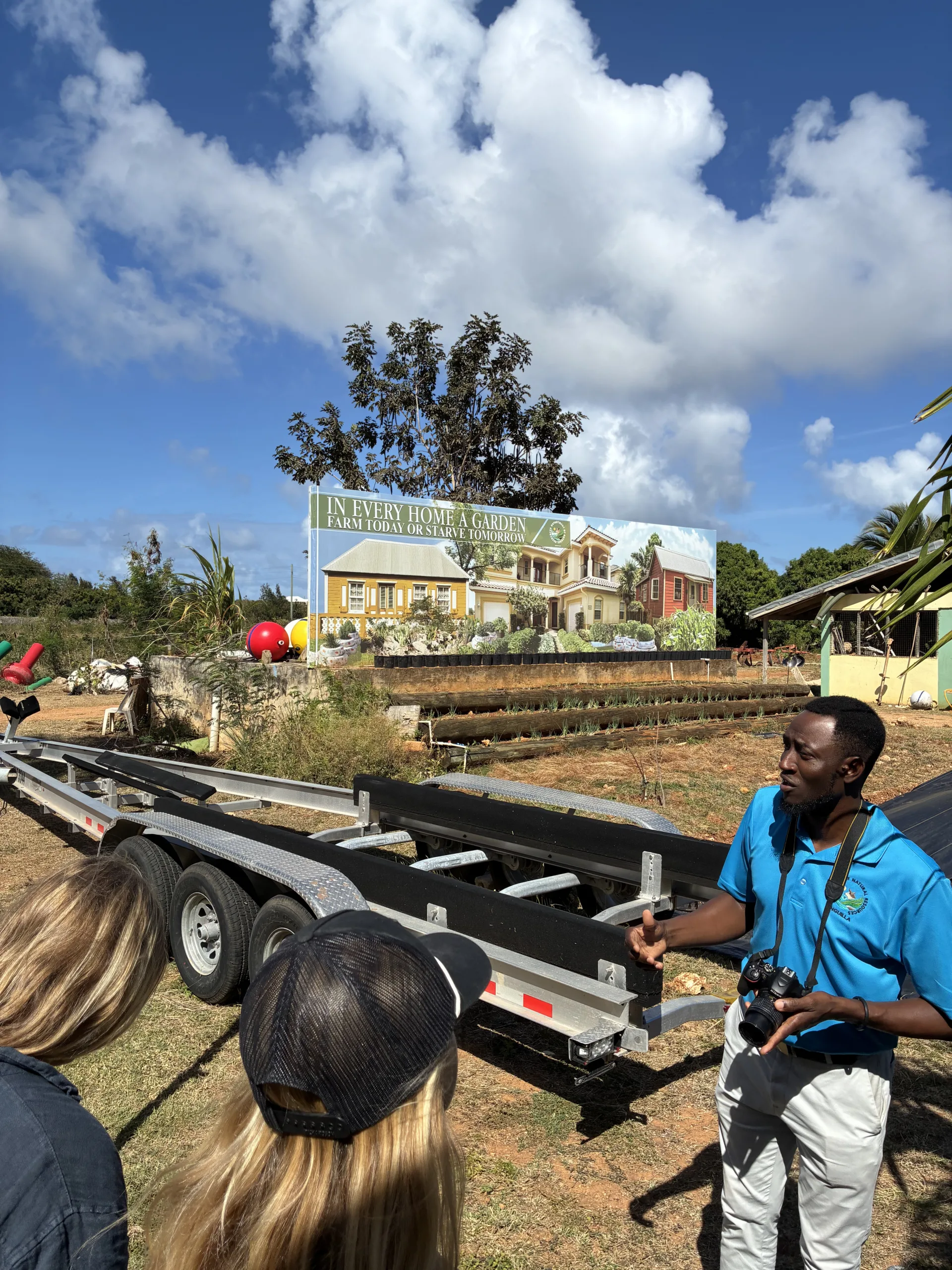
On Thursday March 20, 2026, we visited Anguilla’s Department of Natural Resources (or DNR) to hear from local experts on their active conservation and restoration projects. Remone Johnson and Jasmin Ruan were passionate and energized about protecting the breathtaking island they call home. Right now, the Department of Natural Resources assumes unofficial responsibility for Marine Park management due to its umbrella title. However, there has been drafted legislation since 2014 to formally recognize the DNR as officially responsible for Marine Park management. Anguilla currently has a total of seven Marine Protected Areas (MPAs) that protect reef sites, seagrass sites, and heritage sites. At MPAs, the DNR closely collaborates with the Anguilla National Trust to conduct baseline and comparative studies. The future of MPAs include, but are not limited to, the establishment of Marine Park Fees and restrictions on fishing. However, enforcement of MPAs is tricky in Anguilla. Remone shared that fine enforcement of breaking fishing restrictions, for example, is a long and outdated process that places the DNR at risk of endless legal battles. Yet, right now, confiscation of illegally caught marine life is their only actionable enforcement that they have at their disposal. AMMP (or Anguilla Marine Monitoring Program) is a tool established in 2007 that assesses the health of Anguilla’s marine environment. They practice annual monitoring of nine coral reef sites and five seagrass sites monitoring fish density, fish size, invertebrate density, coral density, seagrass density, benthic cover, and disease presence. Furthermore, BMP (or Beach Monitoring Program), established in 1992, monitors 15 mainland beaches and 4 offshore cays quarterly. With the implementation of RTK GNSS modules and survey drones, they are now able to generate 2.5D modeling within 5cm accuracy. These technology improvements are achieved through the Blue Belt Programme (joined 2023). By joining the Blue Belt Programme, Anguilla has been able to receive grants that support active restoration practices. As a Blue Economy, Anguilla heavily relies on its surrounding marine ecosystems. To combat an accelerating loss of their marine ecosystems, the DNR’s Marine Threat Response targets coral disease, invasive lionfish populations, and monitoring of diadema die-off. Their response to these issues reflects a symbiotic relationship Anguilla has with their natural resources. Ultimately, our conversations with Remone and Jasmin kept returning to the importance of community engagement. Through education, communication, collaborative management, and building positive relationships with local stakeholders, Anguilla is ensuring their investments in active restoration are supported for long-term success.
Shoutouts: Thank you to the Anguilla National Trust and Anguilla Department of Natural Resources for the lovely tours! Love to all of our family and friends back home, we can’t wait to see you soon!
Koa Chun, C Watch, Columbia University
Laura Hernandez, A Watch, Cornell University
Samantha McPherson, C Watch, Rochester, NY
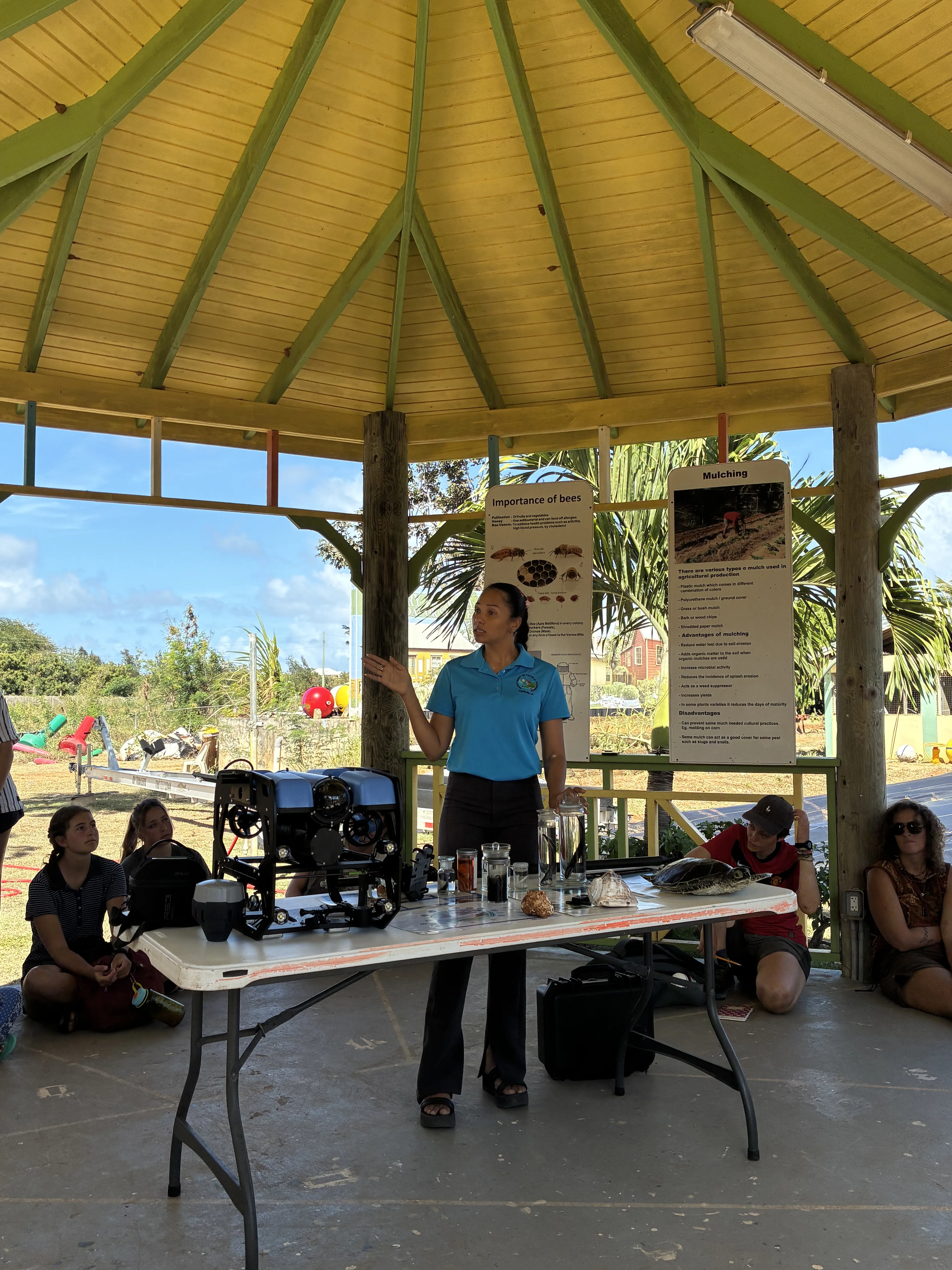
Jasmin Ruan from the Anguilla Department of Natural Resources discussing current projects they are working on
Recent Posts from the Ships
- Ocean Classroom 2024-A collaborative high school program with Proctor Academy
- Collaborations and Long-term Commitments: SEA’s Caribbean Reef Program Sets a Course for Coastal Programs that Compliment Shipboard Experiences.
- Sea Education Association students prepare for life underway using state of the art nautical simulation from Wartsila Corporation.
- SEA Writer 2022, Magazines From the Summer SEA Quest Students
- Technology@SEA: Upgrades Allow Insight into Ocean Depths
Programs
- Gap Year
- Ocean Exploration
- High School
- Science at SEA
- SEA Expedition
- SEAScape
- Pre-College
- Proctor Ocean Classroom
- Protecting the Phoenix Islands
- SPICE
- Stanford@SEA
- Undergraduate
- Climate and Society
- Climate Change and Coastal Resilience
- Coral Reef Conservation
- Marine Biodiversity and Conservation
- MBL
- Ocean Exploration: Plastics
- Ocean Policy: Marine Protected Areas
- Oceans and Climate
- Pacific Reef Expedition
- The Global Ocean: Hawai'i
- The Global Ocean: New Zealand