
Programs Blog
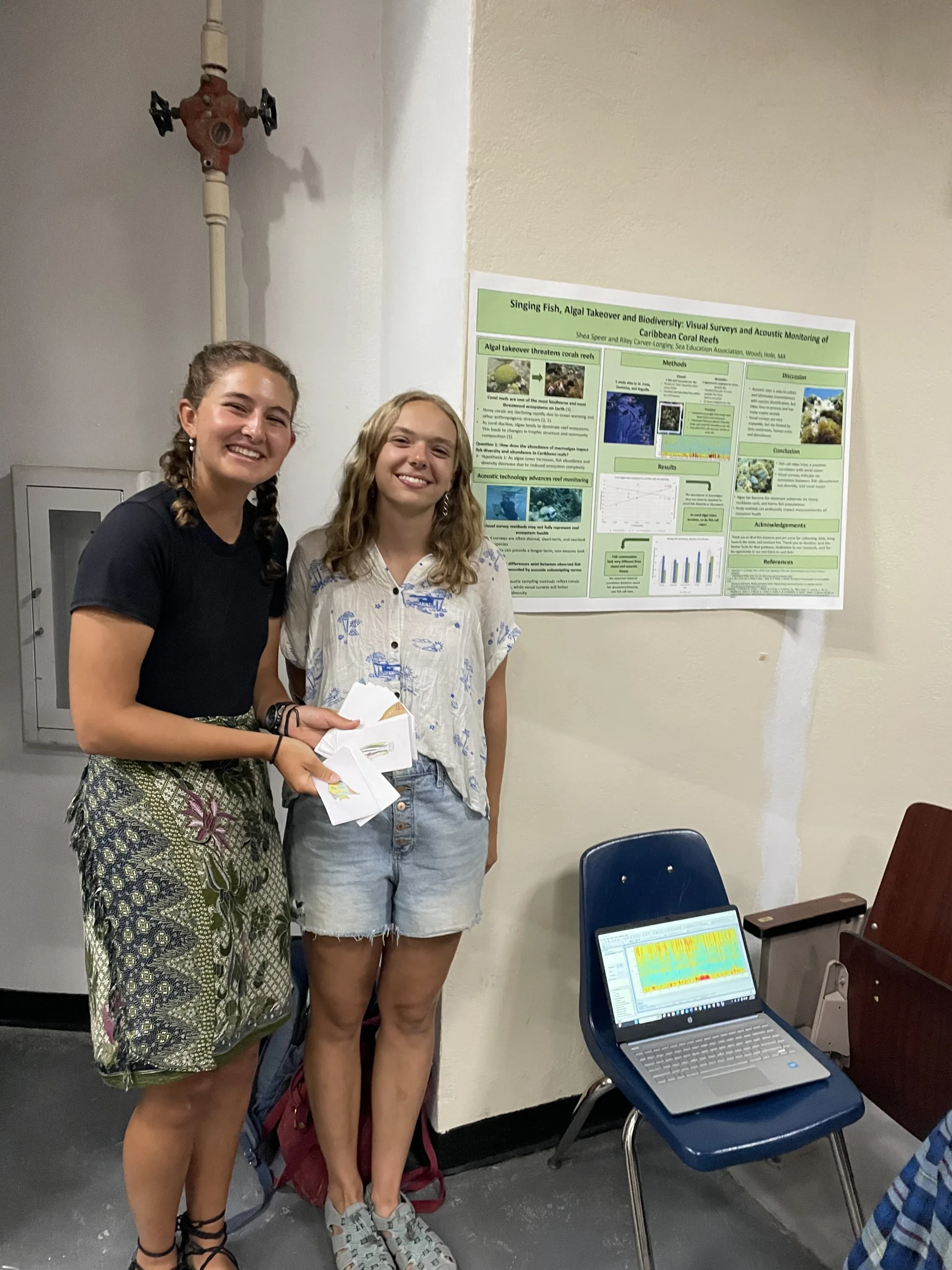
Student Research Symposium in St. Croix and Final Reflections
March 29, 2026
Alongside, Gallows Bay, St Croix
Three years ago, with all the ambition and none of the planning that often afflicts young graduate students, I carried a single acoustic recorder (hydromoth) in my hand luggage to join SEA’s ship in Hawaii. Yesterday, I got to watch proudly as our students presented their research on fish acoustics and reef soundscapes in the Caribbean to the community in St. Croix.
I have been scheming for years to apply this acoustics component to SEA’s reef and coastal programs. Like many sailors and scientists, I struggle to find the time and space to integrate all my interests together into the scope of one project, trip, job and lifetime. I have borrowed various acoustic recorders from collaborators, tried and failed to make protocols and plans, had students use the data, and had students not use the data. At times, I failed to do what I set out to, but I learned a lot in the process. This year, we were finally able to purchase our own recorders and fully include them in our sampling protocol.
Watching the students present their research at the local high school the other day, I was reminded why I persisted in this goal. Acoustics is still a somewhat niche research method, but it is growing in popularity. Not only are acoustic recorders an effective research tool, but they are also accessible. Our hydromoths are low-cost, easy to deploy, and yielded the students exciting and significant results.
I feel so grateful that I got to share my passion for eavesdropping on these underwater soundscapes with five of our students. They, in turn, got to introduce their audience to the wild world of fish sounds, asking students for their best impression of a fish call before playing some of our recordings. Additionally, on this voyage, I am proud to say that we collected usable data for our local and at-home collaborators. As we continue to work in the Caribbean in the coming years, returning to St. Croix, Dominica, and Anguilla, I feel positively about our abilities to build out our capacity and impact with these tools.
But more than learning about the highs and lows of acoustics, all the students learned about the trials, tribulations, and joys of field research, of working and living in a close and cooperative community, and reaching goals as a team. That was evident yesterday in the pride and confidence with which all the students presented the research they have been collaborating on this semester. I love field science because every experience has pushed me to grow as a scientist and as a person. This semester, there was a lesson in every long day in the field, both in experiencing the ecosystems and connecting with watchmates. The students will graduate and leave the ship this morning. In some ways, they’re leaving just as they came, at the same time, I’ve watched everyone, including the professional crew, become more authentic, more confident, and more resilient versions of themselves.
Fair winds and following seas C325!
Kenzie Meier, Teaching Fellow
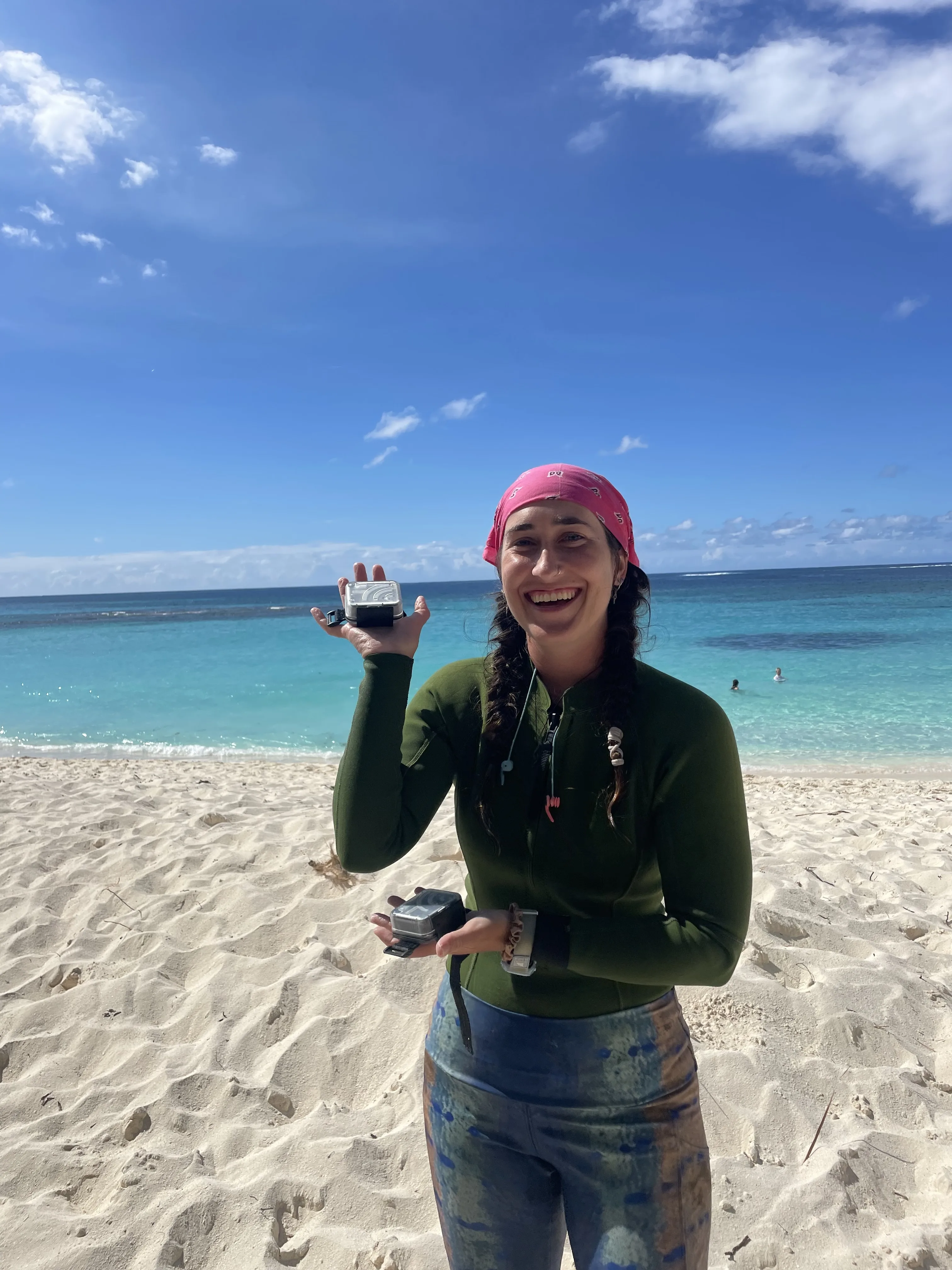
Kenzie with our very own hydromoths after our final snorkel of the program.
Recent Posts from the Ships
- Ocean Classroom 2024-A collaborative high school program with Proctor Academy
- Collaborations and Long-term Commitments: SEA’s Caribbean Reef Program Sets a Course for Coastal Programs that Compliment Shipboard Experiences.
- Sea Education Association students prepare for life underway using state of the art nautical simulation from Wartsila Corporation.
- SEA Writer 2022, Magazines From the Summer SEA Quest Students
- Technology@SEA: Upgrades Allow Insight into Ocean Depths
Programs
- Gap Year
- Ocean Exploration
- High School
- Science at SEA
- SEA Expedition
- SEAScape
- Pre-College
- Proctor Ocean Classroom
- Protecting the Phoenix Islands
- SPICE
- Stanford@SEA
- Undergraduate
- Climate and Society
- Climate Change and Coastal Resilience
- Coral Reef Conservation
- Marine Biodiversity and Conservation
- MBL
- Ocean Exploration: Plastics
- Ocean Policy: Marine Protected Areas
- Oceans and Climate
- Pacific Reef Expedition
- The Global Ocean: Hawai'i
- The Global Ocean: New Zealand