
Programs Blog
The Biology of the Corwith Cramer & Thoughts on the Sea
Wednesday, May 13th, 2026.
Noon Position: (Lat and Long): 41 degrees 10.9’ N, 070 degrees 49.2’ W
Log (nm): 3153 nm
Weather / Wind / Sail Plan (from 1300 Watch Change): Cloudy, 12 degrees C, SSW force 5 wind, SW 4ft swell. Sailing on a port tack broad reach under the stays’ls and jib.
Description of location: Offshore of Martha’s Vinyard
It has been a long time since my last blog. Roughly six weeks and three thousand nautical miles later and so much has changed. When I last wrote, the Cramer lay anchored off St. John’s in the hot, turquoise waters of the Caribbean. Now we approach anchor tonight off Martha’s Vineyard, trading that clear warm water for a colder green sea littered with lobster pots. What can be said of the journey? Much perhaps but constrained by language and time I have selected a few thoughts to share.
The ship is a living organism. This much has become clear to me. When we docked in Bermuda, I recall the ship felt dead with no swell or movement, and I remember how it came to life once again when we put to sea, eagerly jumping through the waves and swaying rhythmically. It is not only the result of outward movement that gives this impression, however. Much like any creature the ship has a nervous system, an immune system, even a digestive system. It functions as a colonial organism, with each individual on board providing for the wellbeing and goals of the whole, similar to corals or the man o’ war hydrozoans we collected.
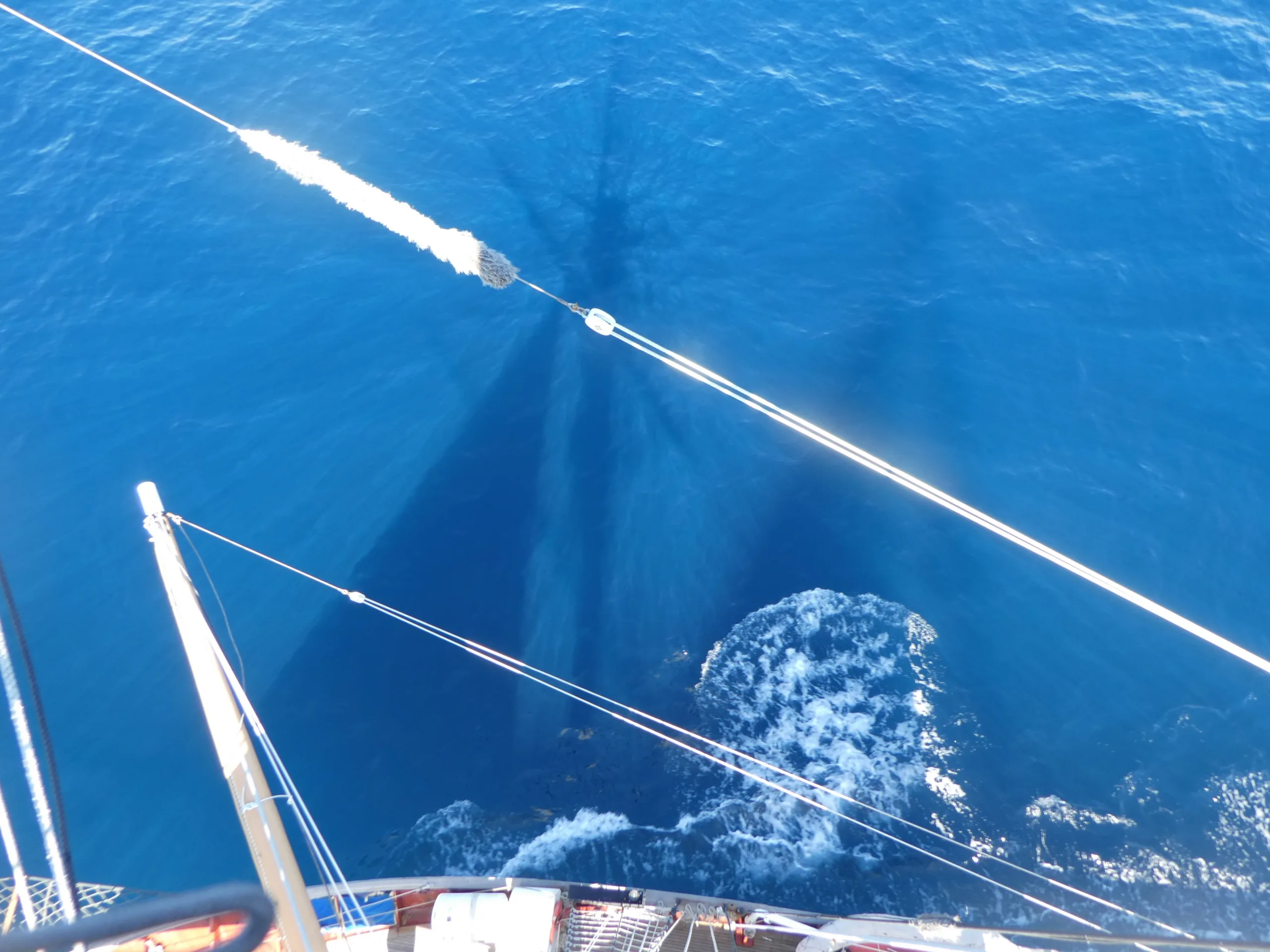
Allow me to paint for you a picture. The Corwith Cramer slices through the water, metal shell vibrating with energy. Muscles heave on tendons to actuate limb segments, shifting the wings into the wind. Later, when the Cramer is resting one of those tendons will be repaired to ensure the wings continue to catch the wind. Inside the creature, an immune cell looks for anything out of place that could harm the animal. Eyes peer out over the horizon and send signals to the brain, telling it of another ship. The brain processes this information and signals more muscles which control the wing below water to change its course. The intestines are full and a signal is sent from the brain for the ship to relieve itself. Like any organism, discord between the cells will lead to autoimmune disease, crippling the ship.
Taking this view of the Corwith Cramer I think demonstrates the level of commitment required to go to sea. You are not simply going on a trip. You are subsumed by this larger creature with its own needs and desires. This is not to say I have found my experience to be horrible in any way; I have found many moments of happiness while sailing. The Corwith Cramer takes care of itself, and when you are a part of it, it takes care of you. This symbiotic relationship between all things at sea is quite comforting, and it creates an intensity of community unlike any I have experienced before with all the highs and lows of life. However, like all worthwhile pursuits it is not an easy thing to do, and it requires dedication.
The sea that surrounds us daily makes it clear how space is relative. I think many people are aware of how time is relative, perceived as going faster on weekends and slower on weekdays. What fewer people realize is that space also has this property. The ocean is so big that it reduces our ability to judge the dimensions of the world around us. Dwarfed by that engulfing blue, the ship feels huge. It is the only thing in existence, the only land to be found. When compared to a town, the ship is tiny, but what can it be compared to at sea? And so space expands.
In the opposite direction the horizon shrinks. That line may be a dozen or more miles away, but with no landmarks to tell, it may as well only be one mile out. I find I never feel so far from land as right before I can no longer see it. The ocean becomes a tiny blue petri dish on clear days, but when there are clouds in the sky, they tower and draw your eye. Under the right conditions, you can forget you sail on a liquid membrane and simply fly through the skies instead. Other days, the ocean is more insistent with its swell, knocking over people and cups, and rattling pans. The space around us is warped by our perception, but we are not the masters of it.
I think the final thing I’ll share is that the natural world is beyond belief and it is still here. I think it is easy to grow disheartened as conservationists, especially since we are often so far removed from the nature we are trying to protect, and human influence exerts itself globally. Plastics were caught in many of our neuston tows, and although not daily, ship sightings were common enough to be reminded of everyone we share the sea with. The glow of the eastern seaboard looked like a second sunrise, and satellites danced amongst the stars.
Amidst that all, however, we saw pods of dolphins jump through the waves and swim before the ship at night trailing ghostly auras of bioluminescence as they jetted through glowing blooms of jellyfish. We saw sea birds dive to catch their prey, and mahi chase flying fish which leapt from the water and soared over the sea. We felt the elation of hearing the cries of “Whale!” and rushing to deck to see great spouts of water and a tail as the king of the seas dove downward into the cobalt blue depths where such wonderful creatures lurked, undisturbed save by our meter net. We saw schools of little sharks swim towards our boat curiously and wiggle off into the waves when they got too close. The seas are alive, and every day we move closer like a slow unstoppable tide towards a world where they are no longer threatened.
I am happy to be here, and I am so proud to be part of this crew and ship. I love you mom and dad, and I’m excited to see you and the family! Ko’u ipo, you were in my dreams.
The ocean is vast and small
It stretches from sky to land
It speaks and cannot be ignored
We listen and understand
We cannot see the bottom
We try.
Quin Seifert, B Watch
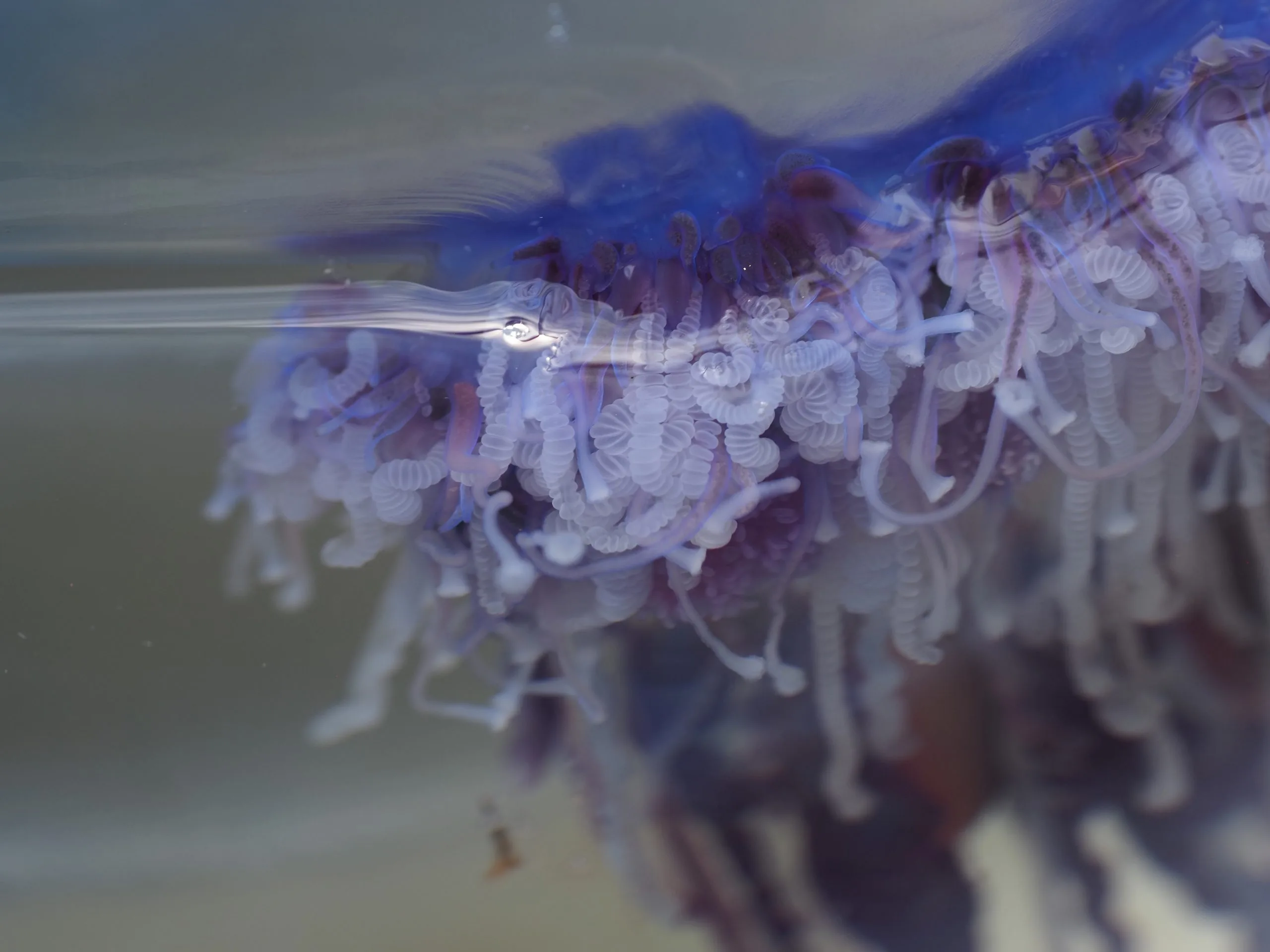
Tentacles of Physalia, a venomous colonial hydrozoan. Photo taken by Sam Ruemmler
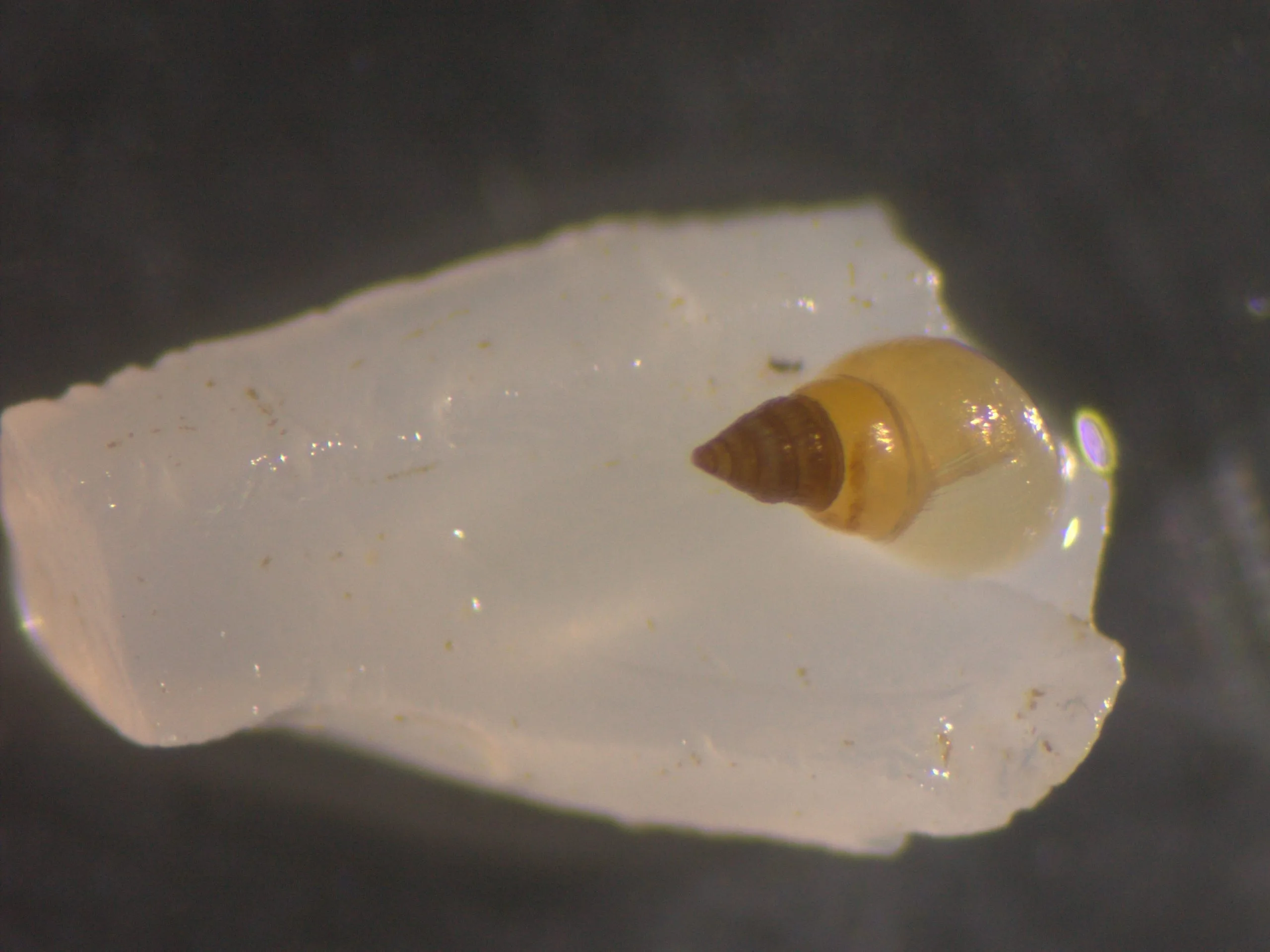
Sargassum snail living on microplastic fragment.
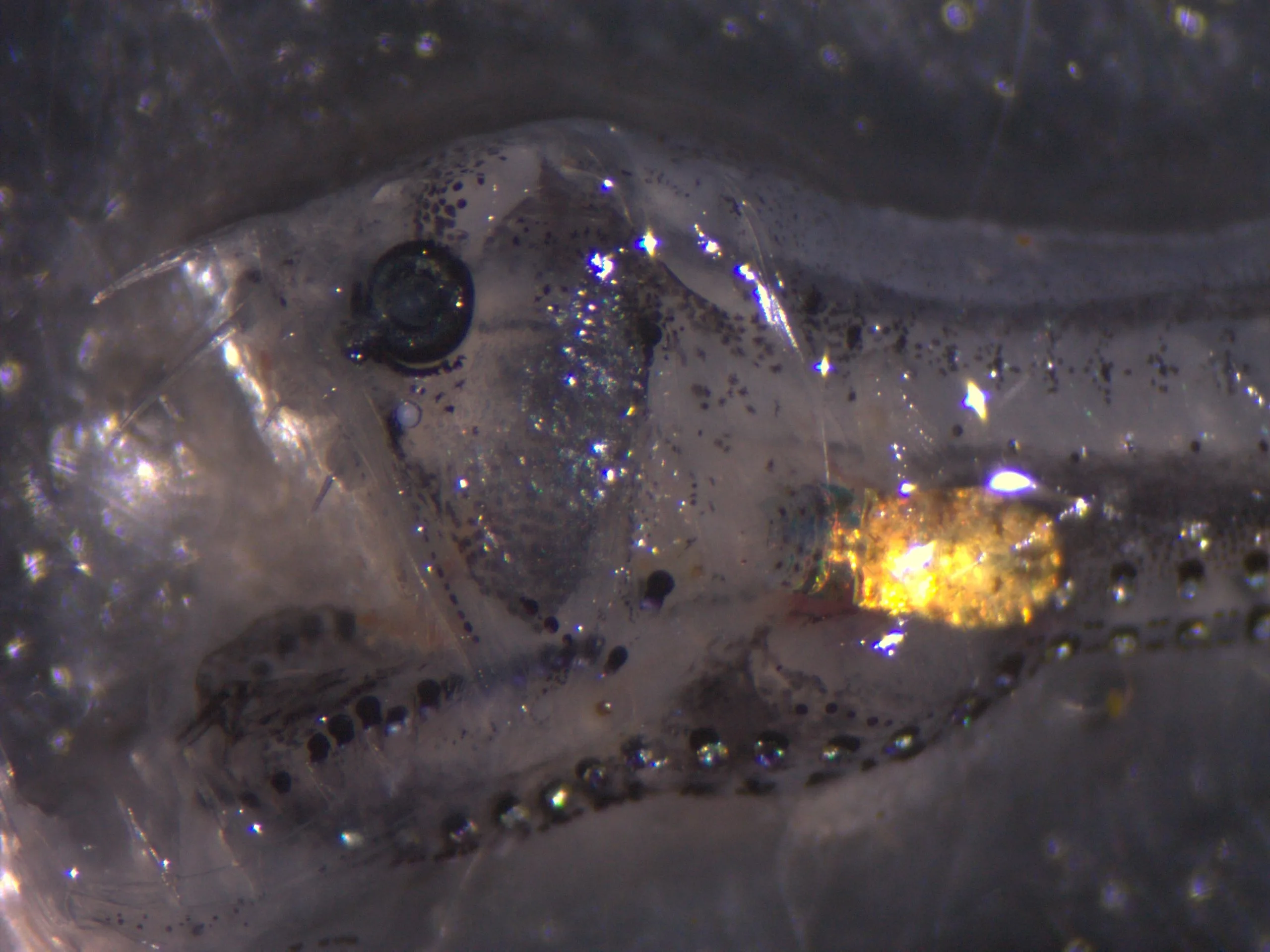
Mesopelagic fish from meter net tow.
Recent Posts from the Ships
- Ocean Classroom 2024-A collaborative high school program with Proctor Academy
- Collaborations and Long-term Commitments: SEA’s Caribbean Reef Program Sets a Course for Coastal Programs that Compliment Shipboard Experiences.
- Sea Education Association students prepare for life underway using state of the art nautical simulation from Wartsila Corporation.
- SEA Writer 2022, Magazines From the Summer SEA Quest Students
- Technology@SEA: Upgrades Allow Insight into Ocean Depths
Programs
- Gap Year
- Ocean Exploration
- High School
- Science at SEA
- SEA Expedition
- SEAScape
- Pre-College
- Proctor Ocean Classroom
- Protecting the Phoenix Islands
- SPICE
- Stanford@SEA
- Undergraduate
- Climate and Society
- Climate Change and Coastal Resilience
- Coral Reef Conservation
- Marine Biodiversity and Conservation
- MBL
- Ocean Exploration: Plastics
- Ocean Policy: Marine Protected Areas
- Oceans and Climate
- Pacific Reef Expedition
- Plastics and Biodiversity in the Sargasso Sea
- The Global Ocean: Hawai'i
- The Global Ocean: New Zealand
- The History of Whaling & Whale Conservation