
Programs Blog
When Fish Fly
Monday, 13 April, 2026.
Noon Position: (Lat and Long): 22 degrees 06.1’ N, 065 degrees 11.4’ W
Log (nm): 507.2 nm
Weather / Wind / Sail Plan (from 1300 Watch Change): Mostly rain and clouds, wind SW x S, sailing under the three lowers and mainly North
Description of location: Somewhere in the Atlantic (224 nm N of Puerto Rico)
Hello hello,
First comes the blue, which switches constantly here depending on the weather. Sometimes it’s deep, a purple almost, later turning translucent with the sun. Reminds me of glaciers and unending amounts of time. Which is also what the days feel like: rotations of watch, sleep, of drawing and looking at the waves. The horizon, a whole circular view, never really ends. And so I sit with how big this place is, in depth, in color, in size and scope. During the past night watch, we had to climb out onto the headrig in order to stow the jib after striking it. Somewhere around 2200, the water oily and black, I looked down remembering that we were travelling over the Puerto Rico Trench. 7,000 meters of ocean beneath our feet.
Second, flying fish. The first day of sailing, they jumped out past the bow. Little silver things that fly out of the ocean?? A group caught a couple in the neuston tow last night. Big round eyes and silvery orange scales with their wings tucked in. Sometimes a bird passes by, tucking its own wings in and diving into the water to catch a fish. They circle for a bit, staying close to the bow and cut close to the water. So many creatures here: shrimp, copepods, eel and fish larvae, salps (the list continues far). To look under a microscope, counting and identifying these guys as the boat rolls and it pours outside from a squall is quite a new lab experience. Simon and I almost went insane in the lab today with 6 hours of everything moving about.
Another good time to lose a sense of reality is during night watch on lookout. Which is where I stood last night, singing to myself and doing anything to stay awake in the last few hours. But it’s beautiful, the bioluminescence bouncing off the bow in sheets and waves like fallen stars. Our only other source of light last night was lightning as we navigated through squalls. Everything dark and hidden until a random flash illuminated the edges and shadows of clouds full and heavy with rain.
Third, stars. Which, due to the recent weather, have not been as visible. But during the other night when we deployed the hydrocast to collect water samples, Polaris and the Southern Cross were in the sky. Seeing both under the same moon was insane, since they are usually separated by their hemispheres. I’ve been learning new constellations with the help of Zara, Sophie, and Sam, who also lead star frenzies at dusk. The Heavenly G is a huge spiral much like the one in Scorpius. It extends high into the night sky and is eternally chasing Orion, which of course reminds me of my mom. Hi mom! If you are reading this. In all things ocean I see my parents, which is a bittersweet reminder being out here. I know they would love it.
I must shower and go to bed; I am on morning watch tomorrow. While I end this, water is rolling up against the window of the library (you are never far from the ocean).
I will see you soon!
Etta Lund, C Watch
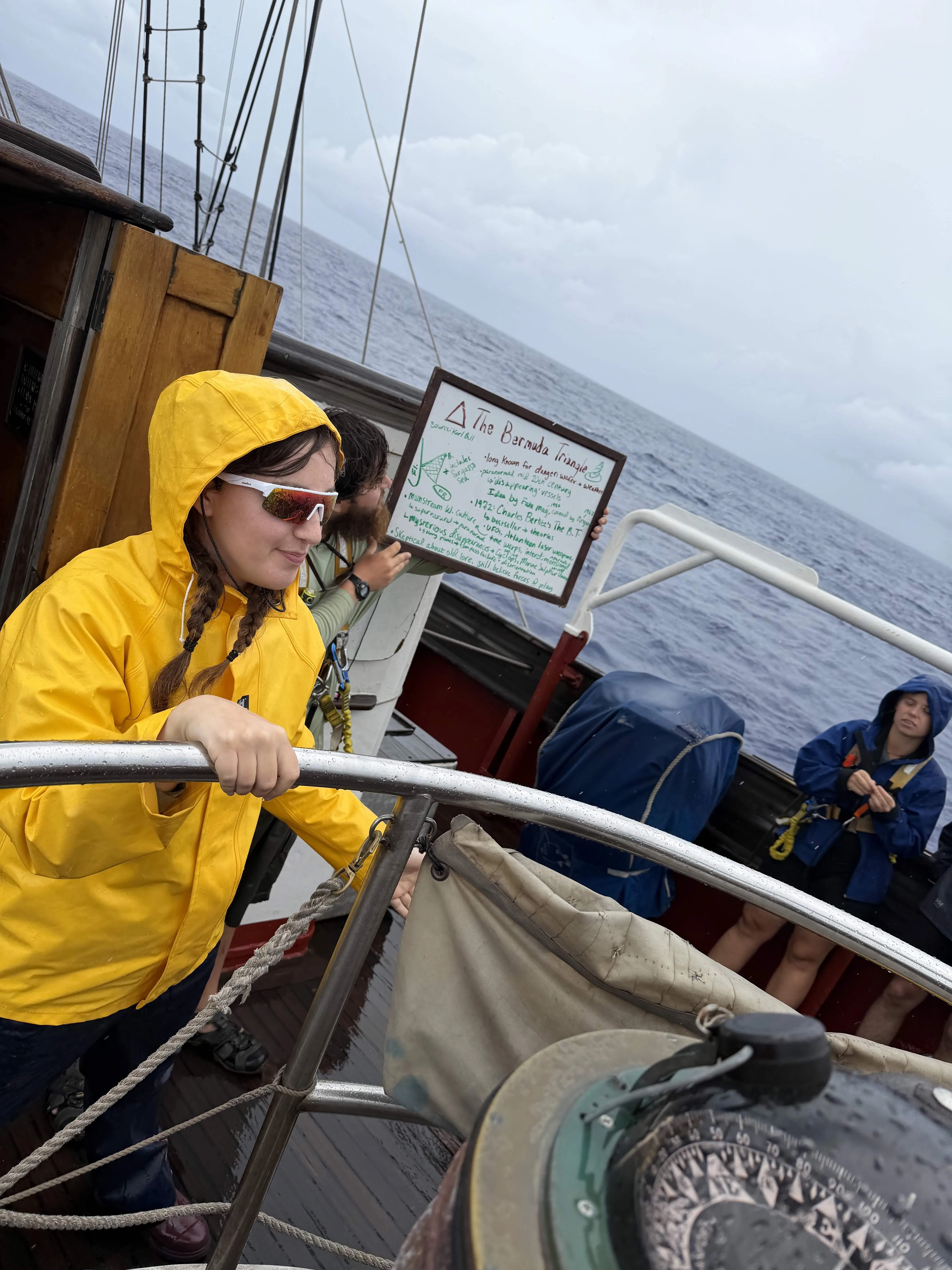
Class on the quarterdeck today (and also in the rain) – Image by Sarah Kingston
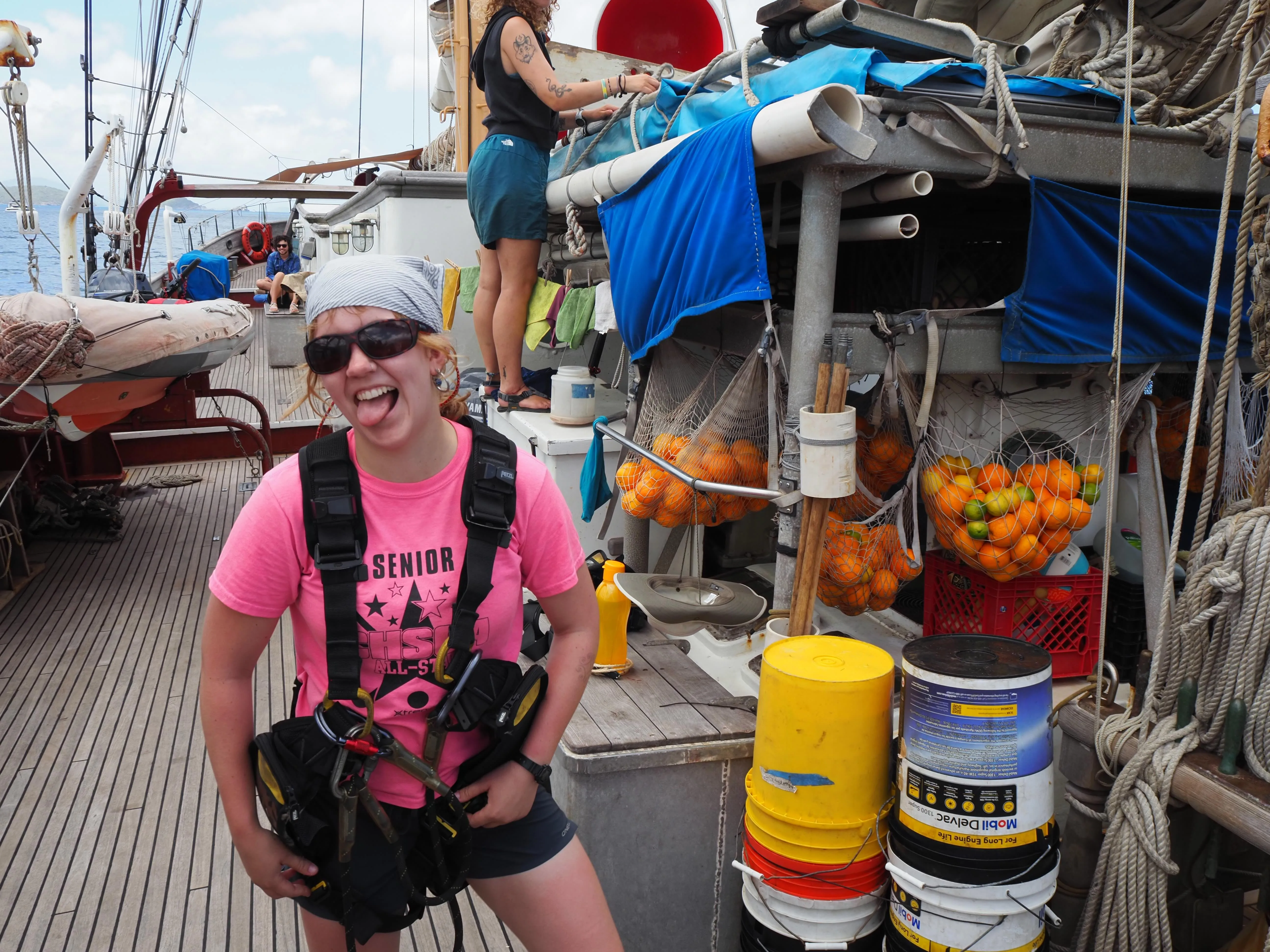
Ready to climb the rigging! – Image by Sam Ruemmler
Recent Posts from the Ships
- Ocean Classroom 2024-A collaborative high school program with Proctor Academy
- Collaborations and Long-term Commitments: SEA’s Caribbean Reef Program Sets a Course for Coastal Programs that Compliment Shipboard Experiences.
- Sea Education Association students prepare for life underway using state of the art nautical simulation from Wartsila Corporation.
- SEA Writer 2022, Magazines From the Summer SEA Quest Students
- Technology@SEA: Upgrades Allow Insight into Ocean Depths
Programs
- Gap Year
- Ocean Exploration
- High School
- Science at SEA
- SEA Expedition
- SEAScape
- Pre-College
- Proctor Ocean Classroom
- Protecting the Phoenix Islands
- SPICE
- Stanford@SEA
- Undergraduate
- Climate and Society
- Climate Change and Coastal Resilience
- Coral Reef Conservation
- Marine Biodiversity and Conservation
- MBL
- Ocean Exploration: Plastics
- Ocean Policy: Marine Protected Areas
- Oceans and Climate
- Pacific Reef Expedition
- Plastics and Biodiversity in the Sargasso Sea
- The Global Ocean: Hawai'i
- The Global Ocean: New Zealand
- The History of Whaling & Whale Conservation