
Programs Blog
Beautiful Glorious and Fantastic
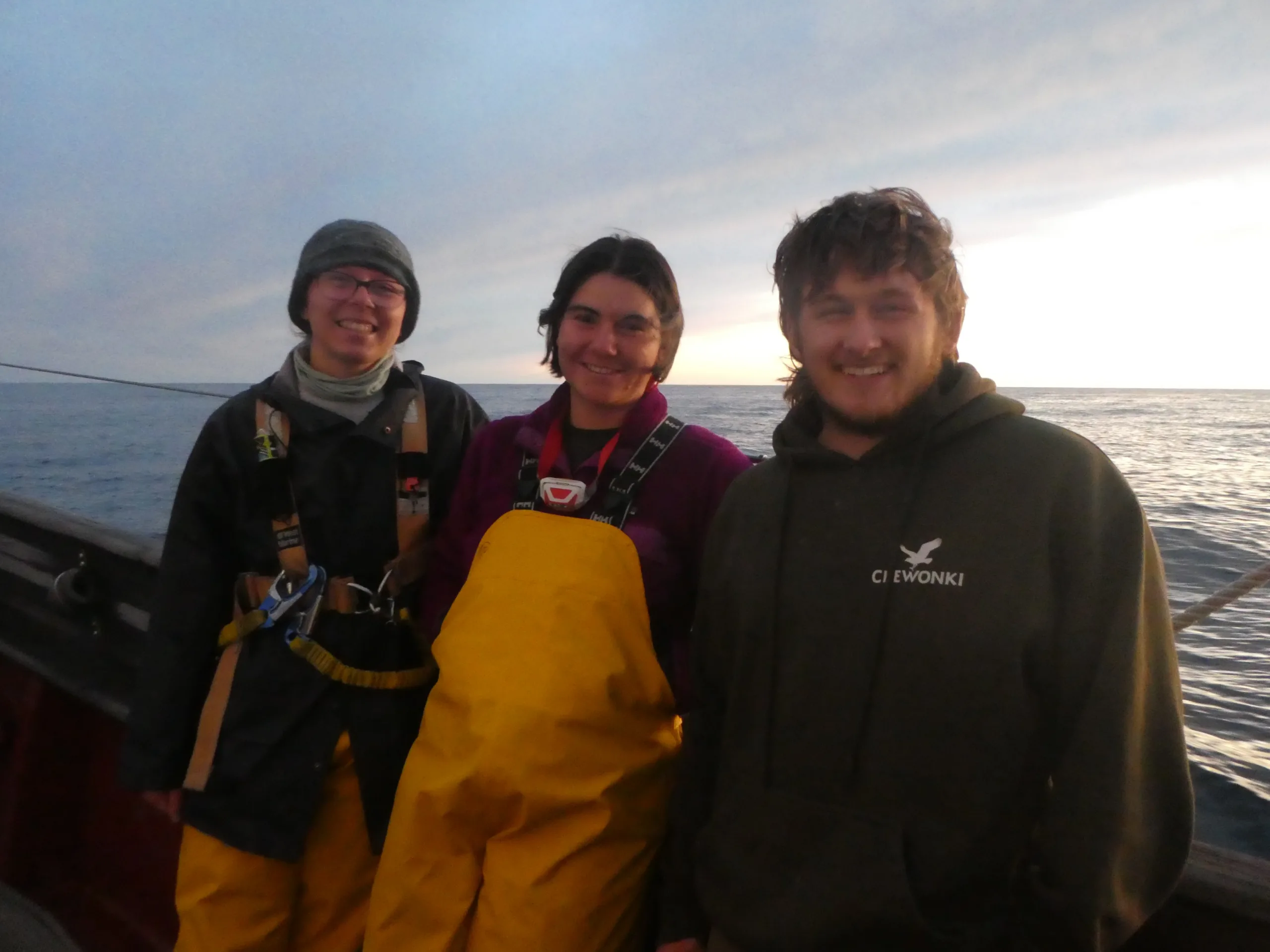
Tuesday, May 12th, 2026.
Noon Position: (Lat and Long): 40 degrees 41.33’ N, 071 degrees 38.25’ W
Log (nm): 3046 nm
Weather / Wind / Sail Plan (from 1300 Watch Change): Sailing on a STBD tack broad reach under the four lowers and the JT, wind SE F5, seas SWxE 4’.
Description of location: Past the Gulf Stream, 30 nautical miles SE of Long Island.
I’ve heard a lot about the Gulf Stream. All my environment classes throughout high school and college have touched on the topic, some with more elaboration than others and all for good reason. The Gulf Stream is the strongest western boundary current in the world; it helps define the North Atlantic Gyre which we just passed through and is responsible for quickly transporting large amounts of warm water all the way from North America to England (sometimes the water can move at more than four knots!). The Gulf Stream is responsible for shifting weather patterns and helping to define the different ecosystems between the Sargasso Sea and the less salty North Atlantic waters. It even has a big role in American Eel migration patterns, although this topic definitely needs more research. Through my coursework, I have learned these facts and more, and it has been drilled into me how important and overall epic the Gulf Stream is. For this reason, the Gulf Stream, although maybe just a geostrophic current to some people, has become sort of an enigma to me (I am aware this statement is strange). Something that you learn about in school but that you will probably never see in person or ever get to interact with. It definitely did not seem like a place people actually go to, and I was skeptical the difference in water characteristics would even be that pronounced. Then, two days ago I woke up and went on deck to discover that the Cramer had made her way right into the middle of this infamous stream.
Noticeably, the water color had shifted to an indigo blue and the air temperature felt slightly warmer. Peaking my head into the lab, the temperature salinity and chlorophyl-a values from our flow-through system in the lab had all shifted from the numbers I was used to writing in our hourly reports and the current was doing something wild. Despite my doubts, the Gulf Stream truly was as beautiful, glorious, and fantastic as I had been told, and I was unsure how to feel. Although I had been highly anticipating this moment, reaching the Gulf Stream in our cruise track meant it was the beginning of the end. After weeks staring out at the Sargasso Sea, I was not ready to give up the purple-y blue that had constantly surrounded me. I would no longer get woken up by a cheerful whisper from one of my shipmates, eat all my meals on gimballed tables with both my classmates and professors, say things like “I’m using the head” or “square the course yard braces” and it be normal, enjoy a post-dinner cup of tea on the quarter deck while trying to see the green flash, or try to balance myself on the bowsprit to get a better view of the horizon.
What really got me, was later that day as I stood lookout and noticed the Gulf Stream water shift into an almost too familiar greenish hue. The new smell in the air was one I knew well from many summers visiting Midcoast Maine, I’m not sure how to describe it other than by saying it smelt like home. My remorse from earlier was replaced with the same hopeful pleasantness that I had at the start of this voyage. I felt the residual gratification of successfully calling a sailing maneuver or helping run a science deployment. The excitement of actually getting to complete the research projects we had planned on shore and successfully process biofilm from the microplastics collected in our neuston tows. A process, which used to be as abstract to me as the Gulf Stream, now a topic I am excited to keep building my knowledge on. Looking out on the North Atlantic waters, I reflected on how grateful I am for the opportunity to be a part of C-326. Even though our voyage is all too quickly coming to an end, I will always have my time aboard the Corwith Cramer and the lovely community, memories, and lessons that came with it.
Kate Murphy, B Watch
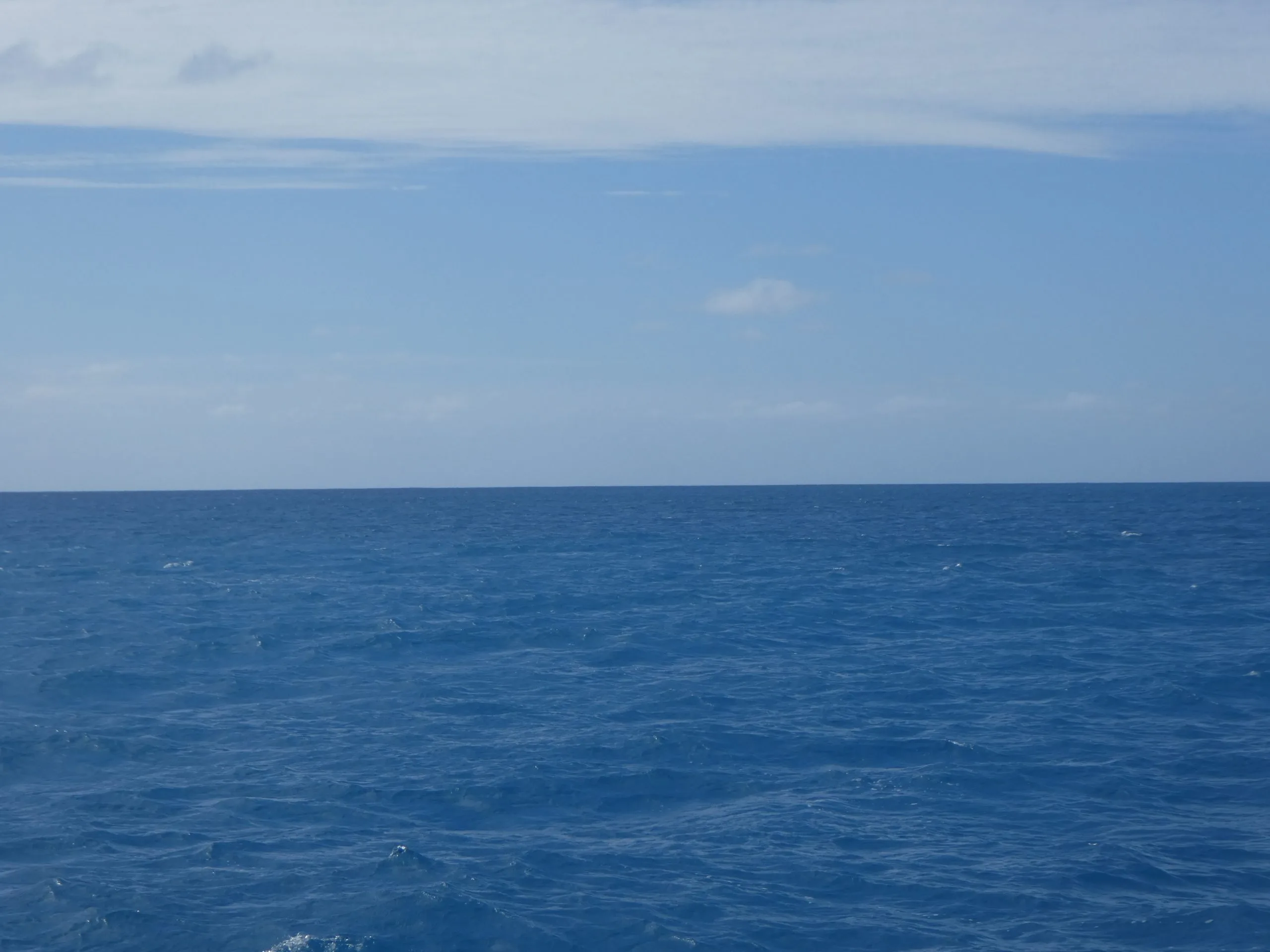
The Blue! See You Later Sargasso Sea!
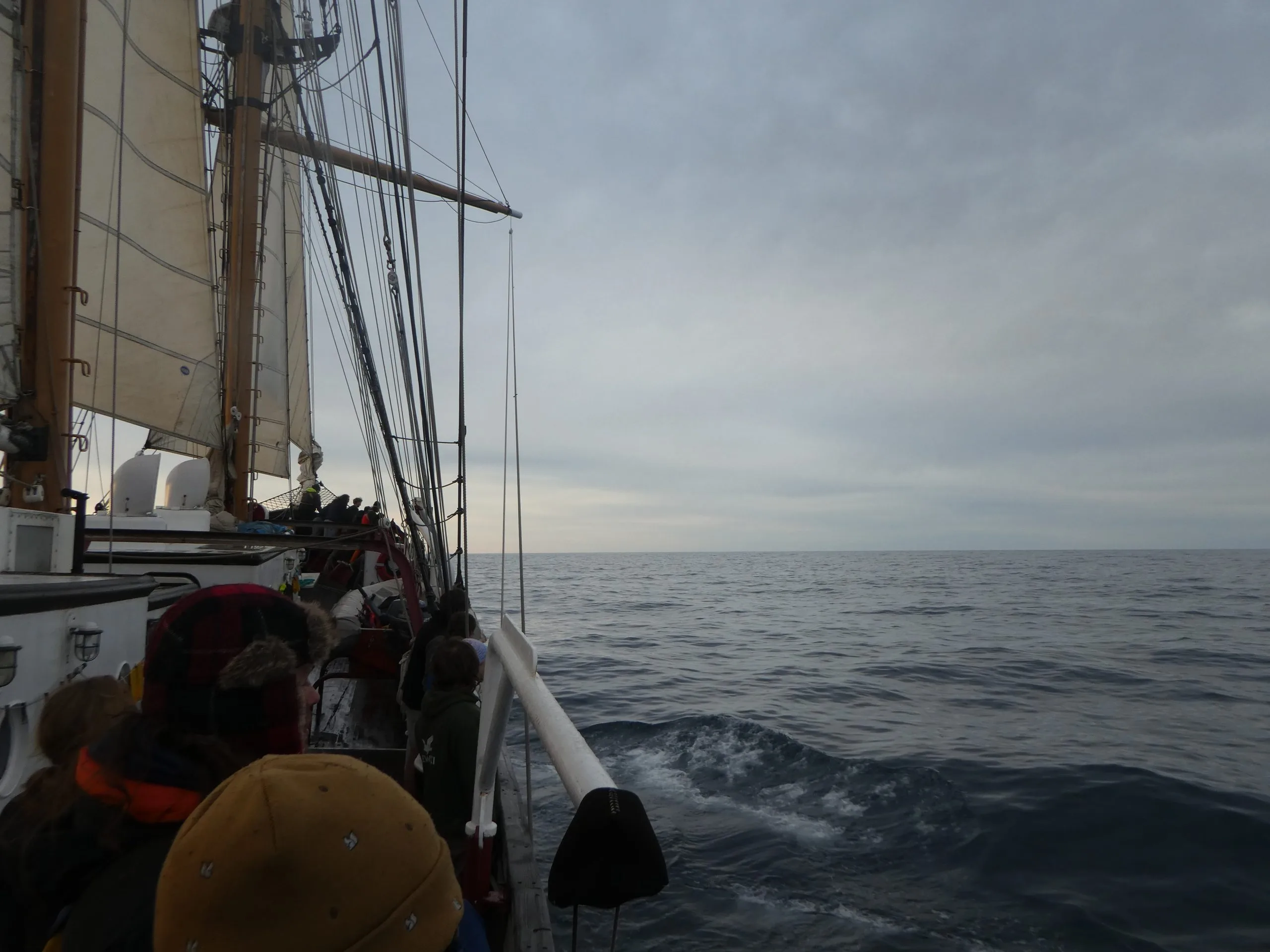
Everyone Checking Out the Dogfish On the Continental Shelf
Recent Posts from the Ships
- Ocean Classroom 2024-A collaborative high school program with Proctor Academy
- Collaborations and Long-term Commitments: SEA’s Caribbean Reef Program Sets a Course for Coastal Programs that Compliment Shipboard Experiences.
- Sea Education Association students prepare for life underway using state of the art nautical simulation from Wartsila Corporation.
- SEA Writer 2022, Magazines From the Summer SEA Quest Students
- Technology@SEA: Upgrades Allow Insight into Ocean Depths
Programs
- Gap Year
- Ocean Exploration
- High School
- Science at SEA
- SEA Expedition
- SEAScape
- Pre-College
- Proctor Ocean Classroom
- Protecting the Phoenix Islands
- SPICE
- Stanford@SEA
- Undergraduate
- Climate and Society
- Climate Change and Coastal Resilience
- Coral Reef Conservation
- Marine Biodiversity and Conservation
- MBL
- Ocean Exploration: Plastics
- Ocean Policy: Marine Protected Areas
- Oceans and Climate
- Pacific Reef Expedition
- Plastics and Biodiversity in the Sargasso Sea
- The Global Ocean: Hawai'i
- The Global Ocean: New Zealand
- The History of Whaling & Whale Conservation