
Programs Blog
A Love for the Sea and C-326

Friday, 15 May, 2026.
Noon Position: (Lat and Long): 41 degrees 31.4’ N, 070 degrees 40.3’ W
Log (nm): 3187 nm
Weather / Wind / Sail Plan (from 1300 Watch Change): Alongside at Dyer’s Dock
Description of location: Woods Hole, MA
Hello friends and family, my name is Jakob. For those of you who know me, I am a first year Master’s student at the University of Connecticut, whose research focuses on the remote sensing of micro plastics and ocean color. For those of you who don’t know me, I am a world-renowned chef, who has won multiple James Beard awards for my restaurants in Boston. I will let the readers determine which one is true. Anyways, I have had the honor of being a special guest on the Corwith Cramer for C-326 as both a researcher and crew member (sorry to disappoint the foodies out there). Originally, I hadn’t planned on joining in on writing a blog post, but one of my fellow C-Watch members signed me up, which I gratefully thank them for. But, the last blog post? That’s a lot of pressure…While brainstorming what to write about, I’ve bounced between whether to make this more personalized, given my unique position on this cruise, or to make this more of a “C-326 Rewind” type thing. As interesting as my personal journey has been on this trip and my research has been, I think it is only fitting that the last blog post is all-encompassing, exploring the opportunities we all had, but through my eyes.
For me, I learned about this trip during a meeting with my advisor, where we sat down at the beginning of this year to try and find a cool research cruise for me to go on during my first year. I really only expected to be doing research and enjoying my time at sea, but instead, I got so much more out of this. We all did. I’m an oceanographer at heart, so being by the water is my home, but for the most part, my experiences have been relatively coastal. Being able to wake up in the morning or go to watch or take my measurements and see nothing but the ocean surrounding me has left me in awe. I love all bodies of water, but the beauty that you get from these open ocean waters is so different from the beauty of coastal waters. Now, it might be the ocean color science in me talking, but the biggest thing I would notice was how vastly different the color of the water changed with our location. In St. Croix you get these refreshing turquoise-blue water. In Bermuda, you get a mesmerizing greenish teal water. In the open ocean, you get to see water that is so blue it almost looks like it’s purple. And bringing it closer to home, recently, in these waters past the gulf stream, you get these incredibly green and nutrient rich waters. Being able to see these changes every day has been such a treat.
Aside from my research, I have also been able to contribute with a bunch of the other science being conducted on board, notably processing our Neuston tows and hydro cast water samples, both of which opened my eyes to a different side of marine science that I wasn’t entirely familiar with. Some of the coolest things I have seen this trip come from the tows and under the microscope during our 100-count. I think two of my favorite things I’ve seen from our Neuston tows are the spiny lobster larvae because of how alien-like and creepy it looks, and C-Watch’s newly (but not actually) discovered species of worm called ‘Oculus’. There was also that one tow recently where one of the watches got approximately 100 Medusa jellyfish to process, or the time where a group found a thousand fish eggs. Then there was the very rare meter net that if you were fortunate enough to be able to deploy one, myself included, you got to see some even crazier and cooler things. The lab also helped bring in our 35th crew member, Jerry the crab, who is now a permanent resident (and homeowner) on the Cramer. Despite being an absolute freak who loves to behead his food, Jerry is loved by all aboard the ship.
Putting aside most of the science from this trip, there was still so much to do. From reading on the lab top, to going aloft and sitting on the top yard, there were so many possibilities for what to do in our free time. My personal favorite was shooting stars during star frenzy. I had never been huge into constellations and the stars, but I got to learn A LOT about them during this trip and I’m really glad I did. Being able to walk outside and point out the stars and constellations just from their position in the sky or how they look is something I never would have been able to do. And while we’re on it, the stars at night? Incredible. I never knew I could see so many stars, let alone have the entire ocean lit up from these little, tiny specks in the sky. If there is any downside to this trip, it is that stars are truly ruined for me on land. It’ll be really hard to top how vast and beautiful the night sky has been. I would also like to, humbly, say that I have become very good at using a Sextant to shoot the stars during this trip. Now if shooting stars or going aloft or on the headrig isn’t for you, then the boat was also a great place to just relax and read a book or play cards. I’ve never been much of a reader myself, but I managed to get through 3.5 books on my booklist this trip, which I am very proud of. And the best part of reading outside when the weather is nice? There are almost always people playing music for you on the top of the charthouse.
The one thing I wasn’t completely expecting, which sounds silly to say aloud now, was how hands-on we would get with the boat and its intricacies. It all started with us memorizing the lines for the pin-chase and eventually got to us being able to understand how to trim sails properly for how we were set up on the wind. It’s just incredible how much we learned about this boat in such a short amount of time. I’ve never been good with memorizing so at times I got overwhelmed with the terminology, but even I was able to call for a gybe or tell people to strike a sail. Honestly, just the fact I was able to drive the boat is something I will never be able to forget! The best part about being able to do all of this was easily how I was able to do it with C-Watch. I pretty much saw these people all day, every day and I’d like to say I got to know everyone really well. From the dawn watch teatime to the mealtime shenanigans, we may not have been the quietest group, but boy did we have some laughs.
It has truly been such a wonderful experience to be on this boat and be with all of these incredible people. It’s honestly kind of funny to think about how close you can actually get with people when you’re all stuck in a wooden box in the middle of nowhere because I feel like I’ve known these people for years. Hell, we even got to go to Bermuda for a few days together and explore the island. Are there people I wish I got to know better? Of course, but even then, I hope I was able to leave a positive impression on everyone through my short time here. Thank you for teaching us and being patient with us. Thank you for the laughs and the support. Thank you for the delicious meals and snacks. Thank you, everyone, for making this both a safe and truly incredible experience for all of us. Most importantly, thank you for being my family for these last 6 weeks. I hope we can all meet again and I will never forget the experience I have had on C-326.
Farewell and adieu,
Kub
Jakob Werdell, C Watch
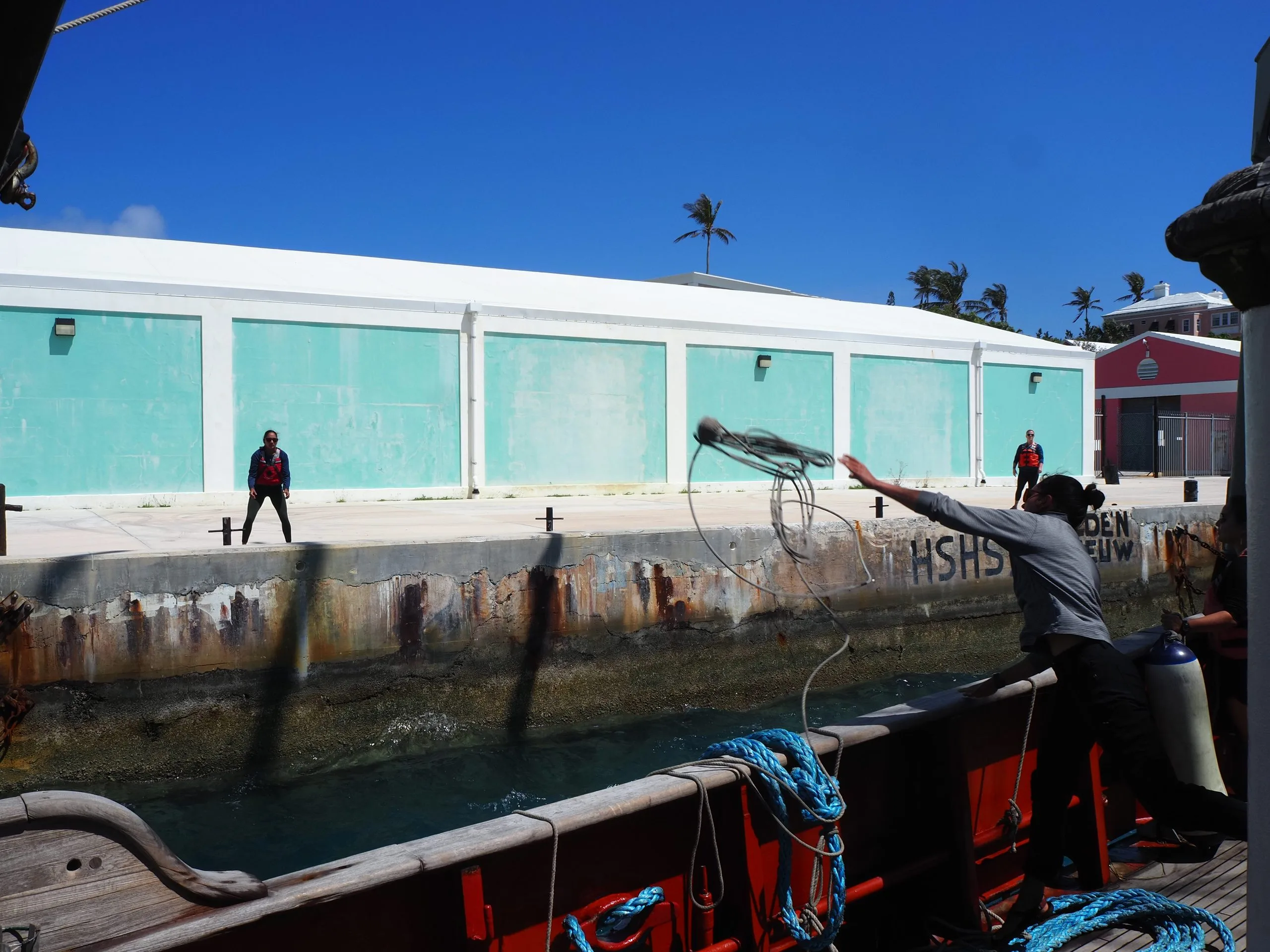
Best arm in the league. Docking at St. George’s. Photo taken by Sam Ruemmler.
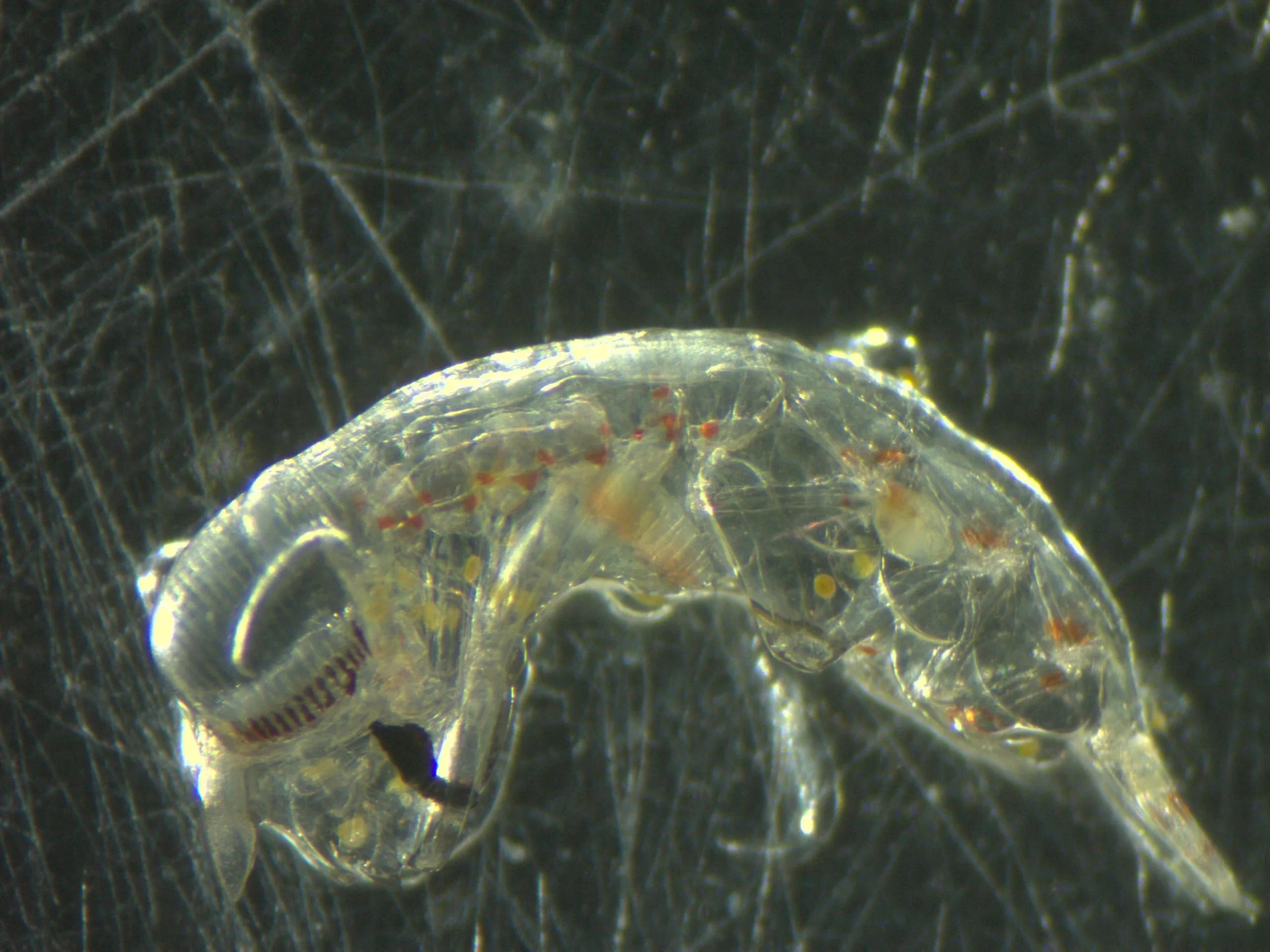
Discovery of a Xenomorph.
Recent Posts from the Ships
- Ocean Classroom 2024-A collaborative high school program with Proctor Academy
- Collaborations and Long-term Commitments: SEA’s Caribbean Reef Program Sets a Course for Coastal Programs that Compliment Shipboard Experiences.
- Sea Education Association students prepare for life underway using state of the art nautical simulation from Wartsila Corporation.
- SEA Writer 2022, Magazines From the Summer SEA Quest Students
- Technology@SEA: Upgrades Allow Insight into Ocean Depths
Programs
- Gap Year
- Ocean Exploration
- High School
- Science at SEA
- SEA Expedition
- SEAScape
- Pre-College
- Proctor Ocean Classroom
- Protecting the Phoenix Islands
- SPICE
- Stanford@SEA
- Undergraduate
- Climate and Society
- Climate Change and Coastal Resilience
- Coral Reef Conservation
- Marine Biodiversity and Conservation
- MBL
- Ocean Exploration: Plastics
- Ocean Policy: Marine Protected Areas
- Oceans and Climate
- Pacific Reef Expedition
- Plastics and Biodiversity in the Sargasso Sea
- The Global Ocean: Hawai'i
- The Global Ocean: New Zealand
- The History of Whaling & Whale Conservation