
Programs Blog
Earth Day Every Day
Wednesday, 22 Apr, 2026.
Noon Position: (Lat and Long): 28°15.66’ N, 64°49.32’W
Log (nm): 1240 nm
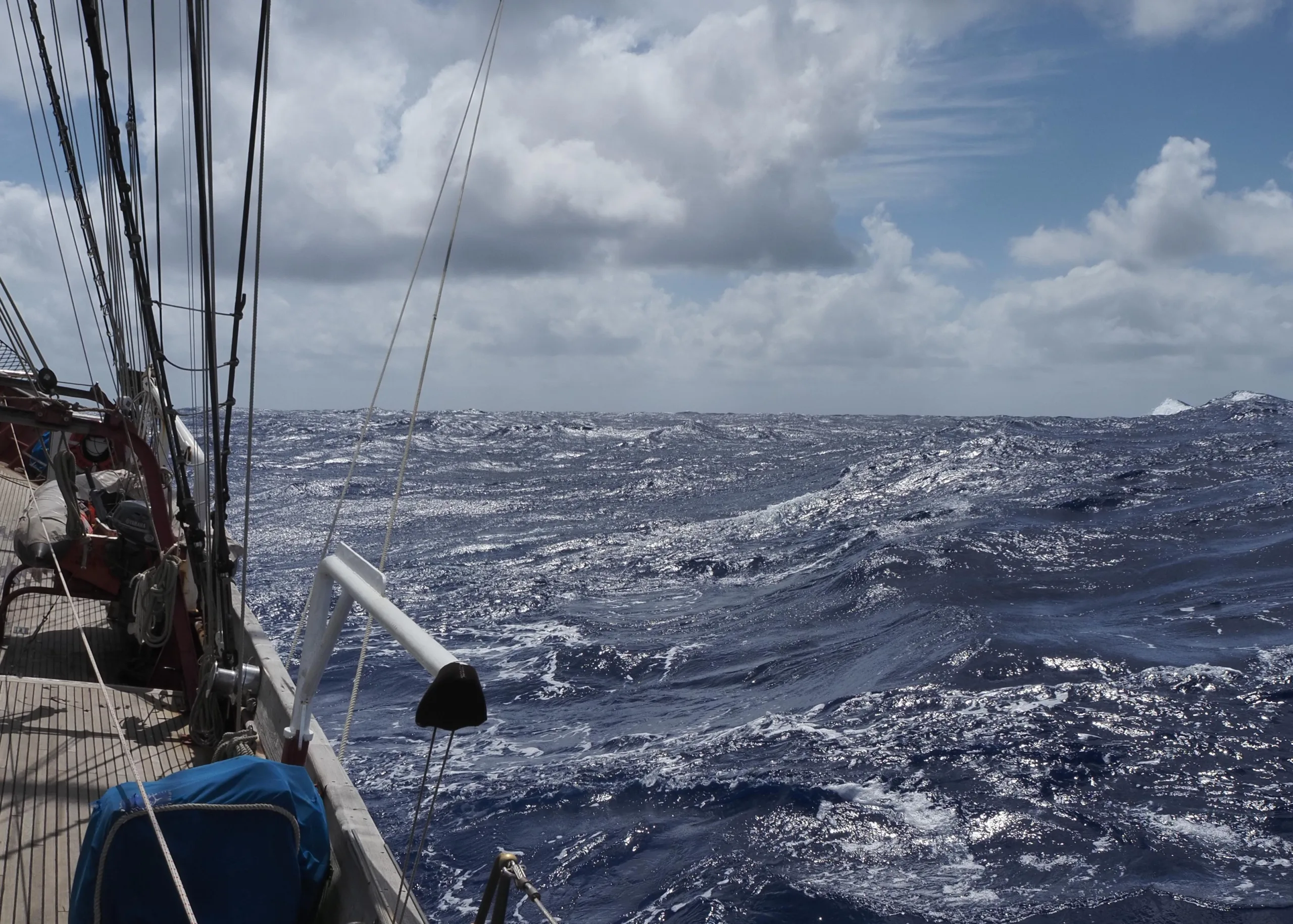
Weather / Wind / Sail Plan (from 1300 Watch Change): Sunny, 23°C (74°F), NxE wind F4 gusting to F5. Stbd tack close reach under the four lowers
Description of location: 250 nm South of Bermuda
On watch this morning we had two tropic birds fly by, a couple of storm petrels bobbing and weaving amidst the watery canyons of the waves, and mahi chasing flying fish off the bow. In fact, one of those flying fish misjudged his leap and landed just forward of the helm during our gybe to return to course after our science station. We got a Neuston tow in this morning, and the second image is of some of the organisms that we pull up in our nets.
On this fifty-sixth Earth Day we find ourselves deep within a remote piece of a little understood ecosystem, chipping away at our ignorance in the plodding, methodical way of science. Our track line on the chart plotter is full of curly cues where we have hove-to for science stations, lowering our instruments into stunningly blue water by day and spangled black waters at night. The ocean remains largely unexplored, and we are proud to be helping to make it a little more known, especially in the face of the rapid changes happening across Earth.
There have been successes since that original Earth Day teach-in. Huge efforts across the world have helped populations of animals like sea turtles and whales begin to recover. Our combined efforts to be stewards of the planet we share do mean something. As a shipboard community it’s much easier to track caring for our resources, as the results of efforts to conserve fresh water and properly sort and manage our trash can be immediately seen and smelled. Our hope is that part of the learning on a voyage like this is that doing your part matters, and that the bits and pieces add up faster than you might think, for better or worse. Luckily everyone is doing well at choosing “for better,” and our ship is clean and happy.
Shelly Hassett, B Watch, Deckhand
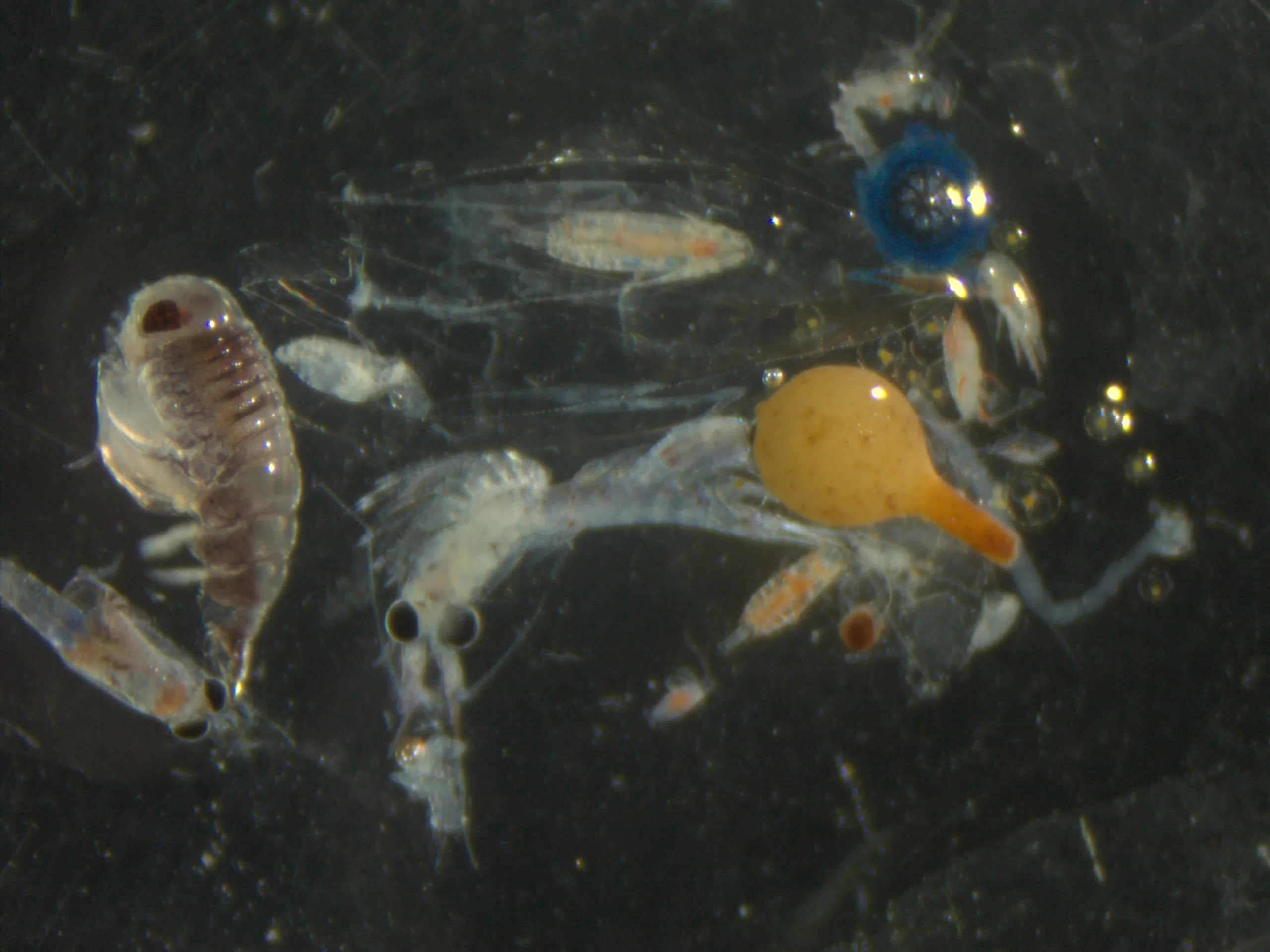
View through the lab dissecting scope at a sample from one of the neuston tows, featuring a blue button, several copepods, a hyperiid, a sargassum float, and more!
Recent Posts from the Ships
- Ocean Classroom 2024-A collaborative high school program with Proctor Academy
- Collaborations and Long-term Commitments: SEA’s Caribbean Reef Program Sets a Course for Coastal Programs that Compliment Shipboard Experiences.
- Sea Education Association students prepare for life underway using state of the art nautical simulation from Wartsila Corporation.
- SEA Writer 2022, Magazines From the Summer SEA Quest Students
- Technology@SEA: Upgrades Allow Insight into Ocean Depths
Programs
- Gap Year
- Ocean Exploration
- High School
- Science at SEA
- SEA Expedition
- SEAScape
- Pre-College
- Proctor Ocean Classroom
- Protecting the Phoenix Islands
- SPICE
- Stanford@SEA
- Undergraduate
- Climate and Society
- Climate Change and Coastal Resilience
- Coral Reef Conservation
- Marine Biodiversity and Conservation
- MBL
- Ocean Exploration: Plastics
- Ocean Policy: Marine Protected Areas
- Oceans and Climate
- Pacific Reef Expedition
- Plastics and Biodiversity in the Sargasso Sea
- The Global Ocean: Hawai'i
- The Global Ocean: New Zealand
- The History of Whaling & Whale Conservation