
Programs Blog
A Gale at Sea
Tuesday, April 21, 2026.
Noon Position: (Lat and Long): 28 degrees 39.7’ N, 064 degrees 32.2’ W
Log (nm): 1205 nm
Weather / Wind / Sail Plan (from 1300 Watch Change): Hove-to in a gale under the mainstays’l; winds up to 25 knots, waves 8-12 feet, sporadic rain
Description of location: Way out in the middle of the Sargasso Sea
As far as gales go, this one has been kind to us so far. The wind is strong and the waves are high, but the rain is infrequent and there hasn’t been much lightning. As far as I know, there has also been no significant seasickness! The biggest departure from ordinary day-to-day life is the sudden lack of things to do: science, sail-handling, and navigation (especially celestial navigation) have all more or less ground to a halt. Deck watches consist mainly of boat checks, dishes, monitoring the weather and radar, standing lookout, and standing by the lashed helm just in case we decide to move. Science watches have required some more creativity—beyond hourlies and six-minute observations, our intrepid scientists-at-sea have been playing pranks, exploring our on-board science library, and writing a prodigious quantity of poetry, including an Ode to the Sargassum Fish (That is Actually a Sonnet). The safety jacklines are up, and those not on watch can sit on the deck boxes and watch hills of indigo-blue water rise up and cover the horizon.
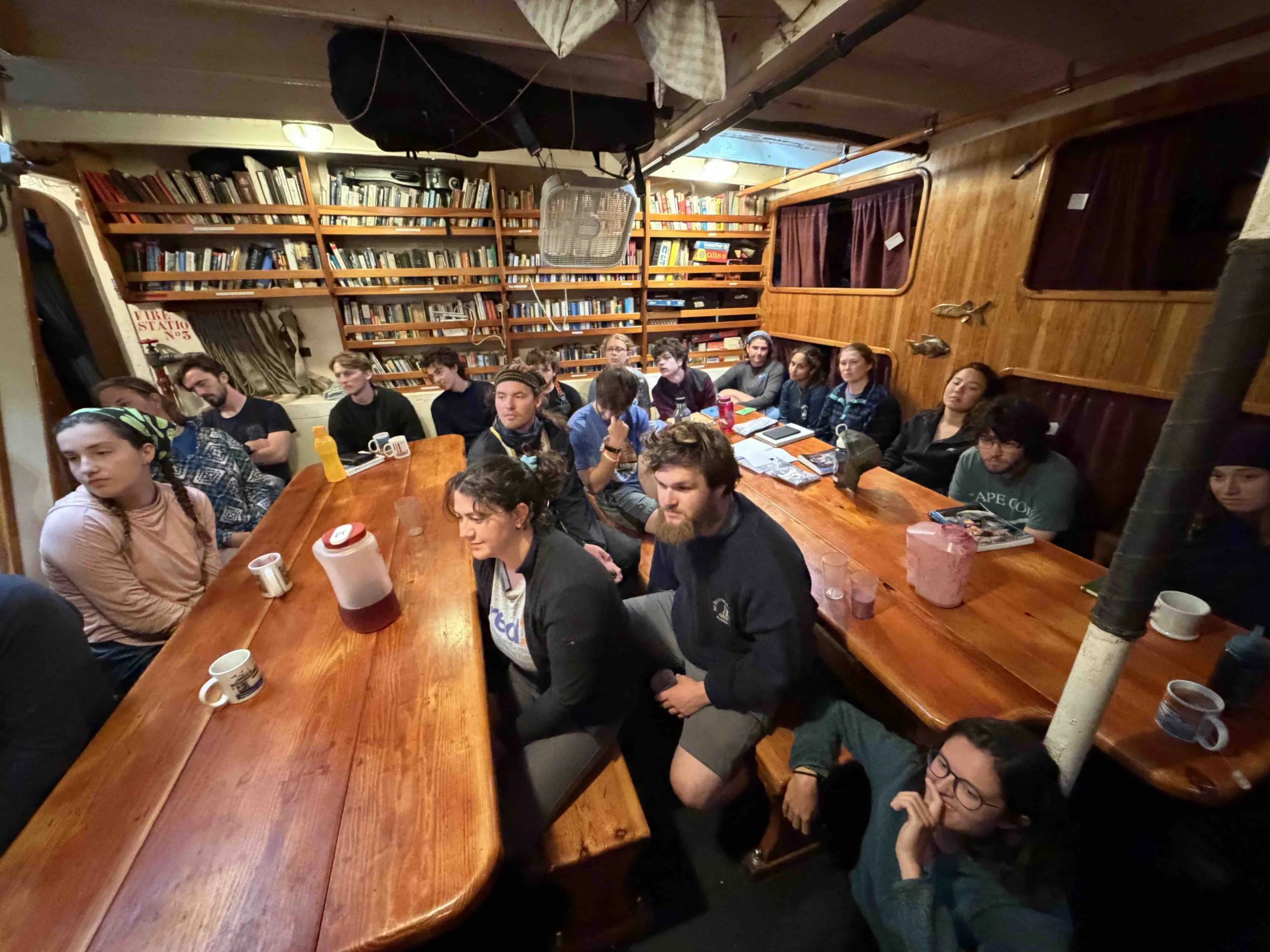
Below deck, where I am currently sitting, everything is moving rather dramatically back and forth. The gimbaled tables roll side to side, in unison with the swaying students seated on the settees, their noses buried in books, sketchbooks, or watercolor pads. The books on the shelves of the ship’s library lean one way, then the other, then back. The curtains in the bunks and cabins swing in and out at ridiculous angles. Every so often a loud succession of metallic crashes and bangs pours out from the galley, where our heroic stewards and our Stu Stew of the day, Simon, are hard at work making us a delicious-smelling dinner in increasingly rocky conditions. I believe I speak for most if not all of the crew and students when I say the stewards on this trip have our undying love, respect, and loyalty.
Walking around has become challenging, too. Frequent pauses are needed, handholds are essential, and collisions unavoidable. When the ship hits a particularly good roll, everyone who happens to be standing at the time freezes and grabs on to a pole or a bulkhead (wall)—or, if one is not in reach, does a silly stumbling slanted run to the nearest one—and there is much laughter and commiseration. The porthole in the library plunges in and out of the water so much so that at times it looks as if we are sitting in a submarine.
I am reading a book called Sextant by David Barrie, which traces the history of celestial navigation in sailing. The vivid descriptions of voyages undertaken decades and centuries and even millennia ago are both so similar and so different from what we are experiencing right now. Of course, we are in much better conditions than many of the sailors who came before us, with exponentially better food, safety equipment, scientific understanding, weather predictions, and navigational systems. But some things remain almost exactly the same: the sextants in our hands, the rocking of the waves, the way a ship becomes a whole small world out here by itself, the glory of the sky reaching down to a round unbroken horizon on all sides, and most of all the wonder, the majesty, the mystery of the ocean itself.
Olivia Carson, B Watch, Deckhand
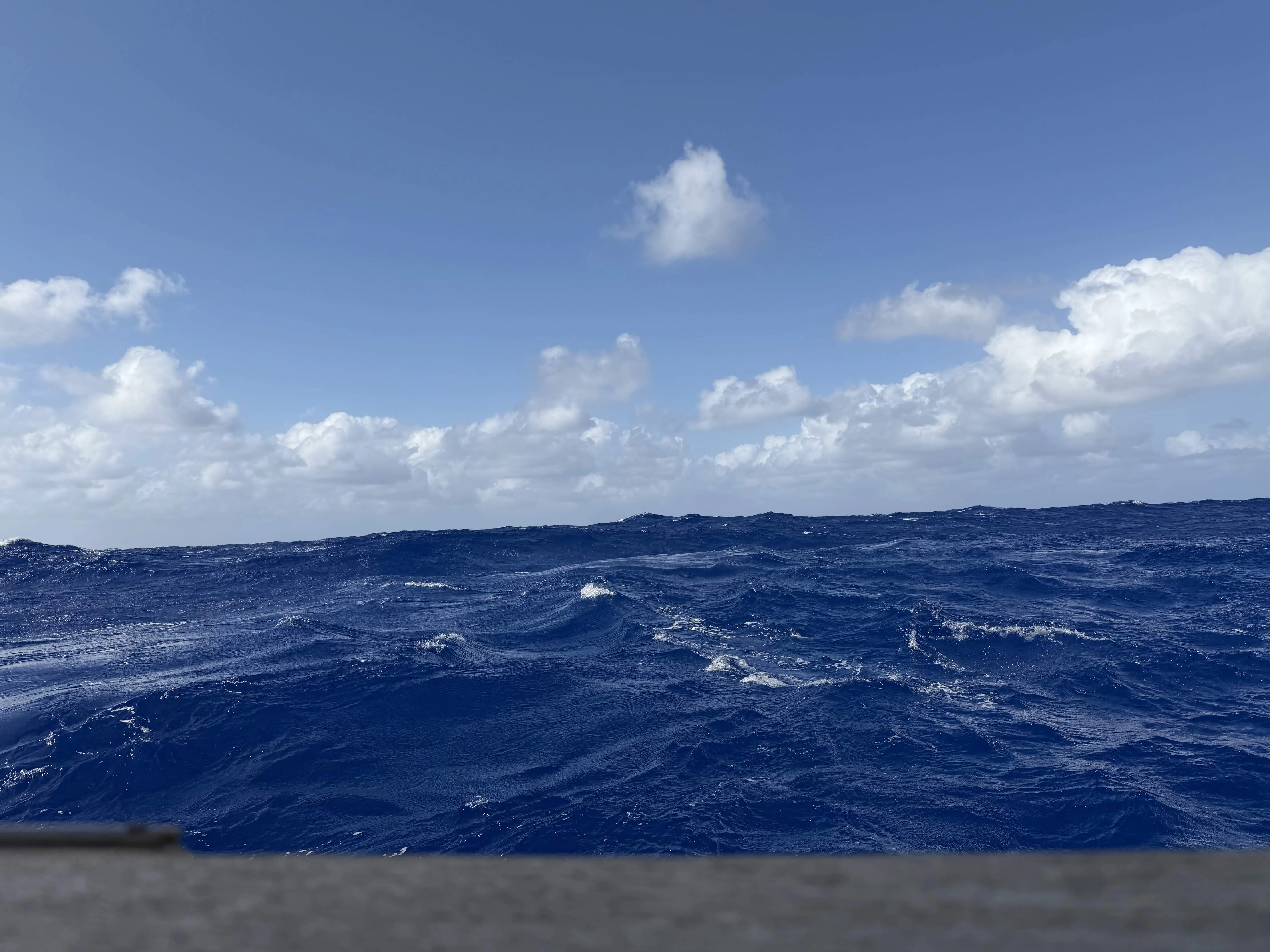
A big wave seen from the deck
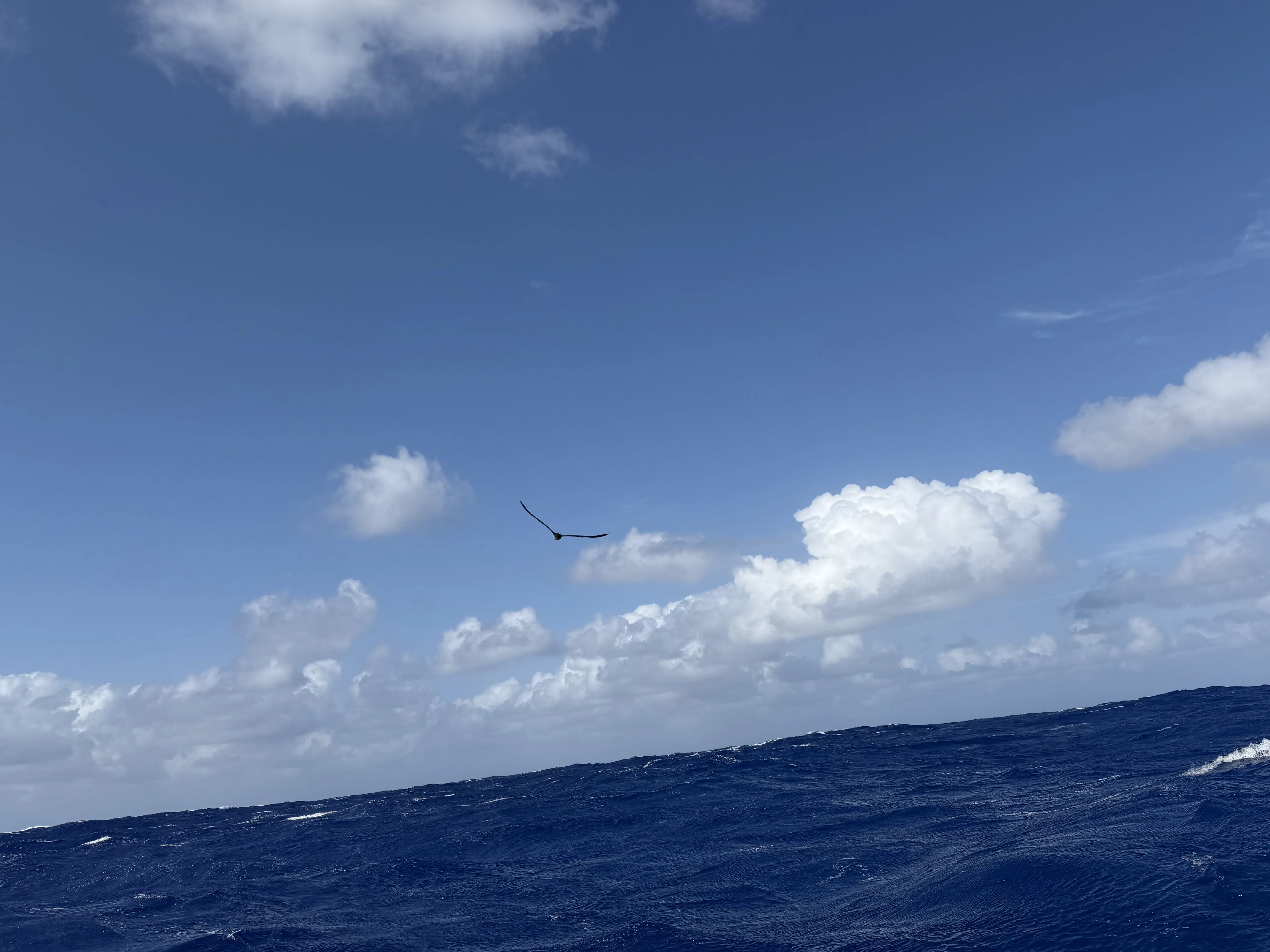
A seabird keeping us company
Recent Posts from the Ships
- Ocean Classroom 2024-A collaborative high school program with Proctor Academy
- Collaborations and Long-term Commitments: SEA’s Caribbean Reef Program Sets a Course for Coastal Programs that Compliment Shipboard Experiences.
- Sea Education Association students prepare for life underway using state of the art nautical simulation from Wartsila Corporation.
- SEA Writer 2022, Magazines From the Summer SEA Quest Students
- Technology@SEA: Upgrades Allow Insight into Ocean Depths
Programs
- Gap Year
- Ocean Exploration
- High School
- Science at SEA
- SEA Expedition
- SEAScape
- Pre-College
- Proctor Ocean Classroom
- Protecting the Phoenix Islands
- SPICE
- Stanford@SEA
- Undergraduate
- Climate and Society
- Climate Change and Coastal Resilience
- Coral Reef Conservation
- Marine Biodiversity and Conservation
- MBL
- Ocean Exploration: Plastics
- Ocean Policy: Marine Protected Areas
- Oceans and Climate
- Pacific Reef Expedition
- Plastics and Biodiversity in the Sargasso Sea
- The Global Ocean: Hawai'i
- The Global Ocean: New Zealand
- The History of Whaling & Whale Conservation