Programs Blog
Welcome, C-327!
Saturday May 30th, 2026
Dyers Dock, SEA’s home wharf
Woods Hole, MA
1400 ET
The Whaling History and Whale Conservation group of college students are as I write this aboard their tall ship of oceanography, the SSV Corwith Cramer. They’re now completing all their preliminary safety training and plan to get underway this afternoon. The ship’s community will tour southern New England and the Gulf of Maine for a week as they take their study of the history of whaling and the state of modern-day whale conservation out into the field, out to sea. They’ll be deploying oceanographic sampling equipment as they consider whale ecology; they’ll be spreading canvas to catch the wind as they consider past mariners in the region; and all eyes at all times will be peeled to see a whale or two for themselves!
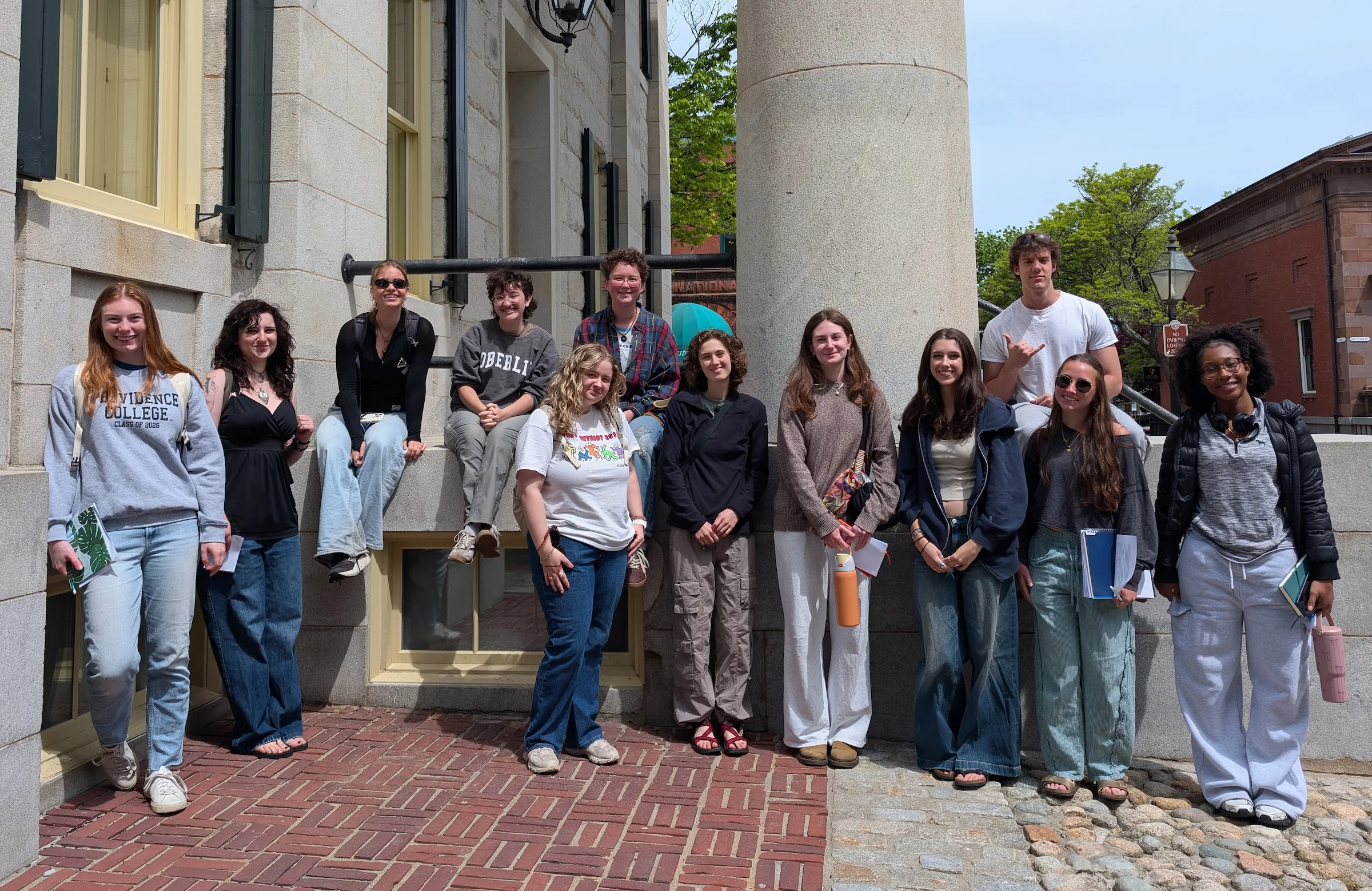
From the start this has been genuinely a special cohort–enthusiastic, committed, and eager to learn. Here’s the student group:
Jude Daniel, University of Massachusetts-Dartmouth
Max Daucher, Lehigh University
Grace Farinella, University of Rhode Island
Gina Gallo, SUNY Stonybrook
Celeste Giannoulias, Yale University
Bridget Gioffe, University of Rhode Island
Georgia Green, Bates College
Beatrice Gumbinner, Oberlin College
Camryn Hartigan, Colby College
Ursula Koch, Northern Michigan University
Kelly McGonigle, Providence College
Sarah Wallen, Syracuse University
They’ll be led on the Corwith Cramer by Captain and Asst. Professor Rebecca Johnson, chief scientist and Professor of Oceanography Jan Witting, and Visiting Professor of History, Brooke Grasberger, who is teaching the primary course, Marine Environmental History. There will also be a full complement of watch officers, marine technicians, engineers, and stewards.
Not going to the sea with the group is Dane Whicker, the program assistant for the program, who has so ably helped the students with all their logistics for the week while they were living on campus before boarding the ship. He helped guide local field trips, helped with food shopping, academic needs, and any and all details as the group settled in.
My name is Richard King. I’m a visiting professor at Sea Education Association, and I, unfortunately, am also not going to sea with the group. I’ll be guiding the students as they put together an interdisciplinary special issue of our student magazine, SEA Writer, which will befocused on our relationship with whales. They’ve already drafted individual articles this past week and some have volunteered for specialized positions, like designing the cover or coordinating our advocacy conclusions. We’ll finish the magazine during the week that they return to campus, processing their data and their sea stories. They’ll also be presenting their research at an online symposium on Thursday, June 11th. Stay tuned for these details!
You can follow the movement of the ship on MarineTraffic.com. Just type in “Corwith Cramer.”
Our blog for this program will take the form of short video interviews, sometimes posted on Instagram, with the transcriptions posted here on this blog. They’ll not be posted each day, but we’ll interview all twelve students and a couple of the faculty before the end of the program on June 12th. Camryn Hartigan, a student at Colby College in Maine, will be leading the interviews. Dane conducted the first one. Here it is below!
———-
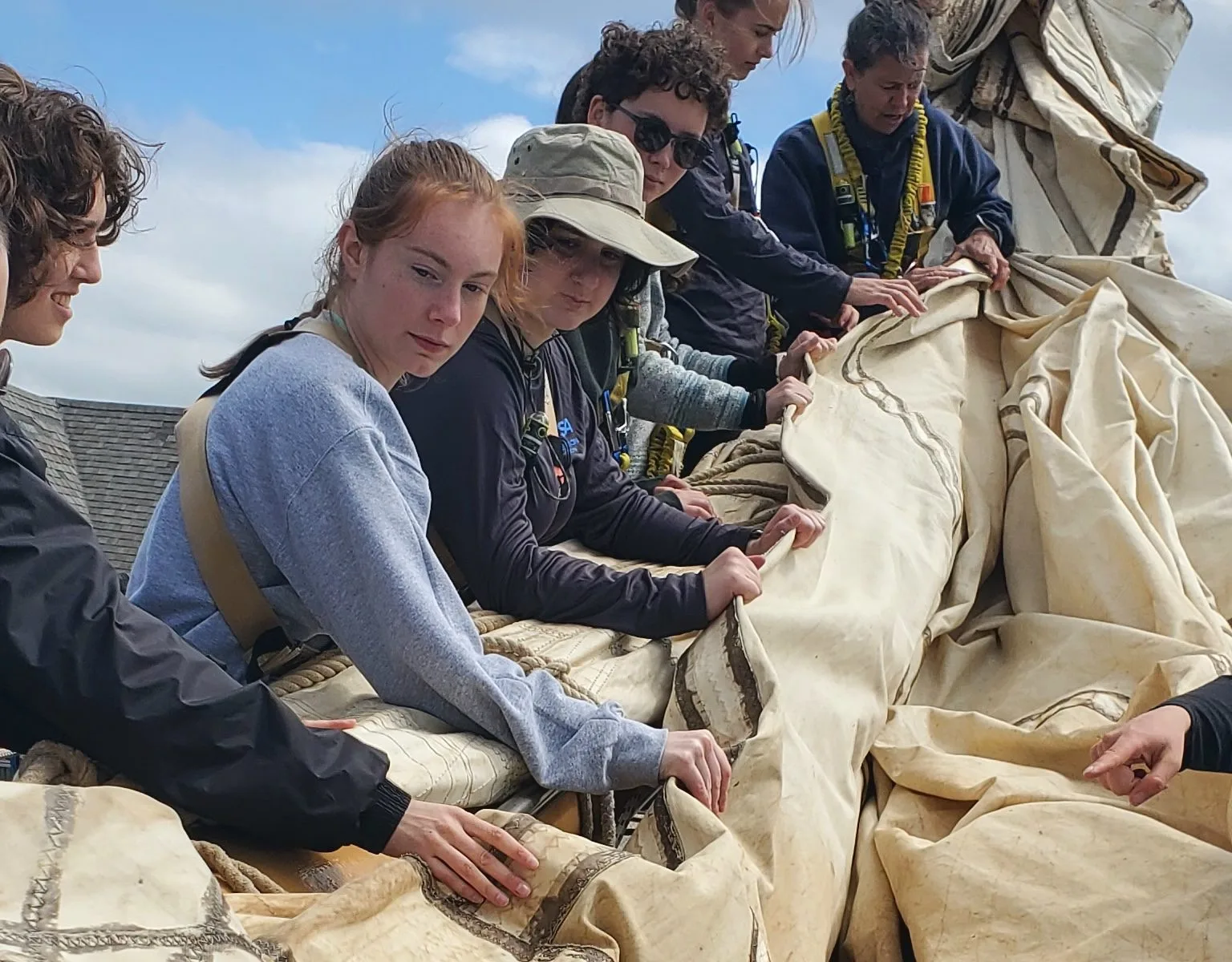
Kelly McGonigle learns to furl the jib with her classmates aboard the Corwith Cramer at Dyers Dock in Woods Hole, MA. (Brooke Grasberger)
My name is Kelly McGonigle. I’m from Winchester, Mass., but I also spend a lot of my time up in Barnstable, Mass. My home college was Providence College. I just graduated with a degree in biology and a minor in public and community service studies. So I’m very happy about that!
Will you tell us a little bit about what you’ve done today, what have you been doing in the program so far?
Today we had a morning class session with Rich. He was telling us about the end of American whaling and why it happened due to consequences to both the whales and the industry itself. So that was very interesting to learn about. And up until this point, we’ve been kind of covering the history of whaling: from the Indigenous peoples that it originated with, up into its height, and then subsequent die off.
So that’s been very interesting. And then tomorrow we have our first science session with our onboard oceanographer professor. We’ve also had a few boat sessions with our captain, “learning the ropes,” literally and figuratively as well.
And you have some experience out on whale watch boats yourself, right?
I was an intern on a Hyannis whale watcher. I was kind of an assistant naturalist as well as an educator and a little bit of a researcher. So that gave me a lot of experience with the whales and it only deepened my passion for their conservation.
What is on your mind recently about the theme of the program—whaling history and whale conservation?
Yeah, I’m really excited to see how this past that we’re exploring, of all the whalemans’ logbooks and the whaling histories and all these artifacts left behind, what secrets they might hold to apply to conservation in the current day, specifically speaking to the North Atlantic right whale, which is facing very steep challenges right now.
Looking ahead at our super packed schedule, is there something in particular you’re looking forward to?
I’m very excited to meet with our chief scientist for the first time and to figure out what our focus will be on this voyage. Maybe learn a little bit about whatever experience we’re going to do, experiments we’re going to do, and then to finally get on the ship. I’m beyond wildly excited for that!
Is there a particular story that brought you to this program?
Not a particular story, but from working on the whale watch boat, it’s more seeing the looks on people’s faces as they saw whales for the first time or even for the second or third or many, however, time. And it’s about how, like, you can’t protect something you don’t know about. So I want to bring that education to more people and just raise awareness.
I’m obviously hoping to learn more about whales, but I’m also hoping to learn about conservation in the wider sense, I guess. Maybe a little bit about the history of how that started as a field. And I’m very interested in actually doing research and being out at sea for days at a time, which will be a new experience for me.
This interview was conducted by Dane Whicker on the SEA campus in Falmouth, MA, on May 25th, 2026.
Recent Posts from the Ships
- Ocean Classroom 2024-A collaborative high school program with Proctor Academy
- Collaborations and Long-term Commitments: SEA’s Caribbean Reef Program Sets a Course for Coastal Programs that Compliment Shipboard Experiences.
- Sea Education Association students prepare for life underway using state of the art nautical simulation from Wartsila Corporation.
- SEA Writer 2022, Magazines From the Summer SEA Quest Students
- Technology@SEA: Upgrades Allow Insight into Ocean Depths
Programs
- Gap Year
- Ocean Exploration
- High School
- Science at SEA
- SEA Expedition
- SEAScape
- Pre-College
- Proctor Ocean Classroom
- Protecting the Phoenix Islands
- SPICE
- Stanford@SEA
- Undergraduate
- Climate and Society
- Climate Change and Coastal Resilience
- Coral Reef Conservation
- Marine Biodiversity and Conservation
- MBL
- Ocean Exploration: Plastics
- Ocean Policy: Marine Protected Areas
- Oceans and Climate
- Pacific Reef Expedition
- Plastics and Biodiversity in the Sargasso Sea
- The Global Ocean: Hawai'i
- The Global Ocean: New Zealand
- The History of Whaling & Whale Conservation